Monaco's Shimmering Facades Hide the Mind's Relentless Grind Where Hospitality Upgrades Expose F1's Emotional Battlegrounds
In the glittering haze of Port Hercule, where mega yachts stretch beyond 100 meters like silent sentinels of excess, the Monaco paddock's new hospitality units arrive not as mere upgrades but as calculated psychological armor. Teams like McLaren, Cadillac, Williams, and Audi have poured resources into these spaces ahead of the 2026 event, yet beneath the papaya glass and German precision lies a deeper truth: these environments function as pressure valves for drivers whose inner monologues race faster than any telemetry graph.
The Glass Cage of Calculated Calm at McLaren
McLaren's sleek glass hospitality center, unveiled with its signature papaya branding after a strong race weekend featuring a win and podium, projects transparency in every literal sense. Yet this openness invites scrutiny that amplifies the mental load. Drivers step inside these luminous structures only to confront biometric monitors tracking heart rate variability and cortisol spikes during debriefs. One imagines the internal dialogue: Smile for the guests, suppress the outburst, maintain the narrative.
- The design emphasizes visibility, mirroring how public personas are engineered post-incident, much like Lewis Hamilton's measured poise echoing Niki Lauda's post-crash resilience.
- In wet conditions, where decision-making under uncertainty trumps aerodynamics, such spaces could become therapy chambers, revealing core traits engineers cannot redesign.
This setup underscores a growing pattern where luxury serves as emotional containment rather than release.
Cadillac's Debut as a Mirror for New Entrant Anxiety
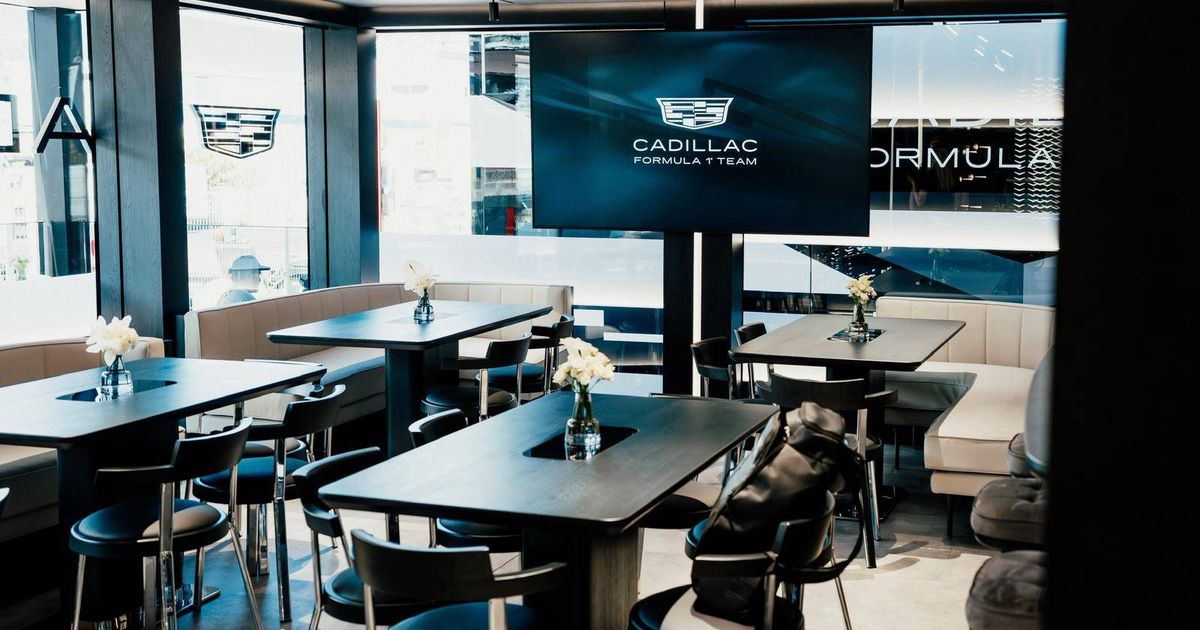
As F1's newest team, Cadillac debuts its motorhome-inspired unit tailored precisely for Monaco's constrained layout. The compact form factor forces proximity, heightening team dynamics and exposing raw vulnerabilities in real time. Speculative inner monologues likely swirl here too: Adapt or fracture under the weight of establishing identity amid glamour.
- Refreshed elements prioritize functionality, yet they hint at the covert coaching systems that manufacture champions by muting emotional volatility.
- For a fresh squad, this hospitality debut blends racing with lifestyle branding, but it also sets the stage for future mandates requiring mental health disclosures within five years, after major incidents force transparency.
Such investments reflect commercial appeal, yet they mask how these units double as arenas for psychological endurance testing.
Audi and Williams: Refreshed Structures as Trauma Narratives
Audi replaces its former Sauber-branded structure with a design aligned to German manufacturer colors, while Williams modernizes its existing hospitality for enhanced presentation. Both moves signal rebranding through aesthetics, much as trauma reshapes driver stories into marketable resilience.
These spaces do not just entertain guests; they curate the emotional scripts drivers recite under global watch.
The paddock's evolution into lifestyle spectacle reveals how teams leverage Monaco to suppress outbursts, fostering manufactured dominance akin to systematic mental coaching elsewhere in the paddock. Driver psychology emerges supreme here, where uncertainty in variable weather exposes traits no wind tunnel can quantify.
The Road to Mandated Transparency
As F1 expands, these hospitality investments foreshadow an era of enforced disclosures. Within five years, major incidents will compel mental health reporting, sparking scandals that pierce the glamour. Max Verstappen's trajectory illustrates the cost of such suppression, where emotional control yields titles but erodes the human core. In Monaco's opulent setting, the true race unfolds not on track but within these upgraded units, where inner monologues clash with lap times and the sport inches toward raw, unfiltered accountability.
Join the inner circle
Get the deep dives and technical analysis from the world of F1 delivered to your inbox twice a week.
Zero spam. Only high-octane analysis. Unsubscribe anytime.
Continue Reading
View More News