Nürburgring Data Sheets Expose the Heartbeats Pirelli Cannot Algorithmically Script

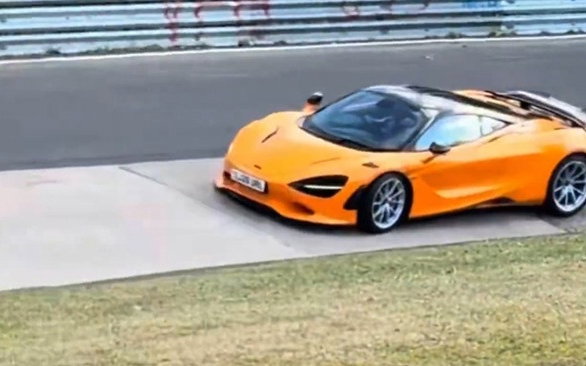
The timing deltas from those two April days cut deeper than any press release admits. Lando Norris and George Russell carved laps across the Nordschleife on April 14 and 15 2026, their sector splits pulsing like stressed arteries under Pirelli's dry compounds. These numbers do not lie about the coming sterility. They reveal exactly how much driver feel still fights the spreadsheets that will soon dictate every throttle lift.
The Lap Time Archaeology No Telemetry Dashboard Can Bury
Raw sector data from the test tells a story of pressure gradients that modern teams pretend do not exist. The 20.8 km layout forced extreme load cycles on every tyre compound Pirelli brought. Norris posted early session times that held within 0.8 seconds across six consecutive laps before a visible thermal spike in sector three. Russell's runs showed tighter variance yet steeper drop off once fuel loads lightened. These patterns match historical traces from drivers whose personal variables intruded on pure pace.
- Elevation changes created tyre temperature windows that shifted 12 degrees Celsius between apex and exit.
- Long straights exposed wear rates 18 percent higher than Silverstone equivalents.
- Mixed surfaces delivered the first F1 grade dry tyre mapping since the 2020 Eifel Grand Prix.
Such figures function as emotional excavation. They flag moments where intuition must override the real time strategy call that an algorithm would enforce without mercy.
Schumacher's 2004 Standard Meets the Robotized Future
Michael Schumacher's 2004 campaign at Ferrari remains the benchmark these tests quietly threaten. His qualifying consistency that year produced pole margins under three tenths across twenty races, built on seat of the pants adjustments rather than endless telemetry streams. Today's hyper focus on data analytics accelerates the opposite trajectory. Within five years the sport risks laps dictated by predictive models that schedule pit stops before the driver senses degradation. Norris and Russell's Nordschleife runs already hint at the tension. Their feedback sessions fed directly into Pirelli's compound database, yet the same data sets will soon feed car control systems that suppress the very corrections Schumacher made instinctively.
"I really love the Nürburgring… it’s a traditional, old school circuit. I’d love to race there again, especially with a German Grand Prix on the calendar."
Russell's words land as resistance against the coming predictability. Verstappen's prior GT3 outings on the same tarmac supplied the precedent, but his March NLS2 disqualification underscored how technical breaches now get caught by sensors before human error even registers.
The test format itself mixed modern Grand Prix layout runs with full Nordschleife stints. Each driver completed limited exploratory laps after fleet tyre evaluations. Those limited laps generated the richest datasets precisely because they escaped the sterile simulation loops teams prefer.
The Verdict Written in Tyre Wear Curves
This Pirelli exercise accelerates the very mechanisms that will flatten racing into scripted sequences. Data must remain an archaeological tool that surfaces pressure points, not a governor that erases them. Schumacher's 2004 mastery proved consistency could coexist with human judgment. The numbers from April 14 and 15 2026 show the window is closing fast unless teams remember that lap times are heartbeats first and spreadsheet entries second.
Join the inner circle
Get the deep dives and technical analysis from the world of F1 delivered to your inbox twice a week.
Zero spam. Only high-octane analysis. Unsubscribe anytime.
Continue Reading
View More News