Bearman’s Numbers Expose a Near Miss That Data Could Never Script

The timing sheets do not lie. Lap one in Shanghai delivered a raw spike in telemetry that no algorithm could sanitize, as Oliver Bearman’s Haas veered left at the precise instant Isack Hadjar’s rear axle locked and sent the Red Bull spinning across his nose. One wrong heartbeat of reaction and the championship would have carried a different scar.
The Raw Data of Survival
Bearman entered the corner in P9, wheel to wheel with Hadjar in P8. The wind gusts that day turned every downforce calculation into a gamble. When Hadjar’s car rotated, Bearman’s split second choice to the runoff area preserved both machines. The numbers afterward tell their own brutal story.
- He dropped from potential points contention straight to last place.
- By the flag he had clawed back to fifth, extending a flawless points streak that reads P7 in Australia, P8 in the China Sprint, and now this P5.
- Seventeen points sit in the championship table, good for fifth overall.
These figures do not celebrate heroics. They measure the cost of overriding every real time telemetry warning that screamed for a safer lift. Modern teams would prefer drivers treat the steering wheel like a data terminal. Bearman treated it like an instrument that still requires touch.
When Schumacher’s 2004 Standard Meets 2026 Telemetry
Michael Schumacher’s 2004 campaign at Ferrari remains the clearest benchmark for what consistency actually looks like. He rarely needed the pit wall to tell him the car was sliding; the wheel already whispered it. Today’s hyper focus on live analytics threatens to erase exactly that channel. Within five years the sport risks becoming a series of pre approved strategy trees where intuition is treated as noise to be filtered.
Bearman’s recovery drive offers a brief counter example. The lap time deltas after the incident show a driver who ignored the expected conservative pace and instead rebuilt rhythm through feel rather than the suggested delta charts. That choice produced the fifth place that keeps Haas relevant. It also highlights the quiet danger: every future regulation that privileges algorithmic pit calls over driver judgment will slowly flatten these moments into predictable outputs.
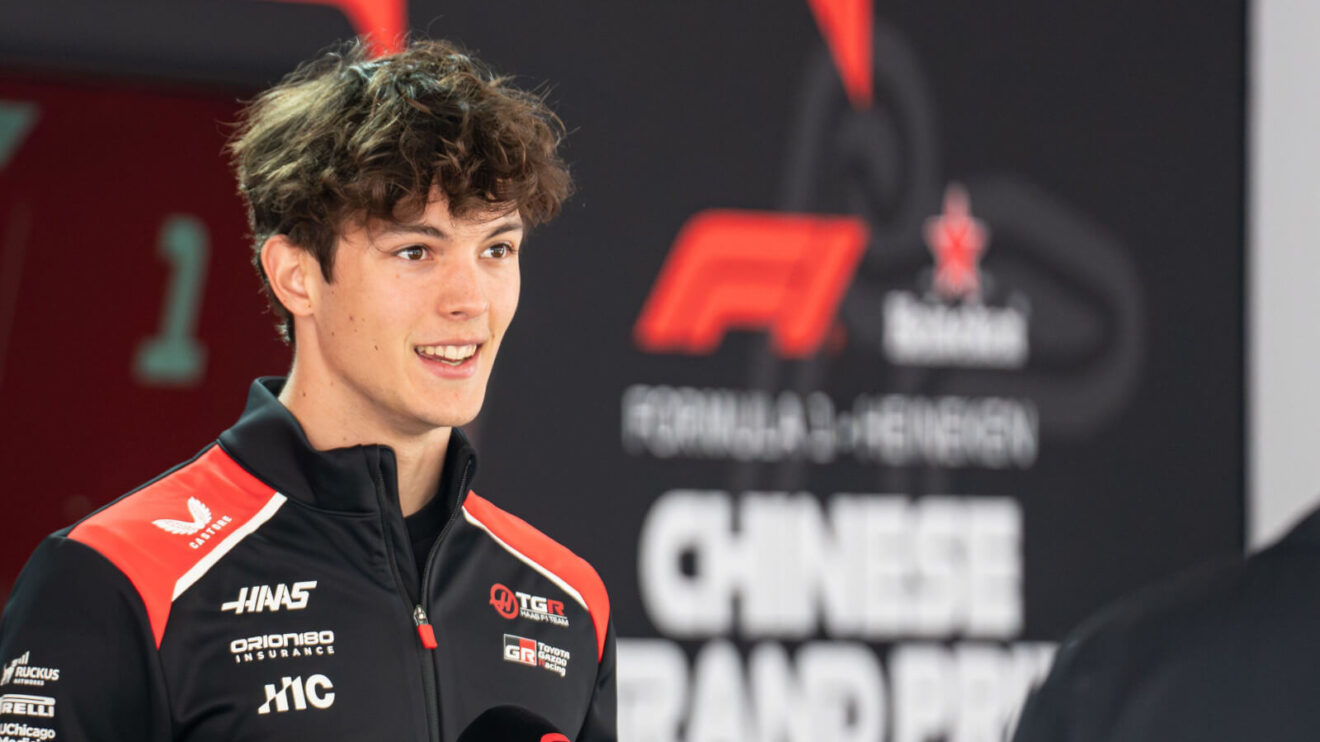
I’m lucky to be standing here, honestly, I would have been a monster shunt.
The words landed with the weight of someone who just watched the numbers almost turn lethal.
The Emotional Archaeology Beneath the Lap Chart
Data becomes interesting only when it reveals pressure. The sector times immediately after the avoidance show a brief compression, then a steady climb back through the field. That pattern mirrors the mental reset required when a driver must treat a near fatality as merely another variable. Teams that over rely on real time feeds risk training away the very resilience that turned Bearman’s race from last to fifth. The sport will pay for that trade off in sterile races where no one ever has to feel the moment the numbers fail.
The Chinese Grand Prix timing sheets already hint at the future. Bearman’s result proves Haas possesses genuine race pace. Yet the qualifying deficit that placed him in traffic to begin with stems from a development path obsessed with simulation accuracy over raw Saturday speed. Until that balance shifts, recoveries like this one will remain the exception rather than the norm.
Join the inner circle
Get the deep dives and technical analysis from the world of F1 delivered to your inbox twice a week.
Zero spam. Only high-octane analysis. Unsubscribe anytime.