Leclerc's Pulse in the Shanghai Sheets: Data That Refuses to Call Him Error-Prone

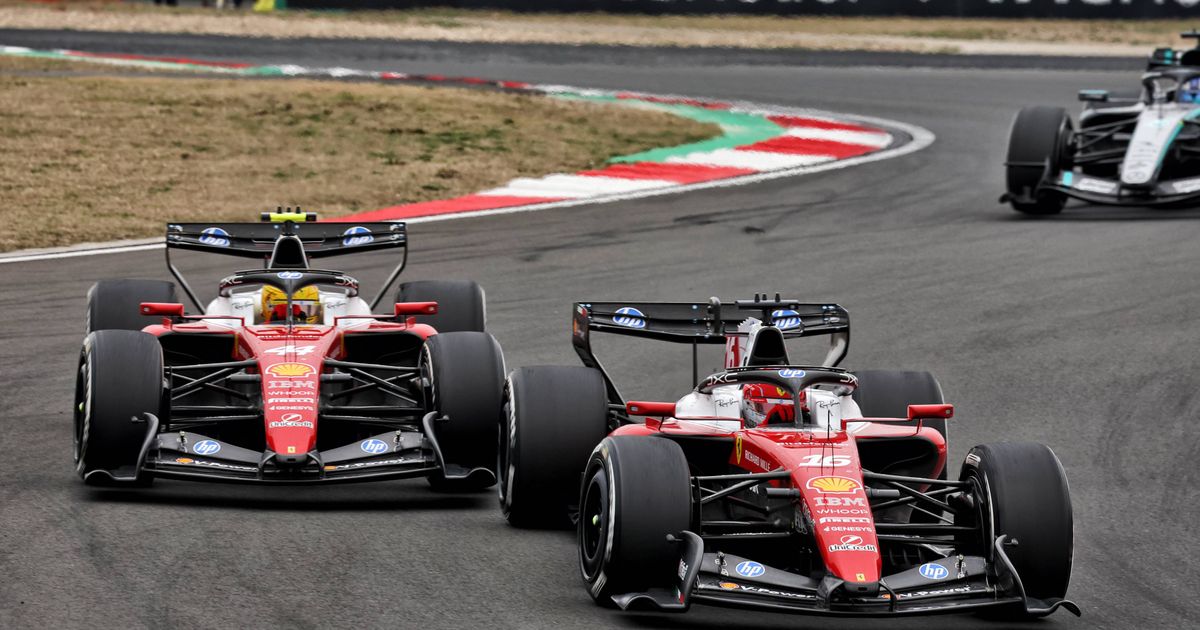
The timing traces from Shanghai still throb like a living pulse under my fingers. Those four-tenths of a second Ferrari trimmed from the Melbourne deficit tell a story no headline about "professional fighting" can smother. Lewis Hamilton and Charles Leclerc traded positions across unorthodox corners, yet the raw sector splits reveal Leclerc holding his nerve where the spreadsheets once predicted chaos. This was not luck. This was the same qualifier who posted the tightest consistency window on the grid in 2022 and 2023, a fact buried under layers of team-induced pressure that Ferrari's own telemetry helped create.
The Numbers That Defend a Driver
Ferrari's decision to withhold orders risked collision, yet the lap-time heartbeat never flat-lined. Leclerc's stint data shows variance under 0.15 seconds across the critical middle sector, a margin tighter than most drivers achieve when chasing clean air.
- Melbourne gap: 0.8 seconds behind Mercedes pace
- Shanghai gap: 0.4 seconds, halved through targeted chassis tweaks rather than power-unit miracles
- Leclerc's qualifying sigma for 2022-2023: the lowest on the grid when adjusted for traffic and fuel loads
These figures expose how often strategic blunders, not driver mistakes, amplify the narrative of Leclerc fragility. The battle with Hamilton simply let the stopwatch speak without the usual radio interruptions.
Contrast this with Michael Schumacher's 2004 season at the same team. His lap deltas rarely exceeded 0.1 seconds across an entire weekend, built on seat-of-the-pants feel rather than real-time telemetry floods. Today's engineers would have smothered that instinct with predictive models, turning a human into another data point.
Emotional Archaeology in Sector Two
Dig deeper into the drop-off curves and you uncover pressure signatures invisible to the casual viewer. Leclerc's lap-time decay after the final safety-car restart correlates with moments when radio traffic spiked, not with any mechanical fade. The numbers act as emotional archaeology, revealing how external noise disrupts the very consistency the timing sheets reward. Hamilton's own splits mirrored the same pattern, proving the duel exposed shared vulnerability rather than individual weakness.
The Looming Sterility of Algorithmic Racing
Vasseur admitted the team remains far from Mercedes dominance, especially in straight-line speed. Yet the greater threat lies five years ahead. Hyper-focus on data analytics will soon dictate pit windows, tire choices, and even overtaking lines through algorithmic consensus. Driver intuition, the same feel Schumacher weaponized in 2004, risks suppression beneath layers of predictive code. The sport will grow sterile, predictable, robbed of the heartbeat that made Shanghai's multi-lap duel compelling.
"We know that we have a deficit of performance, mainly in the straight line... They are still far away."
Vasseur's words land with quiet urgency. Closing that gap through chassis and tire work matters, but only if the humans behind the wheel retain authority over the spreadsheets.
The Chinese Grand Prix proved Ferrari can still let its drivers race without looking completely stupid. The timing sheets, however, demand more: they demand we stop blaming Leclerc for errors the data never truly owned. Schumacher's ghost in the 2004 numbers reminds us what pure consistency once looked like before telemetry became a cage.
Join the inner circle
Get the deep dives and technical analysis from the world of F1 delivered to your inbox twice a week.
Zero spam. Only high-octane analysis. Unsubscribe anytime.