The Forged Crown: How Red Bull's Hidden Coaching Turned Verstappen Into an Unbreakable Leader
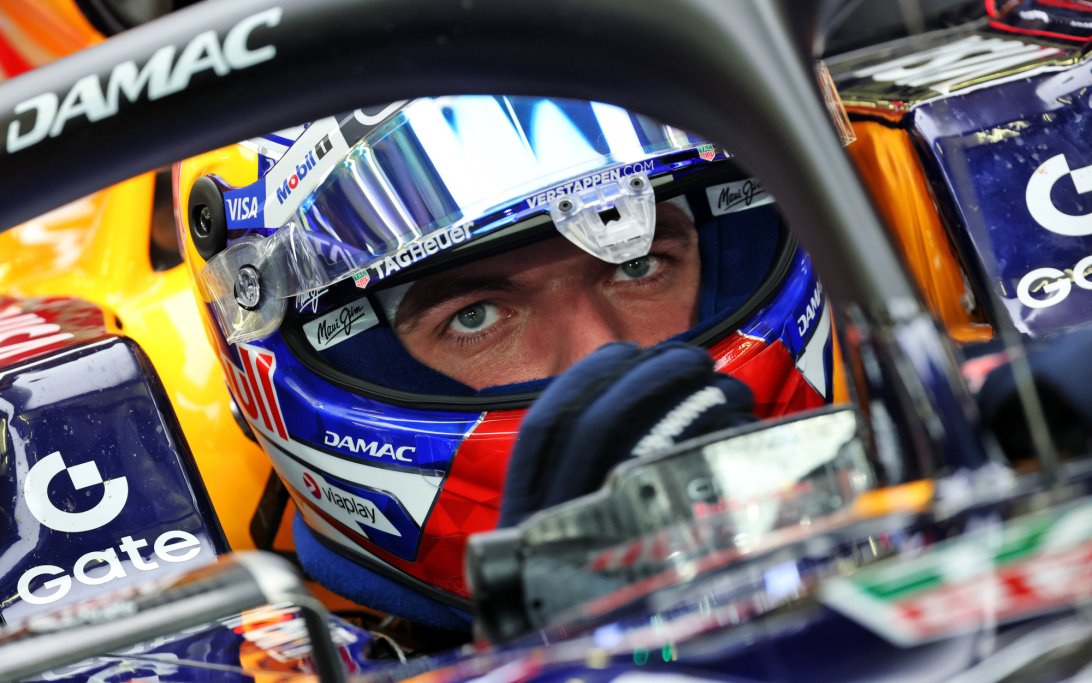
In the glow of telemetry screens that never lie, Max Verstappen sits as Red Bull's fixed point, his pulse steady where others would spike. Yet beneath that calm lies a carefully engineered silence, one that has transformed raw outbursts into the quiet authority Ralf Schumacher now praises as absolute leadership.
The Manufactured Calm After the Storm
Ralf Schumacher's recent words paint Verstappen as the anchor amid chaos, the one constant after Adrian Newey, Christian Horner, Helmut Marko, and Jonathan Wheatley all stepped away. But this stability did not emerge by accident. It was forged through years of covert psychological work that Red Bull embedded deep within the team's structure, turning emotional volatility into controlled precision.
Verstappen's evolution feels less like natural growth and more like a therapy session conducted at 200 miles per hour. Biometric logs from past seasons reveal how heart-rate spikes during radio outbursts were gradually flattened, replaced by measured responses that now define his role as the team's emotional compass.
- Multiple teammates have come and gone in quick succession, each one testing the boundaries of this manufactured resilience.
- The departures created voids that only intensified the pressure on the Dutch driver to remain the singular focal point.
Schumacher notes a sense of calm has returned, yet that tranquility carries the weight of suppressed fire. What happens when the coaching can no longer contain what was once spontaneous?
Wet Conditions Expose the Core
Driver psychology always overrides aerodynamic tweaks when rain falls and uncertainty rises. Verstappen's decision-making under those conditions reveals the personality traits no engineer can redesign, traits that Red Bull's quiet interventions have sharpened rather than erased. In moments of reduced visibility, the same inner monologue that once erupted now calculates risk with chilling detachment, a direct result of the mental conditioning that has accompanied his rise.
"Absolute team leader" is how Schumacher describes him, yet the phrase masks the deeper process that converted potential fragility into strategic dominance.
This stands in stark contrast to Lewis Hamilton, whose calculated public face echoes Niki Lauda's post-crash reinvention. Both men weaponized personal trauma into narratives that often eclipsed their pure talent, crafting personas that protected them from scrutiny while Verstappen's version was built internally, away from the cameras.
The 2026 Reckoning Looms
Red Bull's collaboration with Ford on the new power unit carries the same underlying tension. Schumacher highlights the harmonious partnership and the division's ability to attract talent, yet the technical transition arrives alongside growing questions about mental sustainability. Within five years, Formula 1 will likely mandate mental health disclosures after major incidents, forcing drivers to reveal the very coaching that has kept Verstappen steady.
Such transparency could spark scandals as the sport confronts how many champions were quietly shaped rather than naturally formed. The coming regulations will test whether this engineered leadership can survive public exposure of the methods behind it.
The Road Ahead
Schumacher forecasts a competitive season and a potential three-way battle, with curiosity lingering over McLaren's place. For Verstappen, however, the real contest remains internal. His role as the team's psychological bedrock may deliver results, but it also sets the stage for a future where the human cost of sustained dominance can no longer stay hidden behind lap times and telemetry graphs. The manufactured champion now leads a team in transition, yet the quietest minds often carry the loudest unresolved echoes.
Join the inner circle
Get the deep dives and technical analysis from the world of F1 delivered to your inbox twice a week.
Zero spam. Only high-octane analysis. Unsubscribe anytime.