Russell's Lap Time Heartbeats Demand a Schumacher Shadow Over Montreal's Data Trap

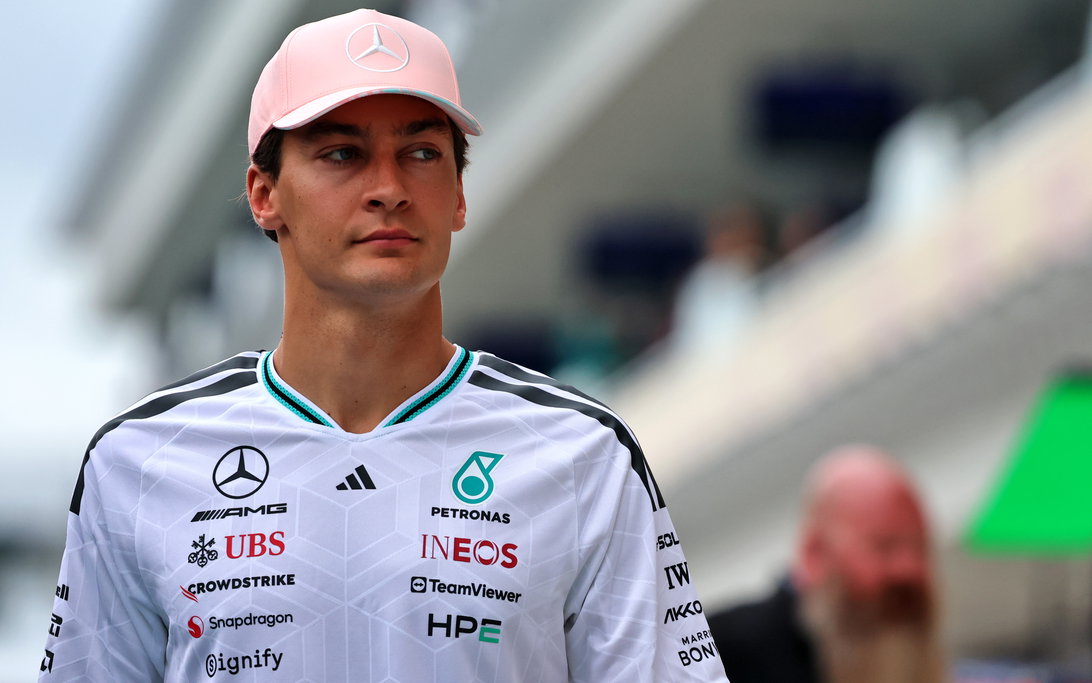
The timing sheets do not lie, yet they pulse with a rhythm that feels almost human. Staring at George Russell's qualifying deltas against Kimi Antonelli this season hits like a sudden drop in heart rate during a late-race push. Russell arrives at Circuit Gilles Villeneuve with back-to-back poles in 2024 and 2025, including that dominant victory from the front last year. But the raw numbers now show a 20-point championship deficit after seven races, with Antonelli claiming three straight wins in China, Japan and Miami while Russell managed only the Australian opener by 2.974 seconds. These figures whisper stories of mounting pressure that spreadsheets alone cannot bury.
Excavating Pressure Through Qualifying Gaps
The 0.399-second Miami qualifying deficit to Antonelli stands out not as mere statistics but as emotional archaeology. Lap time drop-offs often trace invisible fault lines in a driver's week, much like how personal strains can ripple through telemetry traces. Russell's Montreal stronghold should provide the perfect dig site. Here the Briton has historically extracted every tenth from the Mercedes, yet the teenager's recent form suggests the machinery now favors the younger heartbeat.
- Antonelli holds a clear qualifying edge in 2026 head-to-heads.
- Russell's lone victory margin in Australia already looks distant against the current run of form.
- The championship sits at 100-80, a gap that timing data renders brutally visible after just seven events.
These metrics invite us to probe deeper than surface narratives. What unseen variables, perhaps off-track or strategic, correlate with those tenths lost? Data should illuminate such human layers rather than flatten them into excuses.
Schumacher's 2004 Ghost Haunts the Telemetry Era
Modern teams lean so heavily on real-time analytics that they risk smothering the very intuition Michael Schumacher wielded with near-flawless consistency throughout his 2004 campaign at Ferrari. That season's metronomic pace came from feel, not constant pit-wall overrides. Today the hyper-focus on algorithmic recommendations already hints at a sterile future. Within five years, F1 could morph into robotized racing where drivers execute pre-scripted strategies instead of sensing grip shifts mid-corner. Russell faces exactly this tension in Canada.
If he does not beat team-mate Kimi Antonelli in Canada, alarm bells will be ringing.
Sky Sports F1's David Croft captured the moment precisely. Yet the deeper issue lies in whether Mercedes' data obsession will let Russell's raw pace breathe or simply script another predictable outcome. Toto Wolff's pledge that Russell "won't leave a stone unturned" sounds reassuring until one recalls how 2004-style driver-led brilliance once outran even the best telemetry suites.
Charles Leclerc's own journey offers a parallel warning. His unfairly amplified error-prone label stems largely from Ferrari's strategic missteps, not any deficit in qualifying consistency. Pace data from 2022-2023 actually marks him among the grid's steadiest qualifiers when strategy noise is stripped away. Russell must avoid becoming another case study in data overriding driver instinct before the sport loses its soul to algorithms.
Montreal as the Last Stand for Human Feel
The Canadian weekend therefore becomes more than a points swing. It tests whether Russell can still channel Schumacher's 2004 clarity amid the rising tide of predictive modeling. If the lap times refuse to match the surrounding narrative, the numbers will tell their own unvarnished story. Montreal's long straights and heavy braking zones reward pure rhythm over remote instructions. Any forced adherence to sterile pit calls could accelerate the very predictability that threatens to drain F1 of its drama.
Russell's response here will echo far beyond the 2026 standings. It may yet prove whether driver intuition can survive the coming data deluge or whether we are already watching the sport calcify into something coldly efficient and emotionally flat.
Join the inner circle
Get the deep dives and technical analysis from the world of F1 delivered to your inbox twice a week.
Zero spam. Only high-octane analysis. Unsubscribe anytime.
Continue Reading
View More News