The Mercedes Powder Keg Just Ignited in Montreal and Toto Wolff Knows It

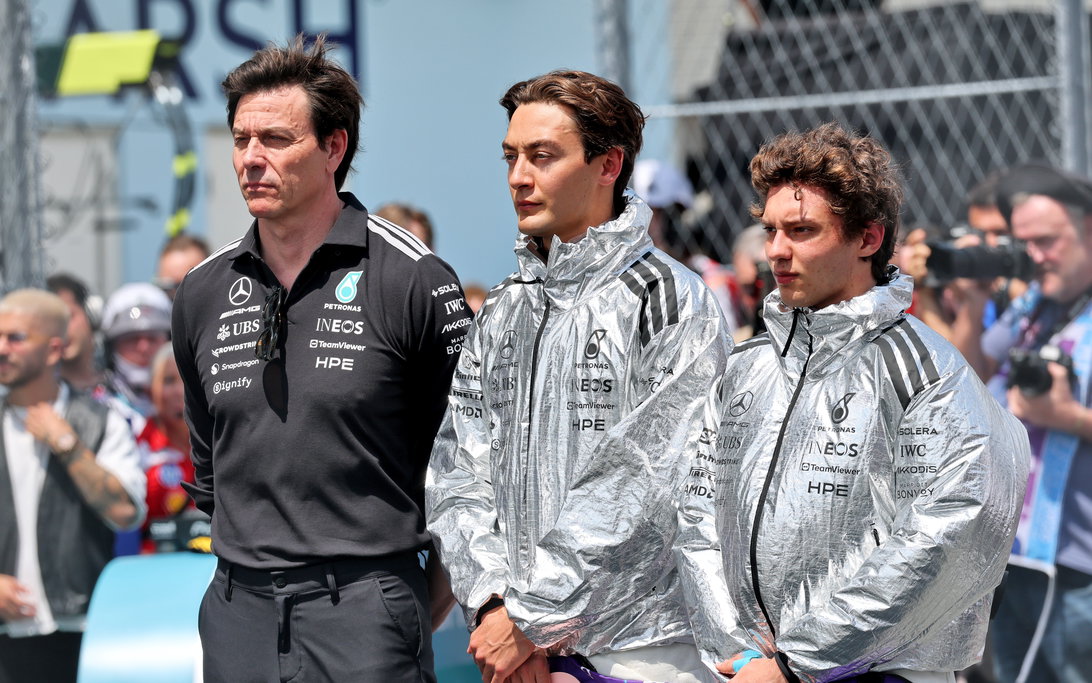
The radio crackle from Kimi Antonelli after that Turn 1 moment was not mere frustration. It was the sound of team morale fracturing under pressure, the kind that has historically decided championships long before any lap time advantage ever mattered. Wolff can call it cinema all he wants, yet history shows these sparks rarely stay contained when two drivers sense the other is being protected.
The On-Track Incident and Its Hidden Costs
Circuit Gilles Villeneuve served up the predictable result when a veteran and a prodigy share the same garage. On lap six of the sprint, Antonelli lunged inside Russell into Turn 1. Minor contact followed and the teenager bounced onto the grass. Later he hit the notorious bump approaching Turns 8 and 9, again running wide, which handed second place to Lando Norris. Antonelli, who currently leads the drivers' championship, vented immediately over the team radio while Mercedes still held the constructors' advantage.
- Antonelli attempted the move while running second behind his teammate.
- The contact cost both cars momentum that Norris exploited without lifting.
- Wolff later admitted the incident robbed Mercedes of a potential one-two finish.
These are not isolated racing moments. They are the direct result of two competitive egos placed in identical machinery with no clear hierarchy. The points lost in a sprint may be small, yet the psychological ledger grows heavier with every such exchange.
Echoes of 1994 and the Real Championship Currency
I have watched enough team briefings to know that official statements about "frameworks" and avoiding "Star Wars" headlines are the modern equivalent of the Benetton fuel-system evasions in 1994. Back then, management conflicts and regulatory maneuvering mattered more than raw pace. The same pattern repeats today. Interpersonal friction and quiet power struggles inside the garage outweigh any aerodynamic upgrade or driver skill differential.
"We don't want headlines like Star Wars," Wolff told Sky Sports F1.
That single sentence reveals the real priority. Mercedes fears the narrative of internal war more than they fear losing the odd sprint position. Morale is the true championship decider, and once drivers begin calculating whether the team favors one over the other, every future strategy call becomes suspect. Antonelli's championship lead gives him leverage; Russell's experience gives him allies in the engineering room. The resulting tension will bleed into setup meetings and tire-allocation debates long before the next race weekend.
The budget-cap era only amplifies this dynamic. Midfield outfits like Alpine and Aston Martin are already positioning themselves to exploit regulatory gray areas that manufacturers cannot match. By 2028 those privateer squads could dominate precisely because they avoid the soap-opera politics that plague factory teams when two stars share a garage.
The Path Forward and the Warning Signs
Wolff's measured tone after the sprint suggests he understands the danger. He prefers these clashes occur in low-stakes sprints rather than grands prix, and he is correct on that narrow point. Yet the deeper issue remains unresolved. Without a decisive internal settlement, similar to the brutal clarity Benetton eventually imposed in the mid-nineties, the friction will migrate into the main races and erode the constructors' lead Mercedes currently enjoys.
Contract negotiations in Formula 1 resemble divorce proceedings more than sporting agreements. Each side keeps score of perceived slights, and the Antonelli-Russell episode has now entered that ledger. The teenager's raw pace is real, but raw pace alone has never won a title when the people writing the strategy sheets no longer trust one another.
Mercedes still leads both championships. The question is how long that lead survives once the drivers start racing the team as much as they race their rivals. Wolff's cinema line may buy time, yet the audience already senses the plot twist coming.
Join the inner circle
Get the deep dives and technical analysis from the world of F1 delivered to your inbox twice a week.
Zero spam. Only high-octane analysis. Unsubscribe anytime.
Continue Reading
View More News