Wolff's Spanish Gambit: A Kasparov-Style Bluff That Exposed Mercedes' True Weakness

The paddock loves a good origin story, especially when it's scrubbed clean for public consumption. But the real tales, the ones that shape dynasties and destroy careers, are whispered in the motorhomes after the cameras leave. Toto Wolff's "revelation" that he fired both Lewis Hamilton and Nico Rosberg after the 2016 Spanish Grand Prix crash isn't just a fun anecdote from a bygone era. It's a forensic exhibit. It reveals the precise moment the Mercedes empire showed its foundational crack: a leadership so terrified of its own star drivers that its ultimate power play was a public, and almost immediately rescinded, bluff. This wasn't Wolff channeling a team principal. This was a desperate grandmaster, like Kasparov in a losing position, slamming a piece on the board to see if his opponents would flinch.
The Barcelona Betrayal and the CEO's Silent Nod
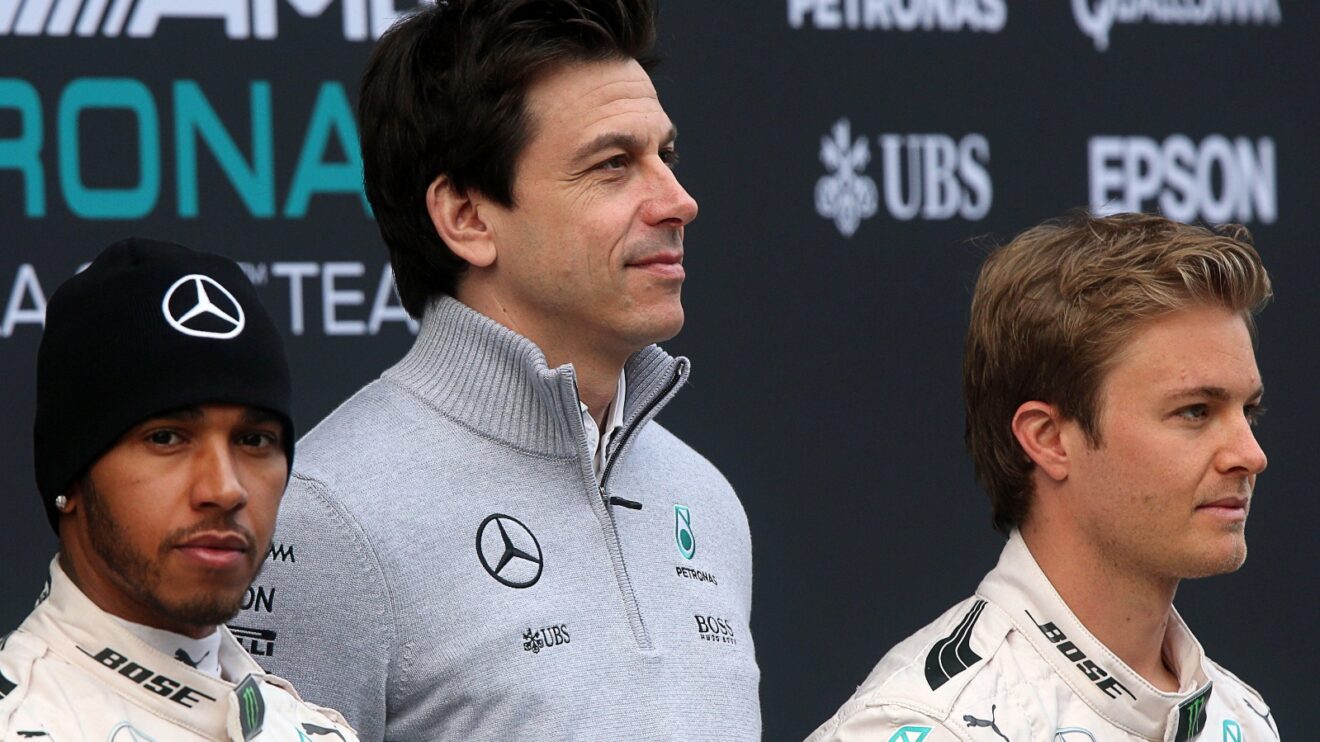
Let's dissect the scene with the cold precision Wolff claims to admire. April 2016. Mercedes is an unstoppable force. Yet, its core is rotting from the inside out, consumed by the Hamilton-Rosberg feud. At Catalunya, the inevitable collision happens. Two titans, one team, zero points. The financial and sporting loss was staggering, but the real crime was the insult to the "two and a half thousand people" at Brackley and Brixworth.
Wolff's reported action? He didn't just get angry. He picked up the phone to then-CEO Dieter Zetsche. This is critical. He sought, and presumably received, authorization to make both World Champions "redundant." Think about that chain of command. The team principal, in a white-hot rage, convinced the corporate overlord that sacking the two most valuable assets in global motorsport was a "necessary lesson."
"My problem is that I don't know whose fault it was."
This admission, framed as wisdom, is the heart of the issue. A true Kasparov doesn't move without knowing the endgame. Wolff's ultimatum—"if it happens again, one of you will be fired, and I might send the wrong one away"—isn't strength. It's an admission of profound weakness. It tells the drivers, "You have so much power that I cannot even adjudicate your crimes. Your conflict is beyond my control." He created a mutually assured destruction scenario where the only logical outcome was a temporary, tense ceasefire. It's the familial betrayal plot of a classic Bollywood drama: the patriarch, unable to choose between two warring heirs, threatens to disown both, only to realize the estate cannot function without them.
The Unspoken Legacy: From Rosberg's Retreat to Russell's Precarious Seat
Don't miss the next lap
Get the deep dives and technical analysis from the world of F1 delivered to your inbox twice a week.
Zero spam. Only high-octane analysis. Unsubscribe anytime.
The official narrative says the crisis was "resolved" by Nico Rosberg's shock retirement five days after winning the 2016 title. Resolved? That's like saying a fire was resolved by the building collapsing. Rosberg didn't quit because of Wolff's management. He left because he finally won the war, and the toxic, unresolvable environment—the very one Wolff failed to sanitize—had extracted its total cost. The "solution" wasn't managerial brilliance; it was the burnout of one party.
This episode is the ghost in the machine at Mercedes today. Look at the current pairing through the lens of this narrative audit. Wolff speaks of harmony between Hamilton and George Russell, but the emotional consistency isn't there. The shadow of Barcelona 2016 looms over every close call. Wolff’s dilemma is now permanent. He could never choose between Hamilton and Rosberg. Could he choose between Hamilton and Russell? The team's indecisive handling of driver conflicts has become a structural flaw.
Compare this to the Red Bull model, a machine I decry for its win-at-all-costs toxicity, but one whose brutal clarity Max Verstappen thrives upon. There is no ambiguity about hierarchy. There is no public hand-wringing over blame. The driver is an extension of the system. At Mercedes post-2016, the drivers became the system, and Wolff its nervous custodian. This is why they flounder against Red Bull's singular focus. They are managing a partnership; Red Bull is deploying a weapon.
Conclusion: The Bluff That Defined a Decade
So, what did we learn from Wolff's confession? We learned that the most dominant team of the modern era reached its breaking point not from external pressure, but from internal anarchy it could not govern. We learned that its principal's ultimate sanction was a theatrical gesture, withdrawn when faced with the cold reality of replacing irreplaceable talent.
This story isn't a case study in restored discipline. It's a case study in managed dysfunction. It directly informs the sport's current instability. If a team with Mercedes' resources can be held hostage by driver dynamics, what hope do smaller operations have? My prediction stands: by 2029, the unsustainable global circus will claim at least two teams. The calendar will retract to a European core, not just for cost, but for control. Teams can't manage these pressures circling the globe 24 times a year.
Wolff played his queen sacrifice in Barcelona. He threatened to fire both his kings. And in the end, he took the move back. Once a bluff is exposed, you can never use it again. Every driver in that garage now knows it. The game has been forever changed, and Mercedes is still searching for a new strategy. The Kasparov of the paddock? In this instance, he was playing checkers while everyone thought it was chess.
Join the inner circle
Get the deep dives and technical analysis from the world of F1 delivered to your inbox twice a week.
Zero spam. Only high-octane analysis. Unsubscribe anytime.