Antonelli's Rise and Wolff's Engine Stance
Kimi Antonelli's Miami GP win extends his championship lead and earns worldwide praise, while Toto Wolff cautiously addresses the FIA's push for a return to V8 engines, emphasizing the need for a measured approach to future regulations.
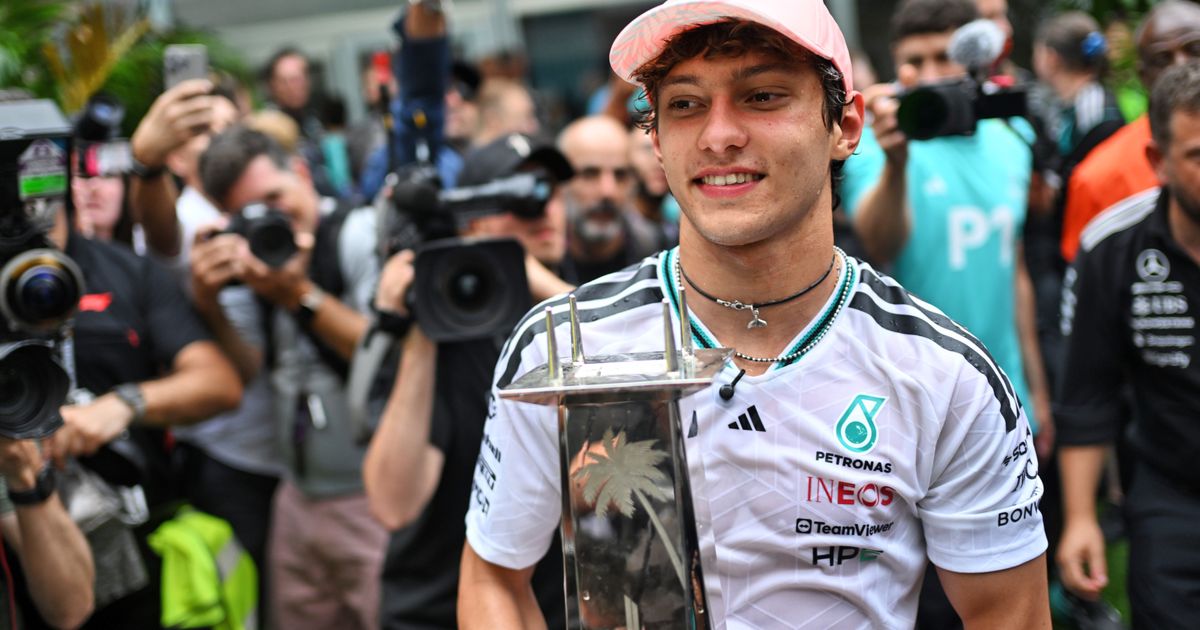
Kimi Antonelli's commanding victory in Miami has solidified his status as the championship leader and drawn global media acclaim, highlighting a dramatic shift in the early-season narrative. Meanwhile, Mercedes Team Principal Toto Wolff has responded to the FIA President's push for a V8 engine return, expressing support for the concept in principle but cautioning against a rushed timeline that could undermine the sport's credibility.
Why it matters:
Antonelli's emergence as a consistent winner in his rookie season is reshaping the driver market and championship dynamics, putting established stars like George Russell under unexpected pressure. Concurrently, the debate over future engine regulations touches on the core identity of Formula 1, balancing fan appeal, technical relevance, and manufacturer investment with billions of dollars and the sport's long-term direction at stake.
The Details:
- Global Acclaim for Antonelli: International media, including Spain's Marca, Italy's La Gazzetta dello Sport, and Germany's Bild, extensively covered the Italian teenager's Miami win.
- Outlets highlighted his growing confidence and suggested his 20-point championship lead could be difficult for rivals to overcome without external setbacks.
- The narrative focused on the contrast between Antonelli's rapid rise and the difficult situation for his more experienced teammate, George Russell.
- Wolff's Cautious Support: Responding to FIA President Mohammed Ben Sulayem's comments advocating a V8 return by 2030, Wolff supported the idea of refining the power unit formula but pushed back on abrupt changes.
- He argued the exciting racing in Miami, with battles throughout the field, proved the current hybrid formula can still deliver a strong spectacle.
- Wolff stressed the importance of giving manufacturers adequate time for development, warning that a poorly executed switch could risk "looking ridiculous" by the target date of 2031.
- He expressed openness to improving the current package, specifically mentioning enhancing straight-line speed through energy deployment modes and extracting more performance from the internal combustion engine.
What's Next:
All eyes will be on whether Antonelli can maintain his stunning form and championship lead as the European leg of the season begins, with increasing scrutiny on Mercedes' intra-team dynamic. The engine regulation debate for the post-2026 era is now formally ignited, setting the stage for complex negotiations between the FIA, Formula 1, and the power unit manufacturers about the sport's technological and philosophical future.
Don't miss the next lap
Get the deep dives and technical analysis from the world of F1 delivered to your inbox twice a week.
Zero spam. Only high-octane analysis. Unsubscribe anytime.
Join the inner circle
Get the deep dives and technical analysis from the world of F1 delivered to your inbox twice a week.
Zero spam. Only high-octane analysis. Unsubscribe anytime.