Seven Sets of Data and One Broken Rhythm: Verstappen's Nürburgring Numbers Reveal the Sport's Quiet Drift Toward Sterility

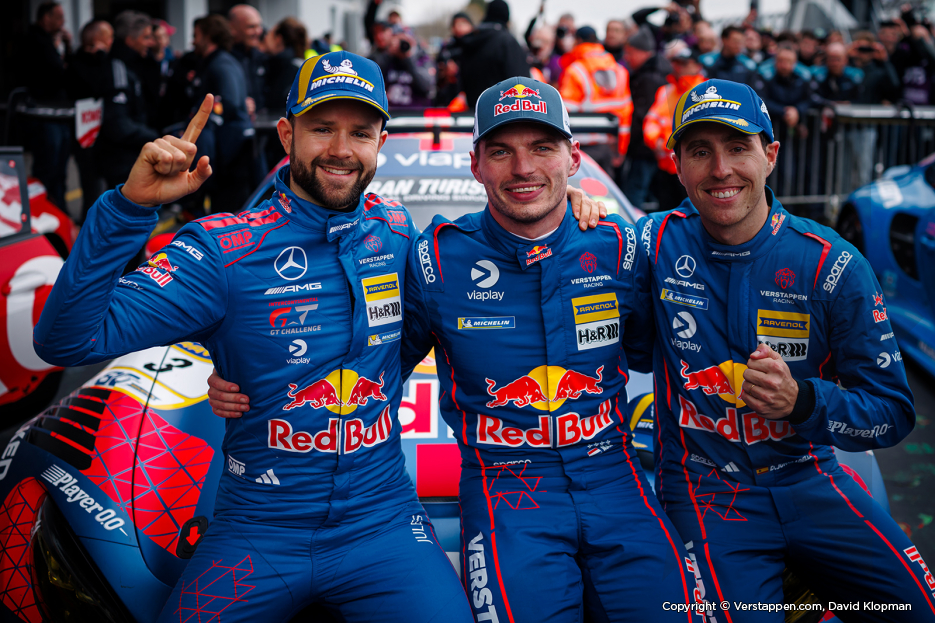
The timing sheets do not lie, yet they rarely tell the full story until you press them for pulse. When the raw telemetry from Max Verstappen's No. 3 Mercedes-AMG GT3 flashed across the Nürburgring screens after his dominant NLS2 run, the numbers sang of near-flawless control. Pole. A near-minute margin. Then the post-race audit arrived like an unexpected drop-off on lap 47, exposing seven tyre sets instead of the mandated six. An automatic disqualification followed, handing the win to the Rowe Racing BMW of Dan Harper and Jordan Pepper. The data had spoken, but it also whispered about something larger.
The Heartbeat in the Lap Charts
Verstappen shared the car with Jules Gounon and Daniel Juncadella, carving through the Nordschleife with the kind of rhythm that echoes Michael Schumacher's 2004 Ferrari campaigns. That season Schumacher posted consistency metrics so tight they still serve as the benchmark for driver feel over telemetry overload. Here the same principle applied at first glance. The team logged sector times that held steady under endurance pressure, proving Verstappen's adaptability outside Formula 1 demands more than raw speed. It requires reading the track's emotional temperature without waiting for the next data packet.
Yet the infringement cut deeper than a simple count. Seven sets instead of six represents one extra cycle of rubber degradation data that should never have entered the system. Winward Team Principal Christian Hohenadel owned the internal error, apologizing to fans and flagging a procedural review ahead of the 24-hour race. The original result stood on track performance alone until the regulations enforced their cold arithmetic.
- Tyre allocation breach: exactly one set over the strict NLS limit for the event.
- Margin of victory before DQ: nearly 60 seconds.
- New classification: Harper and Pepper elevated to first, Tim Heinemann and Sven Müller to second in the Falken Porsche.
When Algorithms Override the Driver's Pulse
This episode mirrors the hyper-focus on data analytics already reshaping Formula 1. Within five years the sport risks becoming a series of algorithmic pit calls and pre-scripted stint lengths, where driver intuition gets suppressed in favor of sterile predictions. Verstappen's raw pace here validated his ability to adapt, much like Charles Leclerc's qualifying consistency from 2022 to 2023 often gets buried beneath Ferrari strategy noise. The Nürburgring DQ serves as emotional archaeology, unearthing how one overlooked data point can erase hours of human effort. Schumacher never needed real-time telemetry to feel when the car was alive. Modern teams chase that same edge through dashboards, yet they still trip over basic tyre tallies.
"An internal error," Hohenadel called it, while vowing tighter processes before the marquee endurance classic.
The disqualification nullifies the official record, yet the underlying telemetry remains instructive. It confirms the Winward Mercedes-AMG combination carries genuine threat for longer events. The lesson lands hardest on procedure, not pace. Endurance racing punishes any deviation from the numbers, even when those numbers arrive from a driver who thrives on feel rather than constant instruction.
The Road Ahead Through the Data Fog
Verstappen voiced genuine enjoyment of the Nordschleife challenge before the ruling, noting the car felt comfortable and the preparation solid. That human layer sits beneath every timing sheet. As Formula 1 barrels toward robotized decision-making, moments like this disqualification act as warnings. They remind us that no amount of sensors replaces the discipline of counting sets by hand when the pressure builds. The performance stands as proof of potential. The error stands as proof that even world champions operate inside systems that can override their rhythm with a single unchecked variable. The next 24-hour battle will test whether the team learned to let the data serve the driver instead of the other way around.
Join the inner circle
Get the deep dives and technical analysis from the world of F1 delivered to your inbox twice a week.
Zero spam. Only high-octane analysis. Unsubscribe anytime.