Audi pushes back against F1's V8 return plan, insists on turbo efficiency
Audi CEO Gernot Dollner tells F1 that turbo engines are essential for efficiency, opposing FIA president Ben Sulayem's push for normally aspirated V8s from 2031, but stresses the issue is not a deal-breaker.
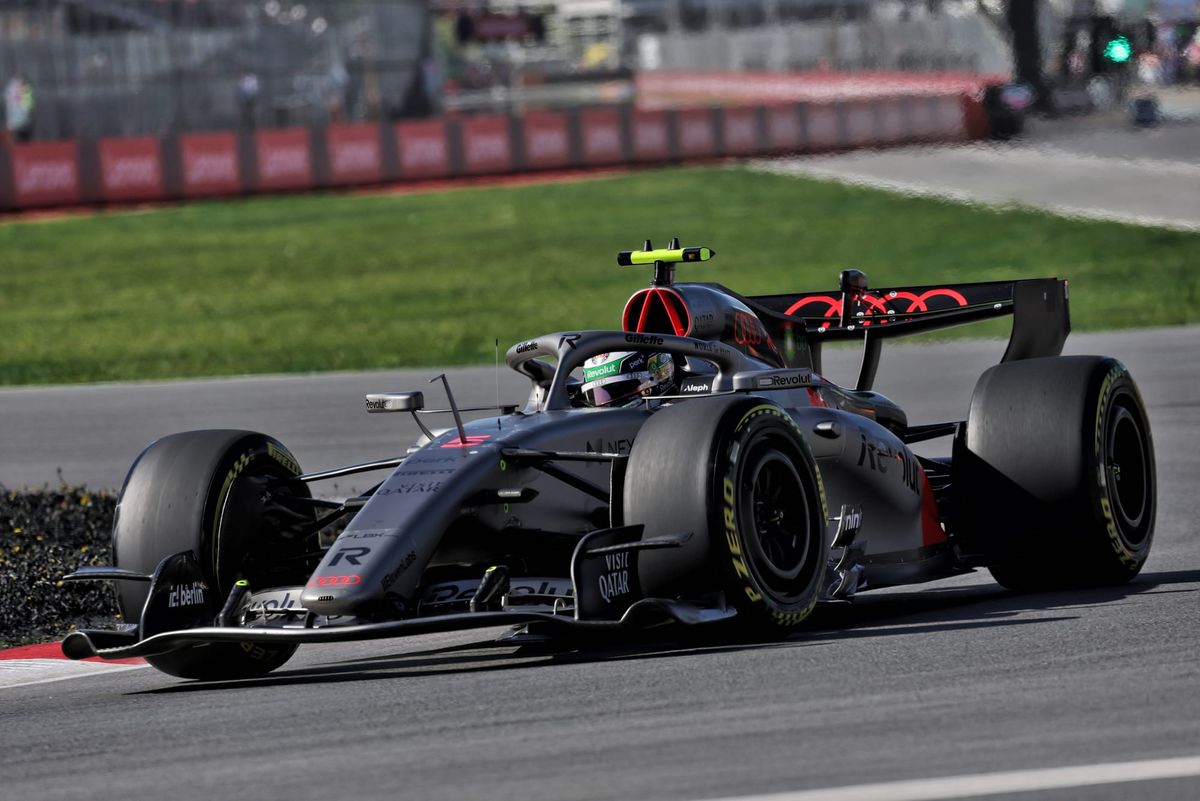
Audi has made clear it wants turbo engines to remain in Formula 1, pushing back against FIA president Mohammed Ben Sulayem's proposal to switch to normally aspirated V8s from 2031 at the latest.
Speaking at the launch of Audi's new Nuvolari V8-turbo hybrid supercar, CEO Gernot Dollner emphasized that energy efficiency is the company's top priority — an area where turbos outperform naturally aspirated engines.
Why it matters:
With F1's next engine ruleset under discussion for 2031, the direction taken will shape the sport's manufacturer landscape. Audi, which just entered F1 as a full works team, has invested heavily in a turbo hybrid powertrain. A shift to NA V8s could undermine that investment and potentially deter other manufacturers.
The details:
- Dollner said having "energy efficiency in the focus" is more important than the number of cylinders, making turbo a clear preference for Audi.
- He confirmed Audi has no problem with V8 engines per se — the Nuvolari uses a 4.0-litre V8 bi-turbo hybrid producing 1000hp — but wants the configuration to remain turbocharged.
- Ben Sulayem argues NA V8s are lighter, simpler, cheaper and bring back the signature F1 sound, but Audi sees efficiency as paramount.
- Not a deal-breaker: Dollner said the V8-versus-turbo debate is not currently a trigger for Audi to leave F1. He trusts discussions with the FIA will lead to a workable solution.
- Stability preferred for 2027: Audi opposes changing the current power unit rules — specifically moving from a 50/50 to a 60/40 ICE/electric split — for 2027. Dollner wants cost-efficiency and stability, especially as Audi's development curve is steeper after a late start.
- Mercedes and Red Bull support the 2027 change; Ferrari, Cadillac and Audi have reservations.
Between the lines:
Dollner's comments signal that Audi is willing to compromise on cylinder count but not on turbocharging. The company's focus on efficiency aligns with its road car strategy, and the Nuvolari — an 80/20 combustion/hybrid split — shows Audi's philosophy differs from F1's current 50/50 direction.
What's next:
The FIA needs four manufacturers to approve any 2027 rule change. Talks are set to continue this weekend at Monaco, with senior carmaker representatives involved. Dollner expects a "good solution" for 2027 that avoids all-new combustion engines, while the 2031 debate remains open. Audi's stance will be a key factor in shaping F1's next power unit era.
Don't miss the next lap
Get the deep dives and technical analysis from the world of F1 delivered to your inbox twice a week.
Zero spam. Only high-octane analysis. Unsubscribe anytime.
Join the inner circle
Get the deep dives and technical analysis from the world of F1 delivered to your inbox twice a week.
Zero spam. Only high-octane analysis. Unsubscribe anytime.
Continue Reading
View More News