Bearman calls for removal of 'counterintuitive' lift-and-coast in 2026 F1 rules
Haas F1 driver Ollie Bearman urges rule-makers to eliminate mandatory 'lift-and-coast' from the 2026 regulations, labeling it a counterintuitive practice that ruins qualifying. He suggests enabling full energy harvesting under throttle could solve the issue, which was highlighted by a crash caused by large speed differences between cars.
Haas driver Ollie Bearman has pinpointed the elimination of mandatory 'lift-and-coast' as his top priority for tweaking Formula 1's new 2026 power unit regulations, calling the current requirement "super strange" and detrimental to flat-out qualifying runs. His comments come after an early-season crash highlighted potential safety risks created by the new cars' significant speed differentials on track.
Why it matters:
The 2026 regulations, designed with a near 50/50 split between internal combustion and electric power, have introduced complex energy management challenges that directly impact on-track action and driver safety. Bearman's advocacy for change reflects a broader driver concern that the sport's core spectacle—particularly the purity of a single qualifying lap—is being compromised by technical mandates that feel unnatural to competitors.
The details:
- Bearman's main critique focuses on the current inability to harvest the maximum allowed energy under full throttle, forcing drivers to lift off the accelerator before braking zones even during qualifying.
- He argues that if the systems could harvest at the full -350 kW potential (instead of the current -250 kW limit) under acceleration, the need for lift-and-coast could be eliminated.
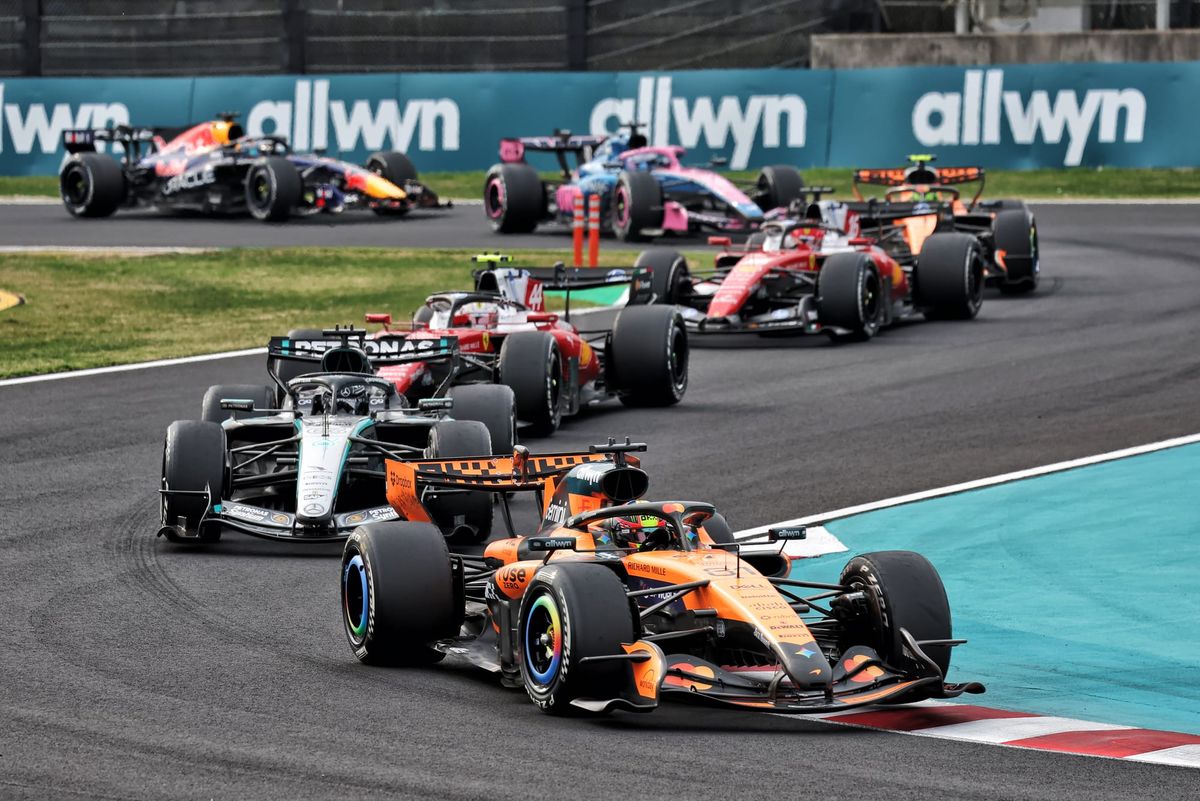
- Safety Incident: The practical danger was demonstrated at the Japanese Grand Prix, where Bearman crashed after encountering a much slower Alpine car that was harvesting energy on a straight. The drastic speed difference forced him to take evasive action, leading to a loss of control.
- Driver Sentiment: Bearman stated that removing this requirement is something "everyone's in agreement" on, emphasizing the universal desire for qualifying to be a true flat-out challenge without artificial constraints.
What's next:
The FIA and F1 have already opened discussions about potential regulation tweaks following feedback from teams and drivers after the first three rounds. Bearman's high-profile comments add significant weight to the argument for technical adjustments, particularly around energy harvesting capabilities. While major overhauls are unlikely, targeted changes to improve drivability and safety before the 2026 season fully beds in could be on the table, with the goal of preserving the sport's competitive essence while managing its new technological frontier.
Don't miss the next lap
Get the deep dives and technical analysis from the world of F1 delivered to your inbox twice a week.
Zero spam. Only high-octane analysis. Unsubscribe anytime.
Join the inner circle
Get the deep dives and technical analysis from the world of F1 delivered to your inbox twice a week.
Zero spam. Only high-octane analysis. Unsubscribe anytime.
Continue Reading
View More News