Bearman crash highlights F1's mental 'overload' problem
Oliver Bearman's high-speed crash at Suzuka, attributed to a misjudgment while managing car systems, has spotlighted the extreme mental 'overload' facing F1 drivers. Experts warn the constant need to adjust complex settings is creating dangerous distractions, turning minor lapses into major incidents and prompting calls for regulatory simplification.
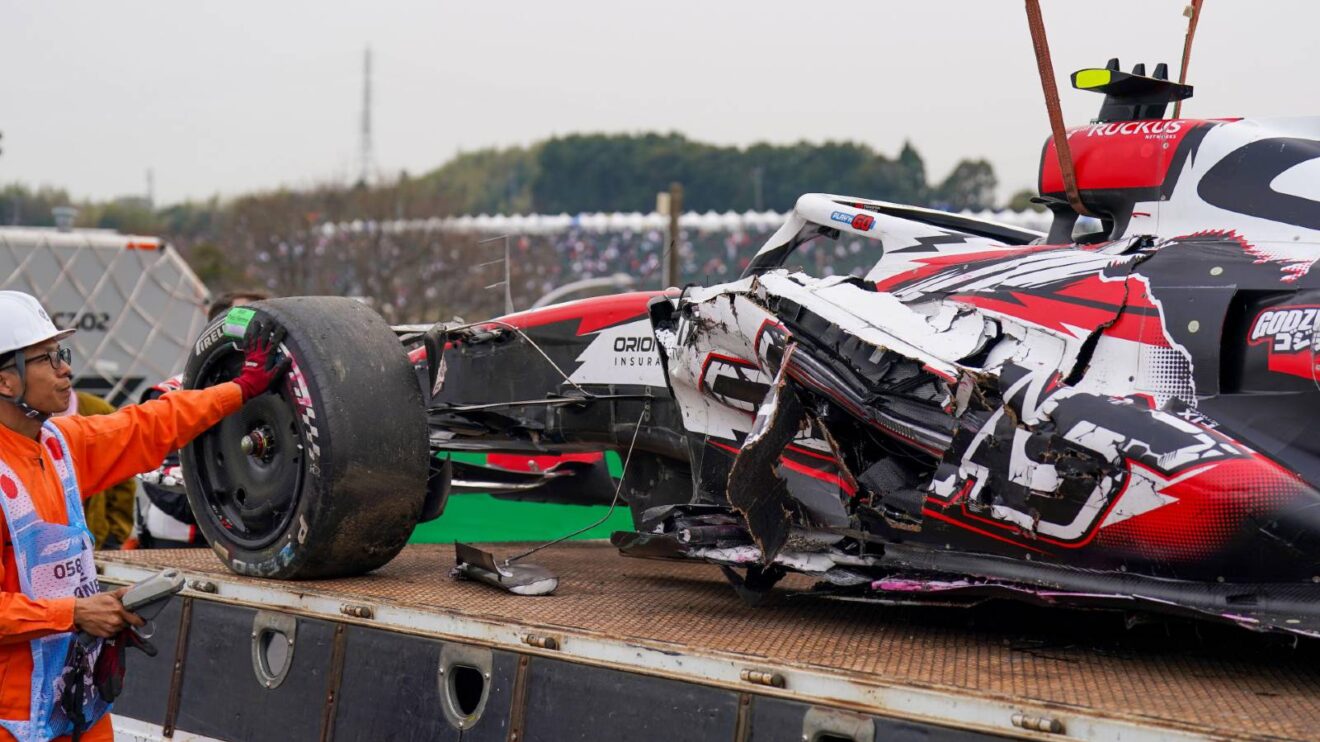
Oliver Bearman's heavy crash at the Japanese Grand Prix, caused by a misjudgment of closing speed, has ignited a fierce debate about the extreme mental demands placed on modern Formula 1 drivers. Experts and drivers alike warn that the constant need to manage complex car systems creates a dangerous cognitive 'overload,' turning minor lapses into major incidents.
Why it matters:
The crash serves as a stark warning that driver error is increasingly linked to the overwhelming number of tasks required in the cockpit, not just raw skill. As cars become more complex, the fundamental act of racing and judging basic elements like closing speeds is being compromised, raising urgent safety and sporting questions about the current regulatory direction.
The details:
- Bearman's incident occurred when he closed on Franco Colapinto at over 50 kph faster, forcing him onto the grass at Spoon Curve. The resulting 50G impact into the barrier was a direct result of a split-second misjudgment.
- F1TV pundits highlighted the visible mental exhaustion in drivers post-race. Alex Brundle noted drivers appear "drained," while 1996 Champion Damon Hill described the cockpit workload as "overload," comparing it to "patting your head and rubbing your tummy at the same time and then juggling."
- Drivers are vocal about the challenge. Lando Norris stated he must look at his steering wheel "every three seconds" to manage energy deployment and braking points, distracting from the track ahead.
- Liam Lawson confirmed the intensity, calling the Suzuka race mentally draining due to the constant in-race calculations and adjustments required.
What's next:
The incident has amplified calls from drivers like Carlos Sainz for the FIA to urgently review and simplify regulations. The focus is shifting toward whether the sport's pursuit of technical complexity is undermining the core racing product and driver safety. Expect this 'mental load' debate to become a central topic in discussions about the 2027-2028 technical regulations, with drivers pushing hard for a reduction in cockpit distractions.
Don't miss the next lap
Get the deep dives and technical analysis from the world of F1 delivered to your inbox twice a week.
Zero spam. Only high-octane analysis. Unsubscribe anytime.
Join the inner circle
Get the deep dives and technical analysis from the world of F1 delivered to your inbox twice a week.
Zero spam. Only high-octane analysis. Unsubscribe anytime.