F1's 'Rain Hazard' rule activated for first time in Miami
F1's new 'Rain Hazard' rule was used for the first time in Miami, allowing teams to tweak aerodynamics and ride height if heavy rain is forecast. Created for the 2026 cars, the rule aims to prevent teams from being disqualified for excessive plank wear caused by running in the wet with a dry setup. Its effectiveness will be reviewed after the first nine races.
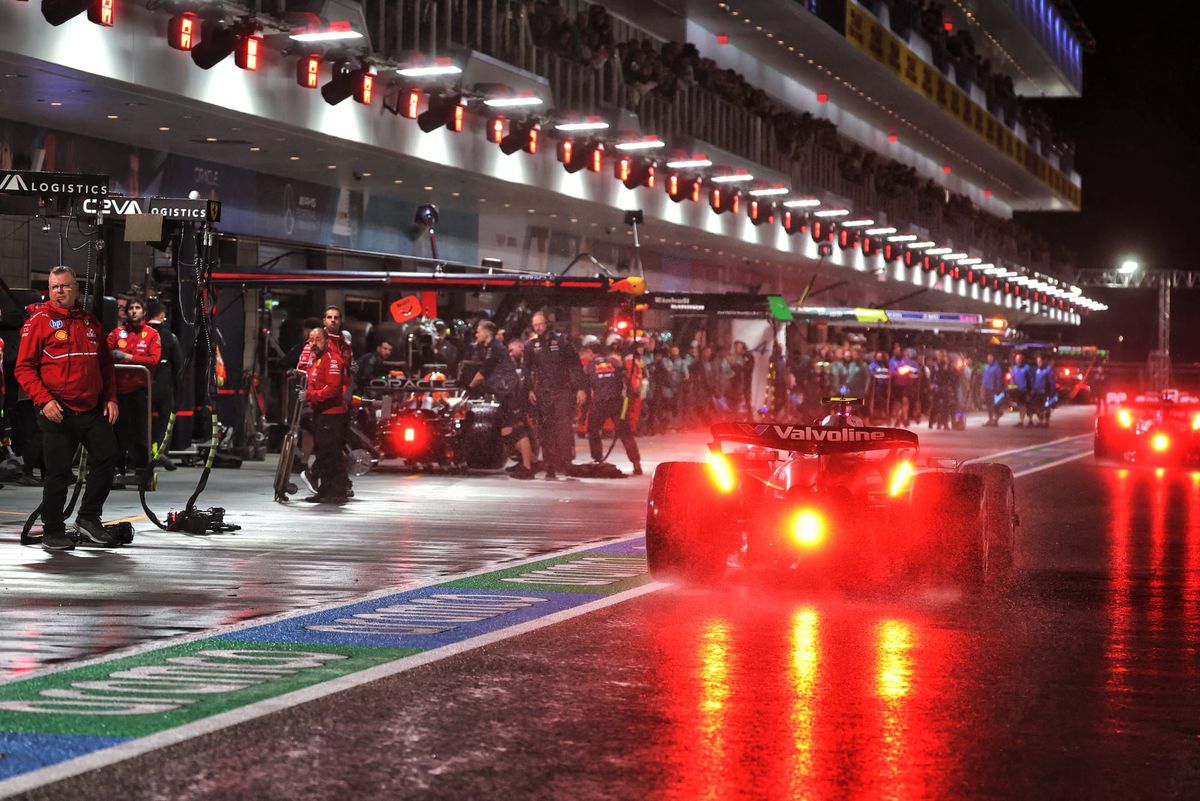
Formula 1's new 'Rain Hazard' rule was officially declared for the first time at the Miami Grand Prix, allowing teams to make specific setup changes to protect their cars from potential damage in wet conditions. The rule, triggered when the official weather forecast predicts a greater than 40% chance of rain during the race, is a direct response to a unique technical challenge posed by the 2026 cars' active aerodynamics. It permits adjustments to front wing settings and ride height to prevent excessive wear on the car's mandatory plank, a critical component for legality checks.
Why it matters:
This rule represents a significant, pre-emptive step by the FIA to address a specific and potentially costly flaw in the new 2026 technical regulations before it becomes a race-defining controversy. It provides teams with a crucial safety valve against being unfairly penalized for plank wear caused by running in wet weather with a dry setup, balancing the strict parc ferme rules with practical necessity. For fans, it's a behind-the-scenes look at the constant regulatory evolution required to manage the complex interplay between cutting-edge technology and unpredictable real-world conditions.
The details:
- The 'Rain Hazard' is declared by the Race Director based on the official forecast or at their discretion, and must be announced no later than two hours before qualifying.
- Its primary purpose is to mitigate a specific risk with the 2026 cars: when running in wet weather, the 'straight mode' active aero is deactivated for safety, keeping the front wing in high-downforce 'corner mode'.
- This high downforce pushes the car lower to the ground at high speed, risking excessive scraping and wear on the titanium 'plank' under the chassis.
- Excessive plank wear leads to automatic disqualification, a penalty teams could incur through no strategic fault of their own if rain arrives unexpectedly.
- The rule allows two key changes if a Rain Hazard is declared:
- Teams can alter the active front aerodynamics settings for their two states (corner and straight modes).
- Teams are permitted to adjust the car's ride height.
- These changes are designed to reduce downforce and increase ground clearance specifically to protect the plank, but do not constitute a full release from parc ferme restrictions for general setup changes.
What's next:
The implementation of the Rain Hazard rule is currently under a trial evaluation phase. The FIA will assess its effectiveness and application over the first nine races of the 2026 season.
- Following the Austrian Grand Prix in late June, the governing body will decide whether to keep the rule as is, modify it, or potentially replace it with a simpler alternative.
- One considered alternative is a system allowing teams to pre-program a specific 'wet' setup distinct from their 'dry' setup, between which they could switch based on the declared weather state. The success or failure of the Rain Hazard protocol in early races will directly inform this decision, shaping how F1 manages this new technical dilemma for the remainder of the season and beyond.
Don't miss the next lap
Get the deep dives and technical analysis from the world of F1 delivered to your inbox twice a week.
Zero spam. Only high-octane analysis. Unsubscribe anytime.
Join the inner circle
Get the deep dives and technical analysis from the world of F1 delivered to your inbox twice a week.
Zero spam. Only high-octane analysis. Unsubscribe anytime.
Continue Reading
View More News