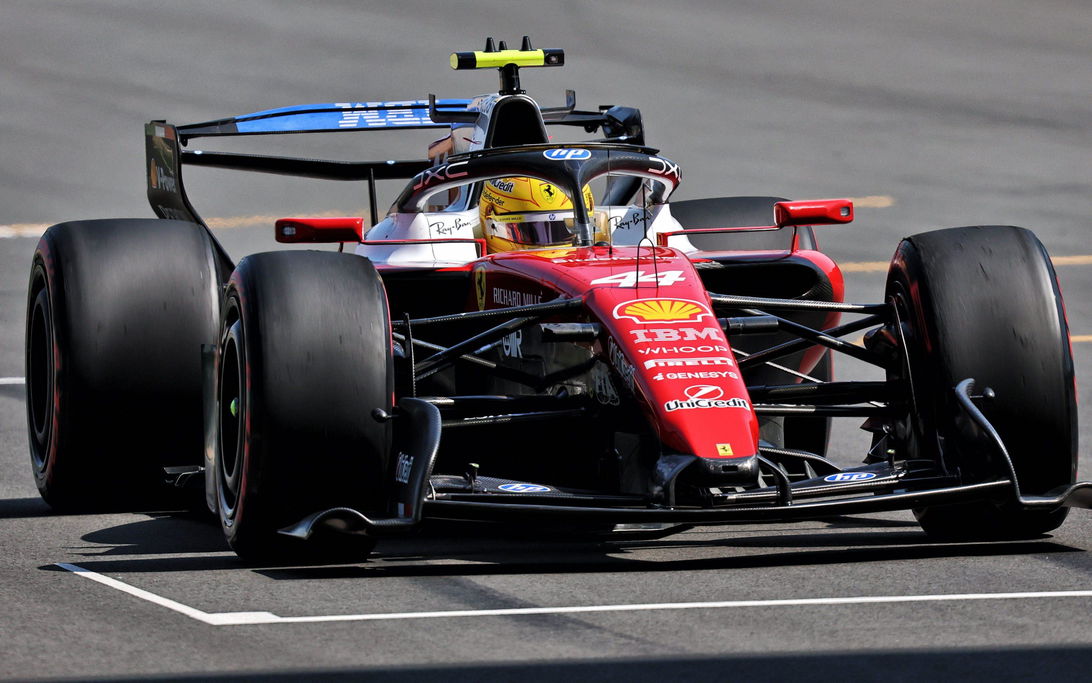
Ferrari explains cautious approach to 'Macarena' rear wing
Ferrari is taking a measured approach to its radical 'Macarena' rear wing, opting for more testing over an immediate race debut. Team boss Fred Vasseur confirmed the rotating wing needs more mileage and reliability checks, with further running planned for the Japanese GP weekend before a full introduction is considered.
Ferrari is continuing to test its innovative 'Macarena' rear wing but will not rush its full-time introduction, with Team Principal Fred Vasseur stating the team needs more data and reliability checks. The wing, which rotates 270 degrees to reduce drag on straights, was run briefly in China but removed for the rest of the weekend, highlighting a methodical development process.
Why it matters:
In the tightly packed F1 field, marginal aerodynamic gains are critical. A functional drag-reduction system (DRS) alternative could provide a significant straight-line speed advantage. Ferrari's cautious, data-driven approach reflects the high stakes of introducing complex mechanical parts that must be bulletproof over a race distance to avoid costly failures.
The details:
- The 'Macarena' wing is designed to rotate open and closed, creating lift to induce a stronger diffuser stall on straights, thereby reducing drag dramatically.
- It debuted briefly in Bahrain testing but was shelved after just five laps and not used in Australia.
- In China, it reappeared on both Charles Leclerc's and Carlos Sainz's cars during the sole practice session but was removed before Sprint Qualifying.
- Vasseur cited insufficient mileage and the need for reliability validation as the primary reasons for not committing to it for a full race weekend.
- With no in-season testing, teams must use Friday practice sessions to gather real-world data on new components, which comes at the cost of valuable setup time.
What's next:
Ferrari plans to give the rear wing more track time during Free Practice 1 at the upcoming Japanese Grand Prix. The team's goal is to accumulate enough mileage to be confident in its reliability before committing to its use for an entire event. This step-by-step process underscores that while the concept shows promise, its race readiness is still under evaluation.
Don't miss the next lap
Get the deep dives and technical analysis from the world of F1 delivered to your inbox twice a week.
Zero spam. Only high-octane analysis. Unsubscribe anytime.
Join the inner circle
Get the deep dives and technical analysis from the world of F1 delivered to your inbox twice a week.
Zero spam. Only high-octane analysis. Unsubscribe anytime.
Continue Reading
View More News