Ferrari's development machine keeps rolling despite F1's unexpected break
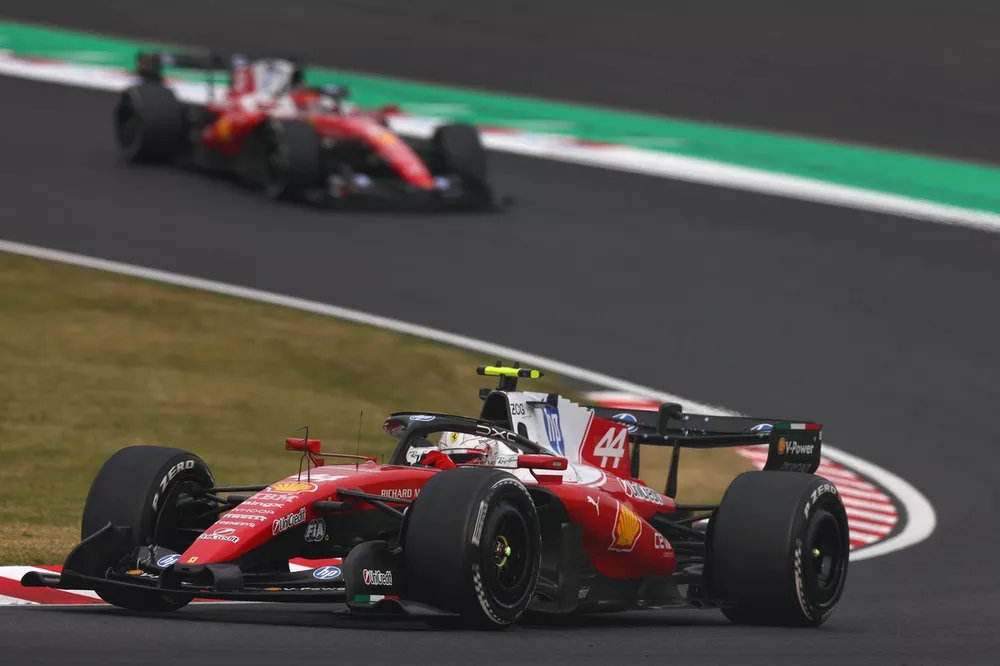
Ferrari chassis technical director Loic Serra reveals the team's development machine was unfazed by F1's five-week break. In an exclusive interview, he details a strict, long-term planning philosophy that avoids reactive, race-by-race updates, emphasizing that missing two Grands Prix only temporarily pauses data correlation without altering the core upgrade strategy for the SF-26.
While Formula 1 fans endured a five-week hiatus after the cancellation of the Bahrain and Saudi Arabian Grands Prix, Ferrari's technical department never stopped. In an exclusive interview, chassis technical director Loic Serra explains why the Scuderia's long-term development plan remains unaffected by the missing race weekends, emphasizing a disciplined, non-reactive approach to car evolution.
Why it matters:
In a sport where every lap of data is precious, missing two full race weekends represents a significant loss of real-world learning. Ferrari's stance—that it sticks rigidly to a pre-ordained development timeline—highlights a fundamental philosophy in modern F1: long-term, systematic planning trumps short-term reactivity. This approach is crucial for a team balancing the immediate fight for this year's championship with the foundational work for 2026's major regulatory change.
The details:
- Plan Over Panic: Serra stated the team's development plan for the SF-26 was set long ago and missing races does not compromise it. "We stick to your development plan. So, you're not really affected by the fact that we are missing a race or two," he said.
- The Cost of Incremental Updates: Questioned on rivals bringing smaller packages to each race, Serra questioned the logic, pointing to the significant cost implications. He suggested Ferrari's approach is based on more substantial upgrade steps rather than constant, minor iterations.
- A Frozen Correlation, Not a Broken One: The lack of track running temporarily halts the process of correlating simulator data with real-world performance. "It sort of freezes your correlation for some time... but it only freezes," Serra explained, noting it doesn't stop development based on existing knowledge.
- No Aggressive Pivot: The break has not prompted Ferrari to choose more experimental or aggressive updates. "There is no real notion of more aggressive, more experimental... It doesn't really change your approach," Serra confirmed, underscoring commitment to the original plan.
- Guarding the Long Game: A key insight was Serra's emphasis on segregating short-term (race-by-race) and medium/long-term (next year's car) development teams. This prevents the constant urgency of the current season from consuming resources vital for future projects.
- The Missing Puzzle Piece: Serra acknowledged the specific data loss from not racing in Jeddah, a unique circuit layout, is a tangible setback. However, he views it as one missing piece in a larger puzzle that will be filled in by future races.
What's next:
Ferrari's first major upgrade package of the season is anticipated for the Miami Grand Prix, the embodiment of their pre-planned development cycle. The team's ability to execute this plan without deviation, despite the unusual calendar break, will be its first real test. All eyes will be on whether this disciplined, long-view methodology yields the on-track performance needed to close the gap to the front and sustain a championship challenge, while also laying the groundwork for the 2026 regulations.
Don't miss the next lap
Get the deep dives and technical analysis from the world of F1 delivered to your inbox twice a week.
Zero spam. Only high-octane analysis. Unsubscribe anytime.
Join the inner circle
Get the deep dives and technical analysis from the world of F1 delivered to your inbox twice a week.
Zero spam. Only high-octane analysis. Unsubscribe anytime.