FIA Investigates Pitlane Speeding Anomalies at Monaco Grand Prix
Multiple drivers, including Lewis Hamilton, were penalized for speeding in the Monaco pitlane by less than 1 km/h, sparking a debate over timing lines and entry trajectories.
The Monaco Grand Prix concluded with a series of controversial pitlane speeding penalties, where the margin of infringement was remarkably slim. FIA documents reveal that for several drivers, the recorded excess speed was less than one kilometer per hour, with Oscar Piastri, George Russell, Franco Colapinto, and Pierre Gasly all clocking in at just 0.1 km/h over the limit.
Why it matters:
These marginal penalties have significant implications for race results and driver strategy. When a five-second penalty is triggered by a fraction of a kilometer per hour, it raises questions about the precision of timing equipment versus the physical reality of driver behavior. In a tight street circuit like Monaco, where track position is everything, such penalties can be the difference between a podium finish and a mid-pack result.
The Details:
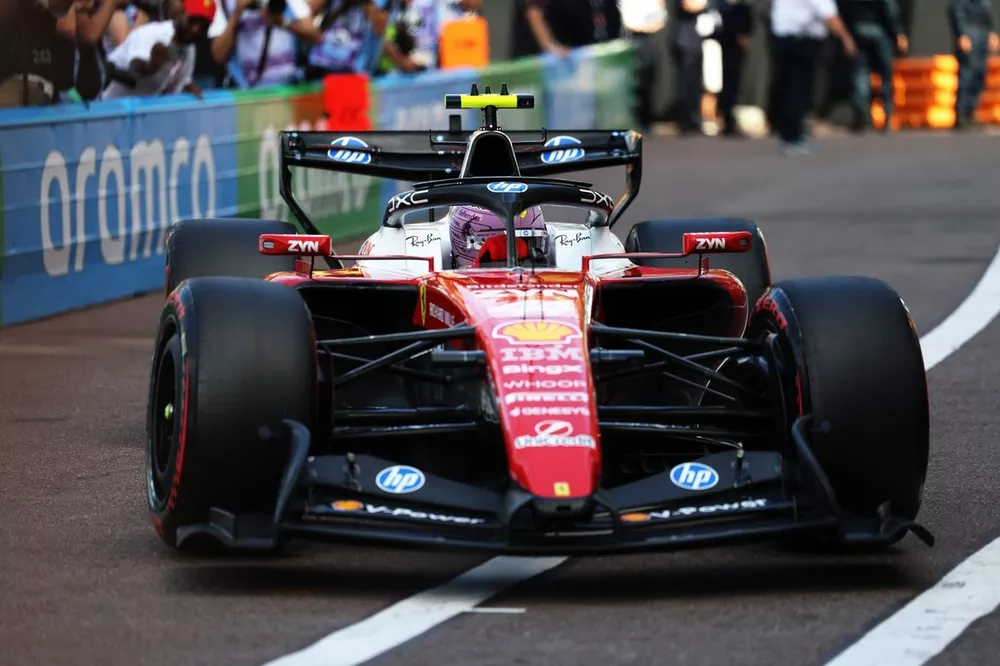
- The 'Short-Cut' Theory: The FIA believes the penalties were caused by drivers cutting the corner at the pit entry. By taking a tighter line on the right-hand side, drivers effectively shorten the distance between timing loops.
- Measurement Mechanics: The timing system calculates average speed using electronic loops embedded in the track. Because the distance was slightly reduced by the drivers' chosen line, the average speed appeared higher, even if the car's physical speed remained constant.
- Driver Reactions: Lewis Hamilton, who finished second despite a penalty, expressed shock, noting that he had used the same line for years. He emphasized that his pitlane limiter was engaged immediately.
- Team Responses:
- McLaren's Andrea Stella acknowledged that "shortcutting too much" likely induced the measurement error.
- Alpine has officially requested a right of review after Pierre Gasly claimed he was "robbed" of a podium finish due to the penalty.
- The Warning: The FIA maintains that race control warned teams before the event to take a wider entry line to avoid this specific technical pitfall.
What's next:
With Alpine pursuing a right of review, the FIA may be forced to reconsider how pitlane speed is measured at circuits with complex entries. While the governing body found no abnormalities in the equipment, the fact that multiple drivers—mostly those using Mercedes power units, though unrelated to the engine itself—fell victim to the same 0.1 km/h error suggests a need for better synchronization between the physical track markers and the electronic timing loops to prevent future disputes.
Don't miss the next lap
Get the deep dives and technical analysis from the world of F1 delivered to your inbox twice a week.
Zero spam. Only high-octane analysis. Unsubscribe anytime.
Join the inner circle
Get the deep dives and technical analysis from the world of F1 delivered to your inbox twice a week.
Zero spam. Only high-octane analysis. Unsubscribe anytime.
Continue Reading
View More News