FIA President Confirms V8 Engine Return to F1 by 2031
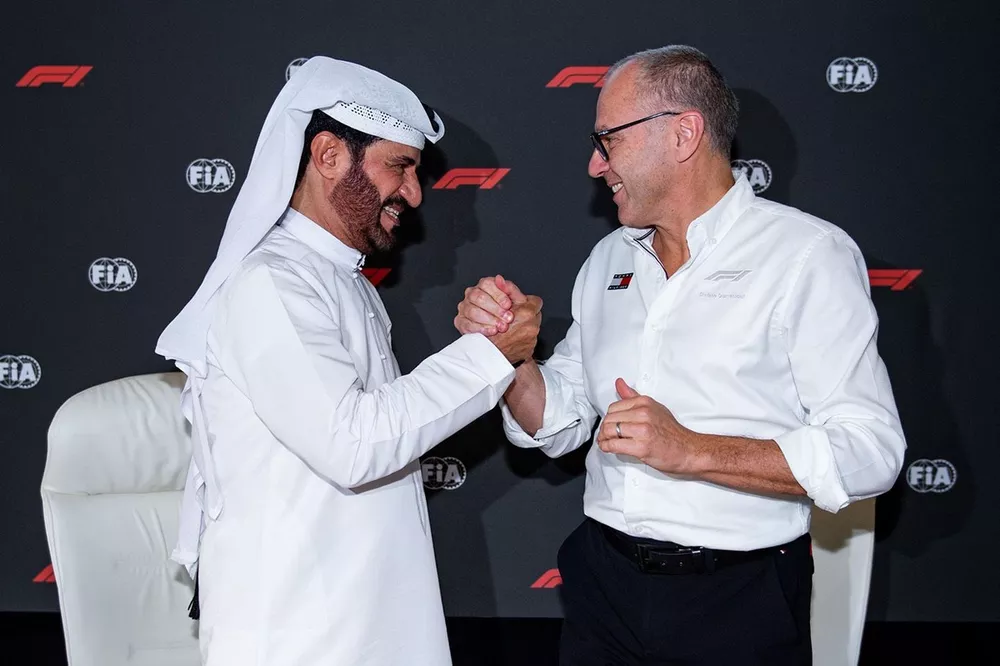
FIA President Mohammed Ben Sulayem has pledged to bring V8 engines back to Formula 1 by 2031, with a target of 2030 if manufacturers agree. The move aims to restore iconic engine sound and reduce complexity, marking a strategic shift away from the current hybrid-focused regulations that have prioritized road-relevance over spectacle.
FIA President Mohammed Ben Sulayem has declared that V8 engines will return to Formula 1 by 2031 at the latest, potentially as soon as 2030, ending a 17-year hiatus since they were replaced by V6 turbo-hybrid units. The move aims to bring back a louder, simpler, and more powerful engine formula with minimal electrification, marking a significant philosophical shift away from the complex and contentious 2026 power unit regulations that have prioritized battery management.
Why it matters:
This represents a fundamental pivot in F1's technical roadmap, signaling a move back towards traditional combustion power and iconic engine sound after a decade dominated by complex, efficiency-focused hybrid technology. The push for V8s underscores a growing consensus that the sport's current direction, heavily influenced by automotive industry trends, has compromised the racing spectacle. A successful return could redefine F1's identity for a new generation of fans.
The Details:
- Ben Sulayem stated the FIA has the regulatory power to mandate V8s for the 2031 season without a vote from power unit manufacturers (PUs).
- To introduce them a year earlier in 2030, approval from four of the six current PU manufacturers (Mercedes, Ferrari, Honda, GM/Audi, and Red Bull Ford) is required.
- The President cited the appeal of "the sound, less complexity, [and] lightweight" design as key reasons for choosing V8s over other configurations like V10s.
- This initiative follows admitted problems with the 2026 regulations, which feature a near 50/50 split between combustion and electric power, leading to early-season tweaks to improve racing and safety.
- Talks are already underway for the 2027 rules, with a move to a 60/40 combustion-electric split being considered as an interim step.
The Big Picture:
The drive to reintroduce V8 engines is deeply connected to broader criticisms of how F1's technical rules are formulated. The 2022-frozen 2026 regulations were heavily shaped by manufacturer desires to align with a then-prevailing automotive industry focus on electrification, a strategy aimed at attracting new entrants like Audi. With that industry trend now cooling, F1 and the FIA have both recently asserted that the sport must no longer be "hostage" to car company road-relevance projects, prioritizing the on-track product instead. The V8 plan is the clearest manifestation of this new philosophy.
What's Next:
The immediate focus will be on securing manufacturer buy-in for a 2030 introduction. While Ben Sulayem claims manufacturers are now receptive, their formal vote remains the hurdle for accelerating the timeline. Regardless of that vote, the 2031 reintroduction appears to be a regulatory certainty. This long-term commitment to V8s will now shape all intermediate technical discussions, including the 2027 power unit rules, as the sport navigates a transition back to a simpler, more vocal engine formula.
Don't miss the next lap
Get the deep dives and technical analysis from the world of F1 delivered to your inbox twice a week.
Zero spam. Only high-octane analysis. Unsubscribe anytime.
Join the inner circle
Get the deep dives and technical analysis from the world of F1 delivered to your inbox twice a week.
Zero spam. Only high-octane analysis. Unsubscribe anytime.
Continue Reading
View More News