FIA President confirms V8 engines will return to Formula 1
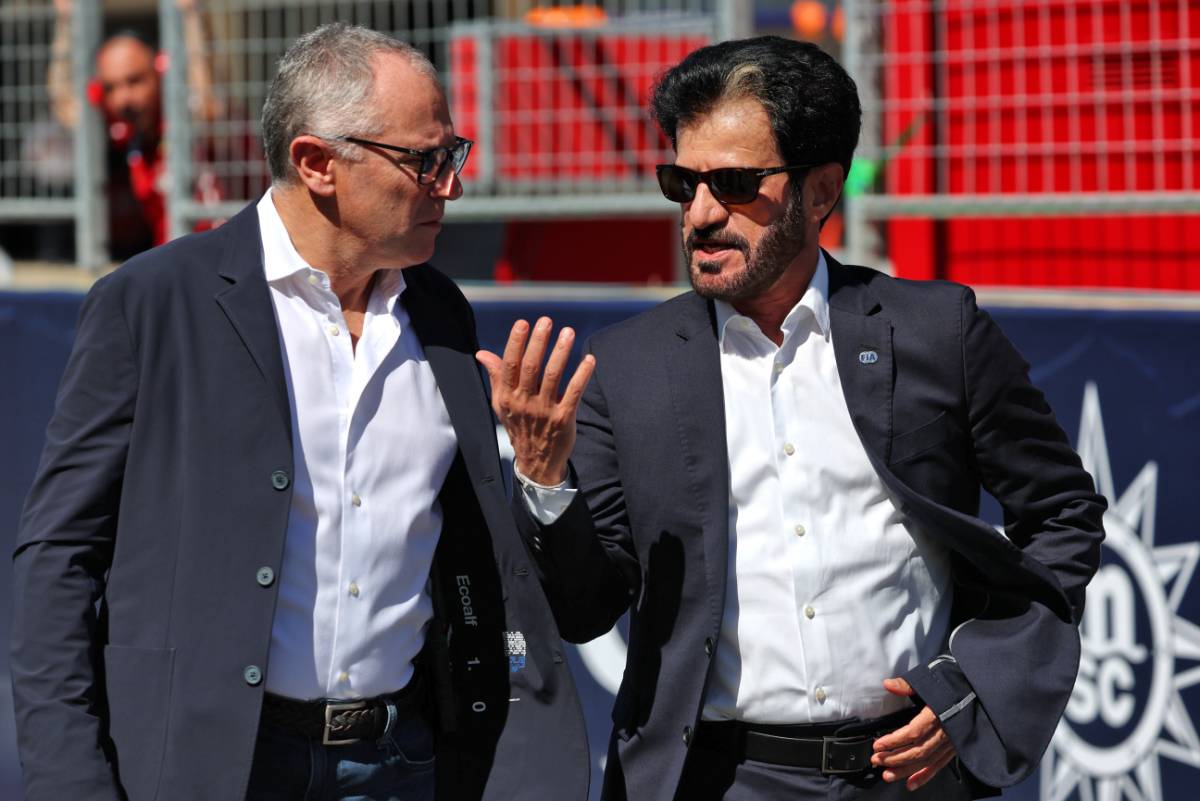
FIA President Mohammed Ben Sulayem forecasts a major reversal in F1's engine philosophy, announcing a planned return to lighter, louder V8 engines with minimal electrification by 2030. This move aims to simplify technology and enhance the fan experience, with the FIA prepared to assert its regulatory power to make it happen.
FIA President Mohammed Ben Sulayem has confidently predicted a return to V8 power units for Formula 1, potentially as early as 2030, marking a significant shift away from the current complex and heavy V6 turbo-hybrids. He envisions a future with simpler, lighter, and louder cars powered primarily by sustainable fuels, with only minimal electrification. The move signals the FIA's intent to reclaim regulatory control from power unit manufacturers to steer the sport's technical future.
Why it matters:
This represents a fundamental philosophical shift for F1's technical roadmap, prioritizing sensory spectacle and mechanical simplicity over the extreme hybrid complexity of the current era. If enacted, it would dramatically alter car design, cost structures for teams and manufacturers, and the core auditory experience for fans, potentially redefining the sport's identity for a new generation.
The details:
- Ben Sulayem identifies the V8 as the ideal engine configuration, citing its widespread use in road cars from manufacturers like Ferrari, Mercedes, Audi, and Cadillac, which supports a lighter car and less complex design.
- The proposed power unit would feature a radical new energy split, moving away from the current near 50/50 balance between internal combustion and electrical power to a setup where the engine is the main component with "very minimal" electric power.
- While the FIA gains full autonomous rule-making power over power units in 2031 per existing agreements, Ben Sulayem is pushing to accelerate the timeline by one year to 2030, seeking a consensus with manufacturers.
- He has explicitly ruled out a return to V10 engines due to their lack of road relevance for modern carmakers.
What's next:
The proposal sets the stage for a pivotal negotiation period between the FIA, Formula 1 management, and the power unit manufacturers (PUMs).
- Ben Sulayem acknowledges manufacturer pushback but asserts the change is inevitable, stating that if consensus for 2030 isn't reached, the FIA will unilaterally implement the rules in 2031 when it has the contractual authority to do so.
- The final decision on the 2030/2031 power unit regulations will shape manufacturer participation, technical development pathways, and the sport's environmental messaging for the next decade.
Don't miss the next lap
Get the deep dives and technical analysis from the world of F1 delivered to your inbox twice a week.
Zero spam. Only high-octane analysis. Unsubscribe anytime.
Join the inner circle
Get the deep dives and technical analysis from the world of F1 delivered to your inbox twice a week.
Zero spam. Only high-octane analysis. Unsubscribe anytime.
Continue Reading
View More News