Hadjar: Miami qualifying gap to Verstappen not reflective of true pace
Red Bull rookie Isack Hadjar says his large qualifying deficit to Max Verstappen in Miami is not a true pace gap but a result of his personal struggle with the circuit's low-grip conditions. Despite being disqualified, he remains positive about his progress.
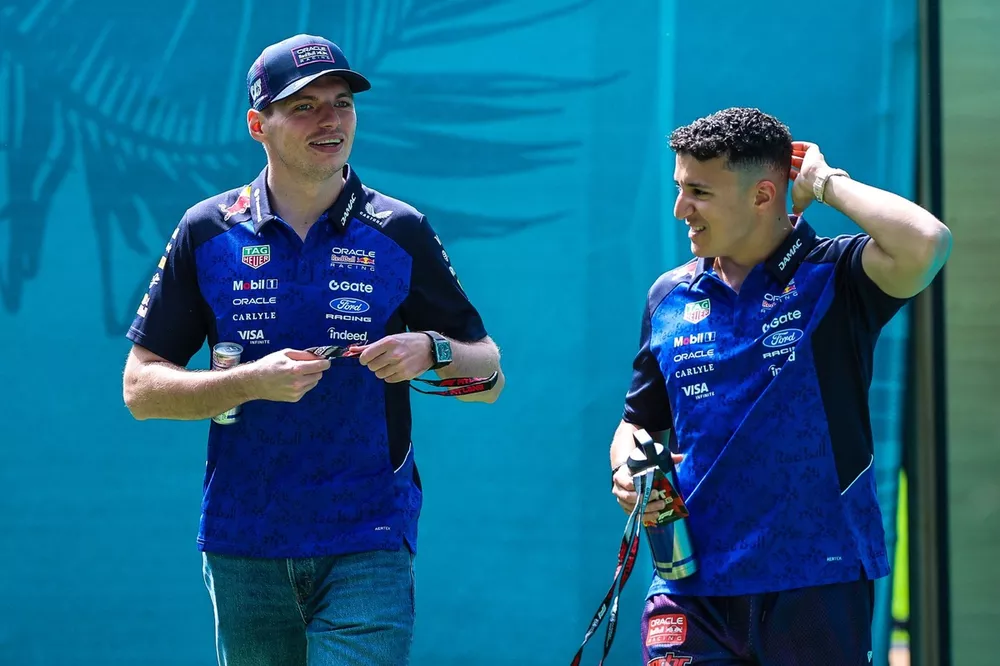
Red Bull's Isack Hadjar insists his significant qualifying deficit to teammate Max Verstappen at the Miami Grand Prix is misleading and not a true representation of their performance gap. The French rookie, who was later disqualified from the session, qualified ninth and was 0.825 seconds behind the four-time world champion, attributing the difference to his personal struggle with the circuit's unique low-grip conditions rather than a pure pace deficiency.
Why it matters:
For a young driver in only his second F1 season, managing expectations and understanding performance gaps within a top team is critical. Hadjar's analysis suggests his issue is track-specific adaptation, a common hurdle for newcomers, rather than a fundamental lack of speed compared to his elite teammate. This distinction is vital for his development trajectory and confidence within the Red Bull system.
The details:
- Hadjar qualified 0.825s behind Verstappen (P2) and was subsequently disqualified from the session due to a technical infringement.
- He emphasized the gap was inflated by Miami's "very tricky track, very low grip with high track temperature," conditions vastly different from the first three rounds of 2026 where the pair were typically within five tenths.
- Sector One Struggle: Hadjar pinpointed issues in the first sector, specifically Turn 1, which then compromised his run through Turns 2 and 3, overheating the tires and hurting the remainder of his lap.
- Verstappen's Mastery: The rookie praised Verstappen's superior ability to adapt and "put everything together" in these challenging conditions, acknowledging his teammate's "amazing job."
- Broader Team Context: The session was otherwise positive for Red Bull, which brought heavy upgrades to its RB22 car, with Verstappen securing a front-row start behind polesitter Kimi Antonelli of Mercedes.
What's next:
Hadjar remains upbeat about his personal progress from Friday's running, indicating he closed a significant portion of the controllable gap. The focus will now shift to the Grand Prix itself, where he will start from the back of the grid due to his disqualification. His ability to manage the race, demonstrate strong long-run pace, and learn from the data alongside Verstappen will be more telling for his long-term prospects than a single difficult qualifying session on a atypical circuit.
Don't miss the next lap
Get the deep dives and technical analysis from the world of F1 delivered to your inbox twice a week.
Zero spam. Only high-octane analysis. Unsubscribe anytime.
Join the inner circle
Get the deep dives and technical analysis from the world of F1 delivered to your inbox twice a week.
Zero spam. Only high-octane analysis. Unsubscribe anytime.
Continue Reading
View More News