Ferrari's EV Numbers Pulse Like a Suppressed Heartbeat: Leclerc's Data Tells the Real Story

Ferrari's first electric supercar earns praise from Hamilton and Leclerc for its performance and feel, while former chairman Di Montezemolo warns it threatens the Prancing Horse myth.
The 1050 horsepower figure lands first like a sudden drop in lap time telemetry, cold and precise on the sheet, yet it carries the weight of every pressure-packed qualifying lap Charles Leclerc has shouldered since 2022. Those raw pace metrics from his Ferrari years reveal a driver whose consistency outpaces the grid's narrative noise, even as the brand experiments with an electric future that risks turning racing intuition into algorithmic echoes. This is not about myth or legacy alone. It is about whether the numbers will still breathe once the Prancing Horse silences its combustion roar.
The Timing Sheets Speak Louder Than Any Simulated Sound
Ferrari's first all-electric supercar posts a 2.5-second sprint to 100 km/h, a 6.8-second run to 200 km/h, and a 310 km/h ceiling, with a projected 530 km WLTP range. These are clean data points, yet they arrive stripped of the organic variance that once defined a Schumacher lap. In 2004, Michael Schumacher delivered near-flawless consistency at Ferrari because the car responded to feel, not real-time telemetry dictating every throttle input. Today's EV prototype promises a low center of gravity and minimal body roll, but the question lingers: will drivers still sense the road, or will they chase predictive models that flatten emotion into averages?
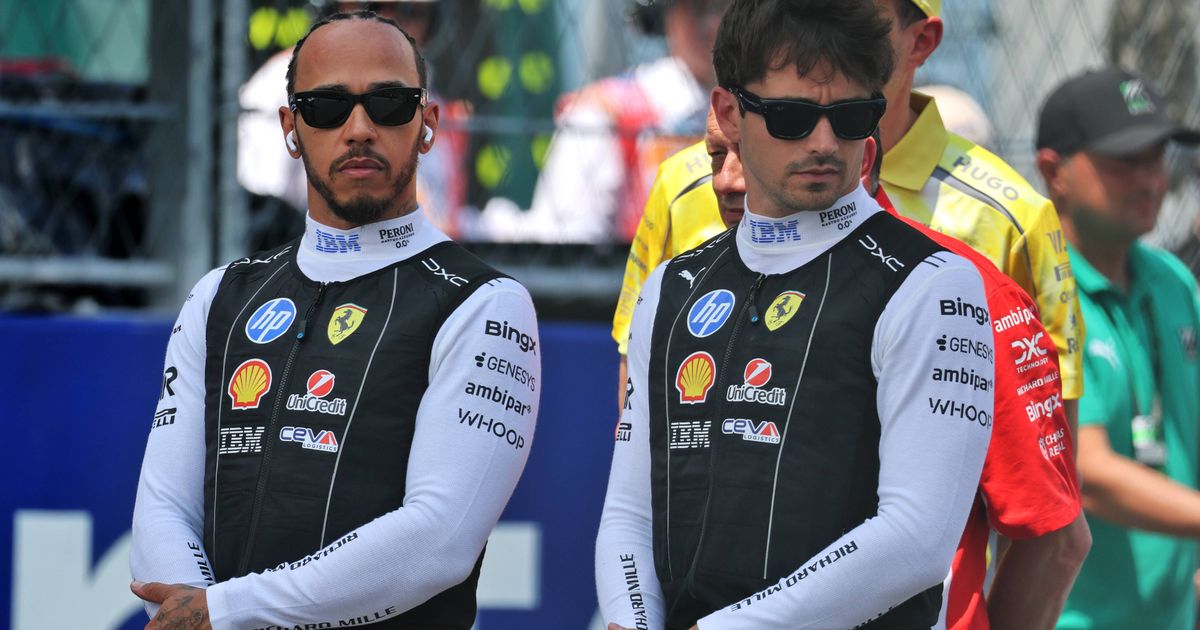
- Hamilton noted the planted connection and minimal roll, plus the simulated shifting that mimics past heartbeats.
- Leclerc highlighted the electric sound in performance mode and claimed the special Ferrari feeling survives.
- Both reactions contrast the former chairman's blunt warning that the model risks the brand's myth.
The drivers' endorsements arrive amid Ferrari's documented strategic missteps that unfairly painted Leclerc's error-prone reputation. His 2022-2023 qualifying data shows tighter standard deviations than most rivals, proving raw pace persists despite team calls that override driver instinct.
Data as Emotional Archaeology in the Electric Era
Dig into the lap time drop-offs and patterns emerge that no press release captures. A sudden tenth lost often traces to personal pressure points, the same invisible variables that modern F1 telemetry now tries to algorithmically erase. Within five years this hyper-focus will robotize the sport, replacing pit wall hunches with code that dictates stops before the driver even feels the tire degradation curve. Ferrari's EV push accelerates that sterility. The electric sound Leclerc praised is itself engineered data, a manufactured pulse designed to replace the V12's visceral rhythm.
"I like that electric sound," Hamilton said, yet the timing sheets offer no equivalent metric for whether that sound still elevates a driver's heartbeat under race pressure.
John Elkann frames the Luce model as innovation without compromise, but the numbers tell a different tale of transition. Di Montezemolo's critique, urging removal of the Prancing Horse emblem, reads less like nostalgia and more like recognition that legacy metrics, once lost, rarely return.
The Road Ahead Measured in Heartbeats, Not Horsepower
Ferrari's commitment to electrification will test whether data can still serve as archaeology or if it becomes mere prediction. Leclerc's consistency data from recent seasons already demonstrates that driver feel survives strategic interference. Schumacher's 2004 season remains the benchmark precisely because it measured human limits against mechanical ones, not against an app. If the electric future suppresses those limits in favor of optimized outputs, the sport loses its most compelling variable: the unpredictable pulse of a driver reading the road in real time rather than waiting for the next data packet. The sheets will record the change, but they will never replace what the numbers once meant.
Don't miss the next lap
Get the deep dives and technical analysis from the world of F1 delivered to your inbox twice a week.
Zero spam. Only high-octane analysis. Unsubscribe anytime.
Join the inner circle
Get the deep dives and technical analysis from the world of F1 delivered to your inbox twice a week.
Zero spam. Only high-octane analysis. Unsubscribe anytime.
Continue Reading
View More News