Jacques Villeneuve Becomes First Driver in 50 Years to Win an F1 Race Within First Five Grands Prix
In 1996 Jacques Villeneuve became the first driver in 50 years to win a Formula 1 Grand Prix within his first five starts, clinching victory at the European Grand Prix and sparking a championship‑winning season. His rapid rise highlighted the rarity of rookie wins, boosted Williams, and set a new benchmark for driver transitions from other series.
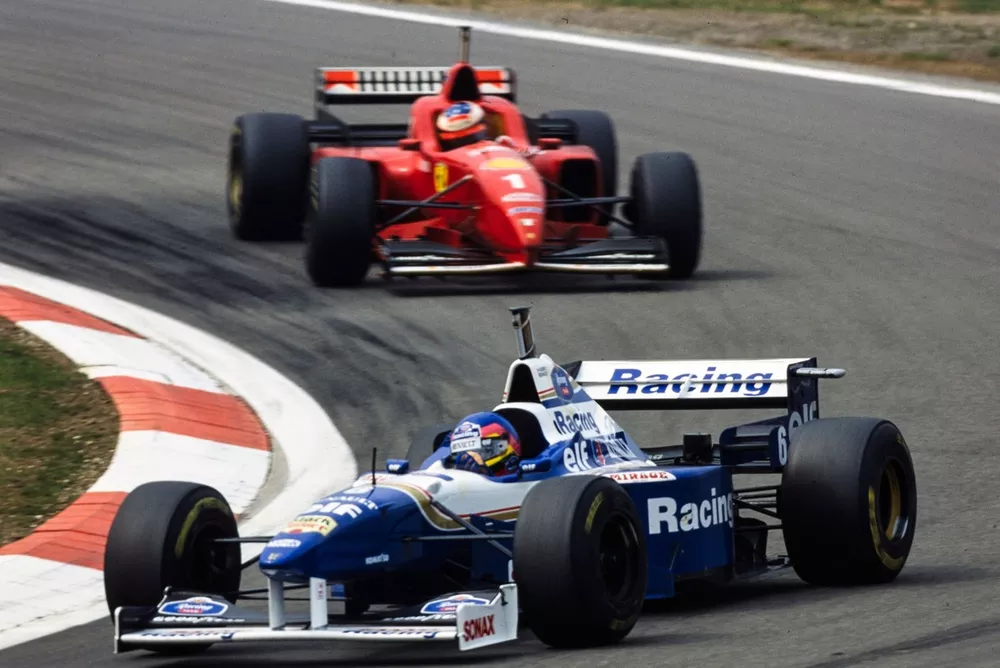
Jacques Villeneuve made F1 history in 1996 by becoming the only driver in the past five decades to claim a Grand Prix victory within his first five starts. The Canadian rookie, fresh off an IndyCar championship and an Indy 500 win, took his maiden win at the European Grand Prix in Germany, beating Michael Schumacher and the rest of the field.
Why it matters:
- Rarity – Only one driver has ever won a race that quickly, underscoring how difficult it is for newcomers to compete at the front of the grid.
- Williams’ resurgence – Villeneuve’s early success helped the Williams team re‑establish itself as a dominant force after a lean period.
- Psychological boost – A win so early validated Villeneuve’s transition from IndyCar to F1 and set the tone for his 1997 world‑championship campaign.
The details:
- Debut – Villeneuve qualified on pole for his first race in Melbourne, but an oil leak forced a retirement.
- First win – At the Nürburgring‑based European GP (Round 4), Villeneuve started second behind teammate Damon Hill, took the lead at the start, and built a 13‑second gap before the first pit‑stop window.
- Schumacher duel – Michael Schumacher’s Ferrari undercut Villeneuve twice, narrowing the margin to a single second, but Villeneuve held firm for the final 30 laps.
- Podium pattern – The race marked the first of six joint podiums for Villeneuve and Schumacher, a rivalry that would culminate in a title fight the following year.
- Team dynamics – Villeneuve later claimed he was asked to back‑off early in Melbourne for “team harmony,” hinting at the delicate balance within a top‑tier squad.
The big picture:
Villeneuve’s breakthrough in 1996 was more than a statistical oddity; it signaled a shift in the driver‑development narrative. His rapid ascent proved that a champion from another discipline could transition swiftly to F1, inspiring teams to look beyond traditional feeder series. The feat also foreshadowed his 1997 world title, a reminder that early success can be a springboard for sustained excellence. While few rookies have replicated the feat since, Villeneuve’s story remains a benchmark for any newcomer dreaming of a front‑row seat.
Don't miss the next lap
Get the deep dives and technical analysis from the world of F1 delivered to your inbox twice a week.
Zero spam. Only high-octane analysis. Unsubscribe anytime.
Join the inner circle
Get the deep dives and technical analysis from the world of F1 delivered to your inbox twice a week.
Zero spam. Only high-octane analysis. Unsubscribe anytime.