Komatsu defends Colapinto, cites speed differential in Bearman crash
Haas boss Ayao Komatsu has absolved Alpine's Franco Colapinto of blame for Oliver Bearman's Japanese GP crash, attributing it to a dangerous 45km/h closing speed caused by differing energy management under F1's new rules. He described it as a systemic challenge rather than a simple driver error, highlighting a potential safety concern for the sport.
Haas Team Principal Ayao Komatsu has cleared Alpine's Franco Colapinto of any blame for the high-speed crash that eliminated Oliver Bearman from the Japanese Grand Prix, pointing instead to a massive 45km/h closing speed differential created by differing energy management tactics under F1's new regulations.
Why it matters:
The incident highlights a potential safety concern emerging from Formula 1's latest technical rules, where differing energy deployment strategies can create extreme and unpredictable speed differences between cars on the same straight. Komatsu's refusal to label Bearman's actions a clear "error" and his call for the "F1 community" to examine the issue underscores that this may be a systemic challenge, not just a driver mistake, with significant implications for on-track safety moving forward.
The details:
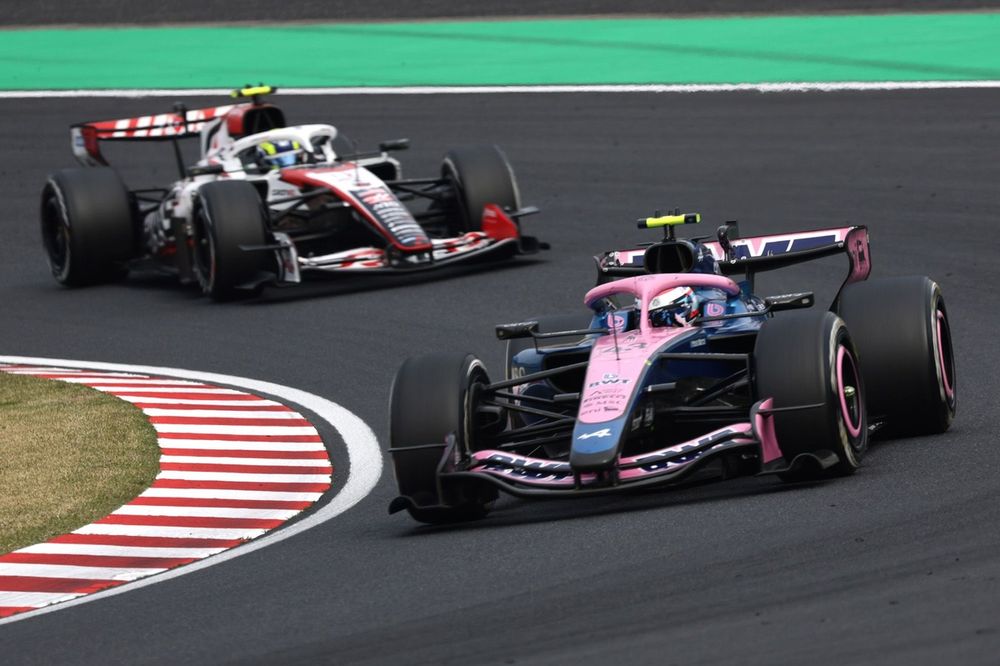
- The crash occurred as Bearman, battling from 18th on the grid, approached the high-speed Spoon corner while attempting to overtake Colapinto for 17th place.
- Komatsu explained that due to different energy management, the Haas had a consistent 20km/h speed advantage over the Alpine in that sector. Bearman then activated an extra energy boost, widening the gap to a 45km/h closing speed just before the braking zone.
- The FIA confirmed the 45km/h speed differential, which led to Bearman misjudging the closing rate and losing control at 306km/h, resulting in a heavy 50G impact with the barrier.
- Bearman emerged with a right knee contusion but no major injuries. Komatsu emphasized relief that the outcome wasn't worse, stating, "It could have been a lot worse, right? So I'm really glad that he didn't break anything."
- The team principal was careful with his wording, describing the cause as a "small misjudgement" exacerbated by an unprecedented situation, rather than a driver error. He noted this was only the third race under the new regulations, a scenario Bearman had never experienced before.
What's next:
Komatsu's comments frame the crash as a learning moment for the team and the sport. He indicated the team will analyze how to improve their approach to such situations in the future. More broadly, his statement that "closing speed could become an issue" under the current regulations may prompt discussions among teams and the FIA about whether mitigations are needed to enhance safety as drivers and teams continue to explore the limits of the new power unit and energy recovery rules.
Don't miss the next lap
Get the deep dives and technical analysis from the world of F1 delivered to your inbox twice a week.
Zero spam. Only high-octane analysis. Unsubscribe anytime.
Join the inner circle
Get the deep dives and technical analysis from the world of F1 delivered to your inbox twice a week.
Zero spam. Only high-octane analysis. Unsubscribe anytime.
Continue Reading
View More News