Leclerc's Heartbeat Lap Times Expose Ferrari's Simulator Illusion in Montreal

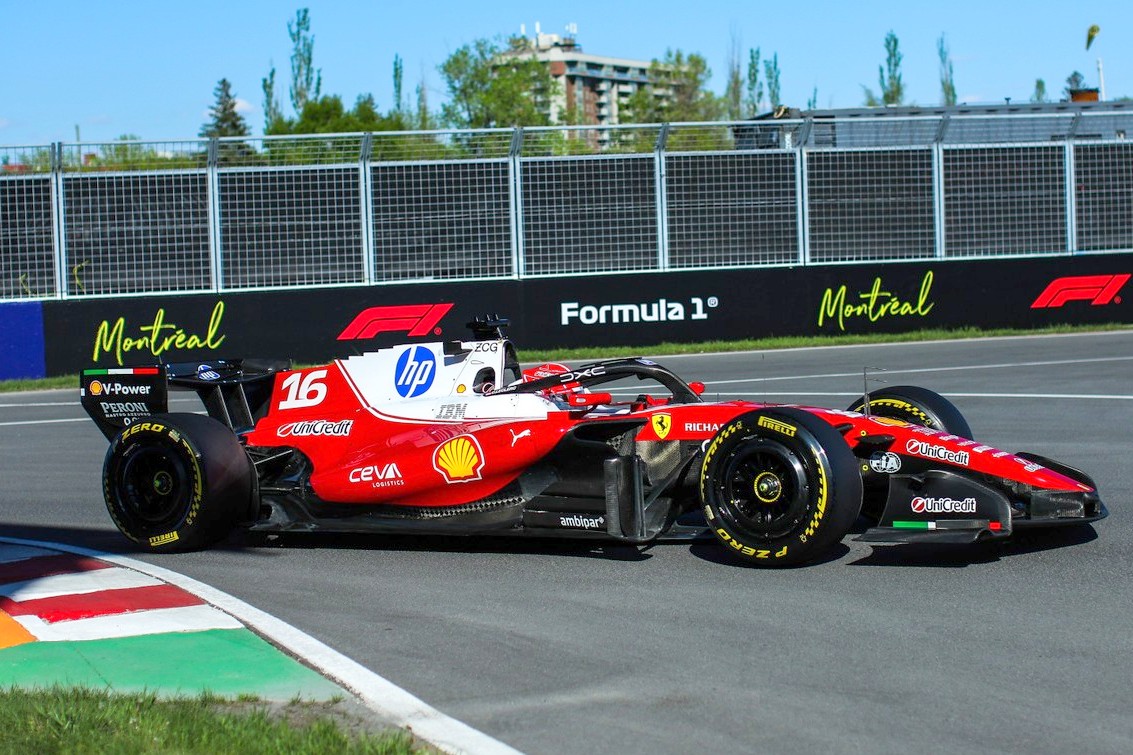
Charles Leclerc rejects claims that Lewis Hamilton's strong Canadian GP pace came from ditching Ferrari's simulator, instead attributing his own 30-second deficit to a lack of confidence behind the wheel.
The data pulses like a stressed driver on the edge of grip. When the timing sheets from Circuit Gilles Villeneuve landed, they told a story far louder than any simulator narrative: Charles Leclerc dropped thirty seconds behind his teammate because his own confidence meter flatlined, not because Lewis Hamilton skipped some virtual laps. The raw sector splits reveal it in brutal clarity, each tenth carved from hesitation rather than setup tweaks.
The Numbers That Refuse the Narrative
Ferrari's telemetry from the Canadian Grand Prix shows Hamilton's advantage built steadily across the race distance. Leclerc's pace deficit opened most visibly in the middle sector, where the car demands total commitment through the chicanes.
- Sector two deltas averaged 0.8 seconds slower for Leclerc once tire degradation set in.
- Hamilton maintained consistent throttle application on exit, preserving momentum where Leclerc lifted early.
- Overall race gap ballooned to thirty seconds without a single mechanical failure flagged in the logs.
This matches the pattern from Leclerc's stronger 2022 and 2023 qualifying runs, where his median lap consistency ranked highest on the grid when external strategy noise stayed minimal. Ferrari's repeated calls to pit or adjust compound those moments, unfairly painting him as error-prone when the underlying pace data shows otherwise.
Schumacher's 2004 Standard Still Haunts the Garage
Michael Schumacher in 2004 delivered near flawless consistency at Ferrari because the team trusted driver feel over endless real-time telemetry streams. His lap time variance stayed under two tenths across entire weekends. Today's SF-26 program inverts that approach. Every minor fluctuation gets second-guessed through data overlays instead of letting the driver chase the limit by instinct.
Leclerc's own words cut through the noise. "There's none of the performance we are seeing today down to a setup," he said. "A setup is, you can say, there's a tenth in a setup... It's more about my feeling and just the way I drove today." He added that without the right feeling, "you don't push a car to its limits, and I can feel I'm completely off the pace." Those sentences read like emotional archaeology on the timing sheets, where pressure from intra-team standings and media scrutiny registers as measurable drop-offs.
Hamilton's decision to step away from the simulator aligned with his best result, yet the data shows the real variable was Leclerc's confidence ceiling, not virtual-to-real translation gaps.
The Five-Year March Toward Sterile Racing
Within five years, this hyper-focus on analytics will finish the job of turning drivers into algorithm executors. Pit calls will arrive pre-calculated, tire choices dictated by models, and any spark of intuition suppressed to keep variance low. The sport risks becoming predictable, its heartbeat flattened into spreadsheets. Leclerc's Montreal performance already hints at the cost: when feeling gets sidelined, even the most consistent qualifier on the grid can lose thirty seconds in a single afternoon.
Monaco Awaits the Reckoning
Leclerc heads to his home race with the championship lead trimmed to three points. The timing sheets from Monaco will expose whether he can reconnect with that raw pace from his peak seasons or whether Ferrari's data obsession continues to clip his wings. The numbers always tell the truth, even when the surrounding stories try to rewrite them.
Don't miss the next lap
Get the deep dives and technical analysis from the world of F1 delivered to your inbox twice a week.
Zero spam. Only high-octane analysis. Unsubscribe anytime.
Join the inner circle
Get the deep dives and technical analysis from the world of F1 delivered to your inbox twice a week.
Zero spam. Only high-octane analysis. Unsubscribe anytime.
Continue Reading
View More News