Mercedes' 2026 dominance rivals its historic hybrid-era supremacy
Mercedes has begun the 2026 F1 season with a perfect record, and data analysis reveals its performance advantage over Ferrari is among the largest in the past decade, rivaling its own dominant hybrid-era start. The average qualifying gap of over half a second points to a potential season of supremacy, challenging the regulatory goal of closer competition.
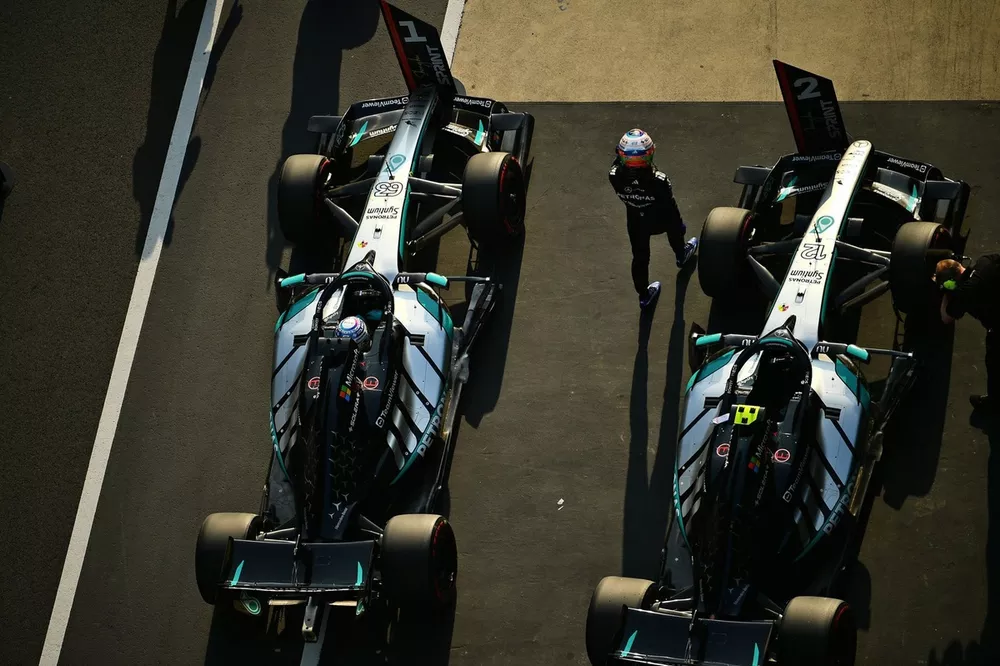
Mercedes has won every Grand Prix and sprint race in the opening three rounds of the 2026 Formula 1 season, but data reveals its true advantage is even more commanding than the on-track battles suggest. While Ferrari has shown flashes of competitiveness, the Scuderia and other rivals lack the sustained pace to challenge the Silver Arrows in clean air, with the average performance gap mirroring some of the most dominant eras in the sport's history.
Why it matters:
Mercedes' current form signals a potential return to the kind of supremacy it enjoyed at the start of the hybrid era in 2014, which could define the championship narrative for the foreseeable future. The size of the performance gap raises questions about the effectiveness of current regulations designed to promote convergence and whether any team can mount a serious title challenge this season.
The Details:
- Historic Performance Gap: The average qualifying deficit for Ferrari, Mercedes' closest pursuer, is 0.56 seconds per lap, with a similar 0.53-second gap in race trim. This places the 2026 advantage on par with Mercedes' 0.55-second margin over Red Bull in 2020.
- A Decade-Long Comparison: This year's advantage is the largest since 2016, when Mercedes led Red Bull by 0.74 seconds on average. It approaches the record-setting 0.83-second gap Mercedes held over the field in 2014, the most dominant single-season performance since 2000.
- Contextualizing Dominance: Past eras of success for other top teams pale in comparison. Ferrari's largest average advantage during Michael Schumacher's reign was 0.37 seconds in 2001, and Red Bull's peak in the Sebastian Vettel era was a 0.4-second gap in 2010.
- Distorted On-Track Picture: Mercedes' relatively weak race starts have allowed Ferrari and others to create moments of close competition early in Grands Prix, masking the true pace difference. Once in clean air, the Mercedes has been virtually untouchable.
What's Next:
The critical question is how quickly rivals like Ferrari, McLaren, and Red Bull can close the gap. While the current regulations, including the ADUO framework, are designed to allow for faster convergence—especially on power units—than was possible a decade ago, history provides a sobering precedent.
- During the initial hybrid era, it took competing teams four full seasons to genuinely challenge Mercedes, with Ferrari finally reducing the average gap to just 0.08 seconds by 2018.
- Although Mercedes' 2026 advantage is statistically smaller than in 2014, the early-season data strongly suggests the team is the overwhelming favorite for both championships, potentially setting the stage for a one-sided season unless a rival can unlock a major development breakthrough.
Don't miss the next lap
Get the deep dives and technical analysis from the world of F1 delivered to your inbox twice a week.
Zero spam. Only high-octane analysis. Unsubscribe anytime.
Join the inner circle
Get the deep dives and technical analysis from the world of F1 delivered to your inbox twice a week.
Zero spam. Only high-octane analysis. Unsubscribe anytime.