Mercedes' Canadian upgrade features unique diffuser extension and serrated profiles
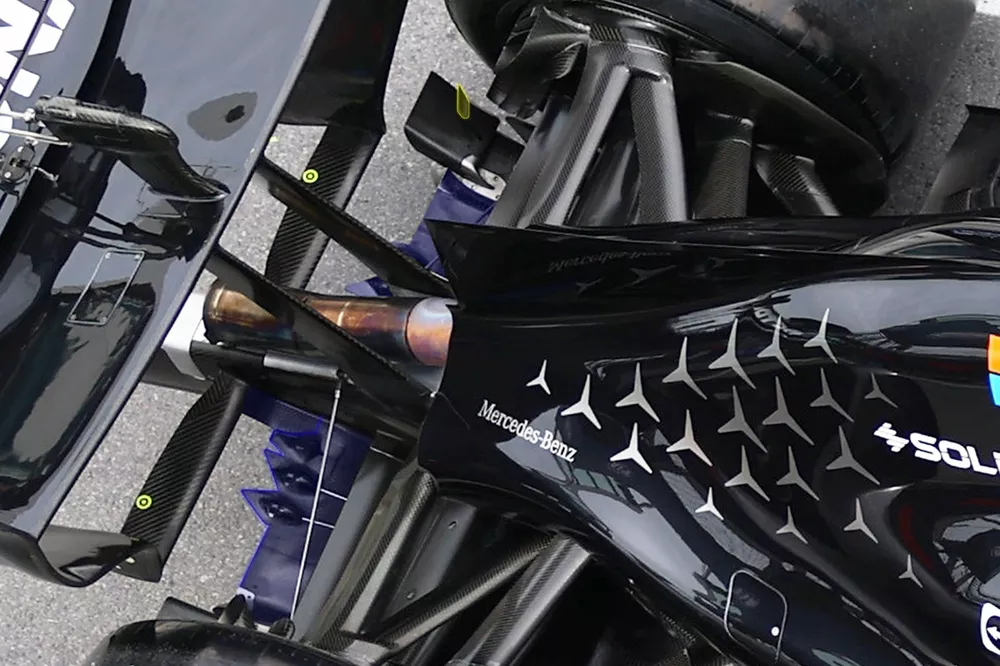
Mercedes brought a significant upgrade to Canada, with a novel diffuser extension using serrated profiles and a small flow deflector – solutions not seen on any other car this season.
Mercedes introduced its first major upgrade package of the season at the Canadian Grand Prix, with a host of changes across the car. While the front wing, bargeboards, and floor received significant revisions, the most intriguing innovations came at the rear – a unique diffuser extension employing serrated profiles and a small flow deflector on the waterfall structure. These solutions are unlike anything seen on the grid so far this season.
Why it matters:
In Formula 1's strict regulatory environment, aerodynamic innovation is the quickest path to lap time. The diffuser area is particularly sensitive, as teams try to maximize expansion of airflow while staying within rules. By adopting a novel serrated profile on the upper diffuser, Mercedes could unlock extra downforce and improve rear stability. This upgrade signals the team's intent to challenge the frontrunners after a mixed start to the year.
The details:
- Front wing & floor: The front wing was almost entirely reworked while maintaining the same design philosophy. The bargeboards and floor also received attention, aiming for better airflow management.
- Diffuser extension: Since pre-season, teams have attached extensions to the rear crash structure to lengthen the diffuser. Mercedes took a different route: adding serrated profiles along the upper diffuser section, covering more than half its width. This is reminiscent of serrated elements used by some teams on cockpit screens, but is a first for the diffuser.
- Waterfall deflector: On the outer edge of the diffuser, where it meets the vertical waterfall profiles, Mercedes added a small outward-facing flow deflector on the highest element. This helps clean up the wake and optimize airflow exiting the floor. Ferrari has experimented in this area but only on the lower section.
- Rear complexity: The area ahead of the rear tyres is now more intricate, crucial for mitigating the harmful effects of tyre rotation on aerodynamics.
What's next:
Mercedes will evaluate the performance gain from these updates during the Canadian weekend. If successful, this unique approach could become a staple of their development path. Rivals will likely study the W17 closely, potentially influencing future design trends across the grid.
Don't miss the next lap
Get the deep dives and technical analysis from the world of F1 delivered to your inbox twice a week.
Zero spam. Only high-octane analysis. Unsubscribe anytime.
Join the inner circle
Get the deep dives and technical analysis from the world of F1 delivered to your inbox twice a week.
Zero spam. Only high-octane analysis. Unsubscribe anytime.
Continue Reading
View More News