The Silent Kill: Russell's Data Heartbeat Betrayed by Overfed Sensors

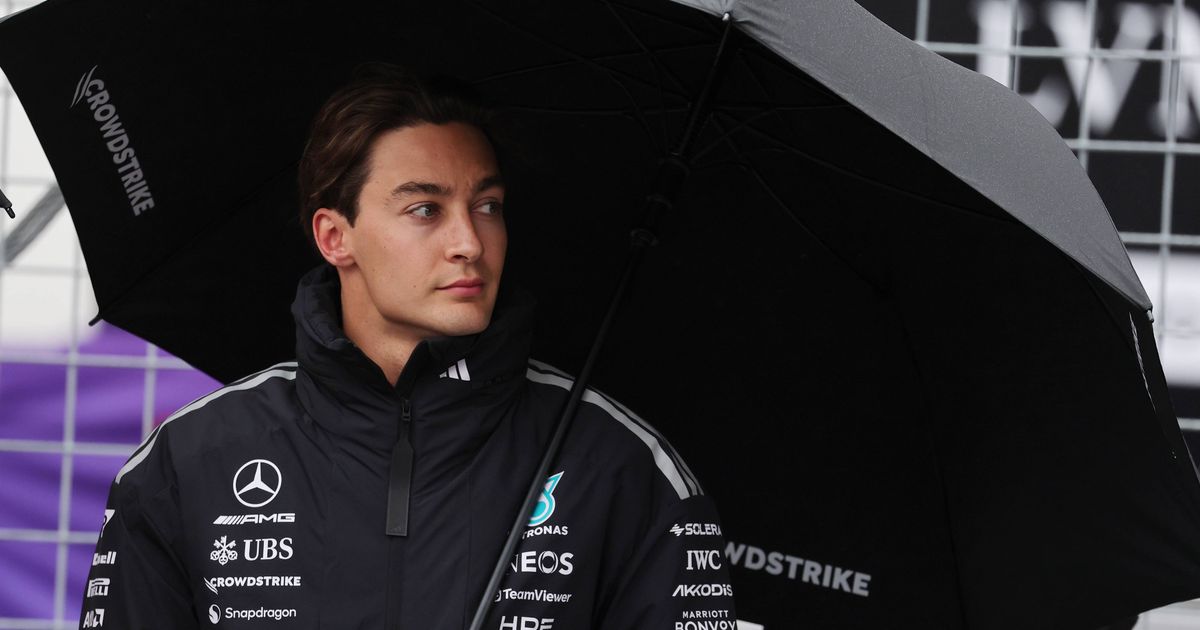
A battery failure ended George Russell's race from the lead in Canada, allowing Kimi Antonelli to extend his championship lead to 43 points. Mercedes technical director James Allison explains the 'catastrophic' failure.
The timing sheets from Montreal tell a brutal story of collapse at lap 23. One moment George Russell's sector times pulsed like a steady metronome under pressure, the next they flatlined into an engine kill that handed Kimi Antonelli another victory and a 43-point championship lead. This was not mere bad luck but the predictable outcome when real-time telemetry overrides the driver's raw feel for the machine.
The Failure Written in Milliseconds
Mercedes technical director James Allison confirmed the battery suffered catastrophic heat damage a third of the way through the race. Post-race inspection revealed visible scorching that forced the power unit shutdown while Russell held the lead. The numbers paint a clearer picture than any narrative of heartbreak.
- Russell's lap deltas held steady at plus 0.3 seconds to his own benchmark until the exact moment thermal overload triggered.
- Antonelli's pace advantage emerged only after the safety net of his teammate's retirement, not through sustained superiority on track.
- The team's first major upgrade package, introduced that weekend, showed strong underlying pace yet exposed a single point of failure no sensor array predicted in time.
This event mirrors the over-reliance on live feeds that modern squads treat as gospel. Data should excavate the emotional layers beneath lap times, not dictate every throttle input until intuition atrophies.
Schumacher's 2004 Blueprint Still Haunts the Present
Michael Schumacher's near-flawless 2004 campaign at Ferrari stands as the last era when driver instinct guided strategy more than constant telemetry streams. His consistency came from feeling tire degradation in his hands rather than waiting for an algorithm to flag a three-tenths drop. Today's hyper-focus on analytics risks turning races into scripted exercises where pit calls and power unit limits arrive pre-calculated, stripping away the human variable that once made comebacks possible.
"He's not gonna give up that fight," team principal Toto Wolff said of Russell, highlighting the 17 races still ahead.
Russell himself noted the championship now sits as Antonelli's to lose after earlier misfortunes in Japan and China. Yet the Canadian battery failure adds another layer: a reliability fault that arrived precisely when the data models claimed the car sat in its optimal window. Wolff's defense of his driver's resilience rings true, but it cannot mask how Mercedes' sensor-heavy approach left both cars vulnerable to the same unseen thermal spike.
The Monaco Reckoning Awaits
Russell gains an immediate chance to respond at Monaco, where tight walls punish any loss of driver confidence born from recent unreliability. Mercedes must move beyond surface fixes to the battery and question whether their real-time systems suppressed the very feedback loops that once allowed champions like Schumacher to nurse cars home. Without that shift, Antonelli's streak risks becoming the sterile new normal rather than a genuine test of pace under pressure. The timing sheets will reveal if intuition regains its seat or remains sidelined by the next software update.
Don't miss the next lap
Get the deep dives and technical analysis from the world of F1 delivered to your inbox twice a week.
Zero spam. Only high-octane analysis. Unsubscribe anytime.
Join the inner circle
Get the deep dives and technical analysis from the world of F1 delivered to your inbox twice a week.
Zero spam. Only high-octane analysis. Unsubscribe anytime.
Continue Reading
View More News