Norris slams 'yo-yo' racing as drivers lose control
Lando Norris warns that F1's new power units are creating dangerous 'yo-yo' racing where drivers lose control to automated systems, linking the issue directly to a scary near-miss crash at the Japanese Grand Prix and calling for urgent changes.
Lando Norris has issued a stark warning that Formula 1's new-generation power units are robbing drivers of control, creating unpredictable "yo-yo" racing and raising serious safety concerns following a near-miss crash at Suzuka. The McLaren driver argues that sophisticated, automated battery deployment is making drivers passengers to an algorithm, undermining the authenticity and safety of wheel-to-wheel combat.
Why it matters:
This critique strikes at the core of F1's identity: the battle between driver skill and machine. If the sport's stars feel they are no longer in command, it questions the very premise of the competition. Furthermore, Norris directly links the unpredictable power delivery to the terrifying incident involving Ollie Bearman and Franco Colapinto, elevating the issue from a racing complaint to a pressing safety matter that the FIA cannot ignore.
The details:
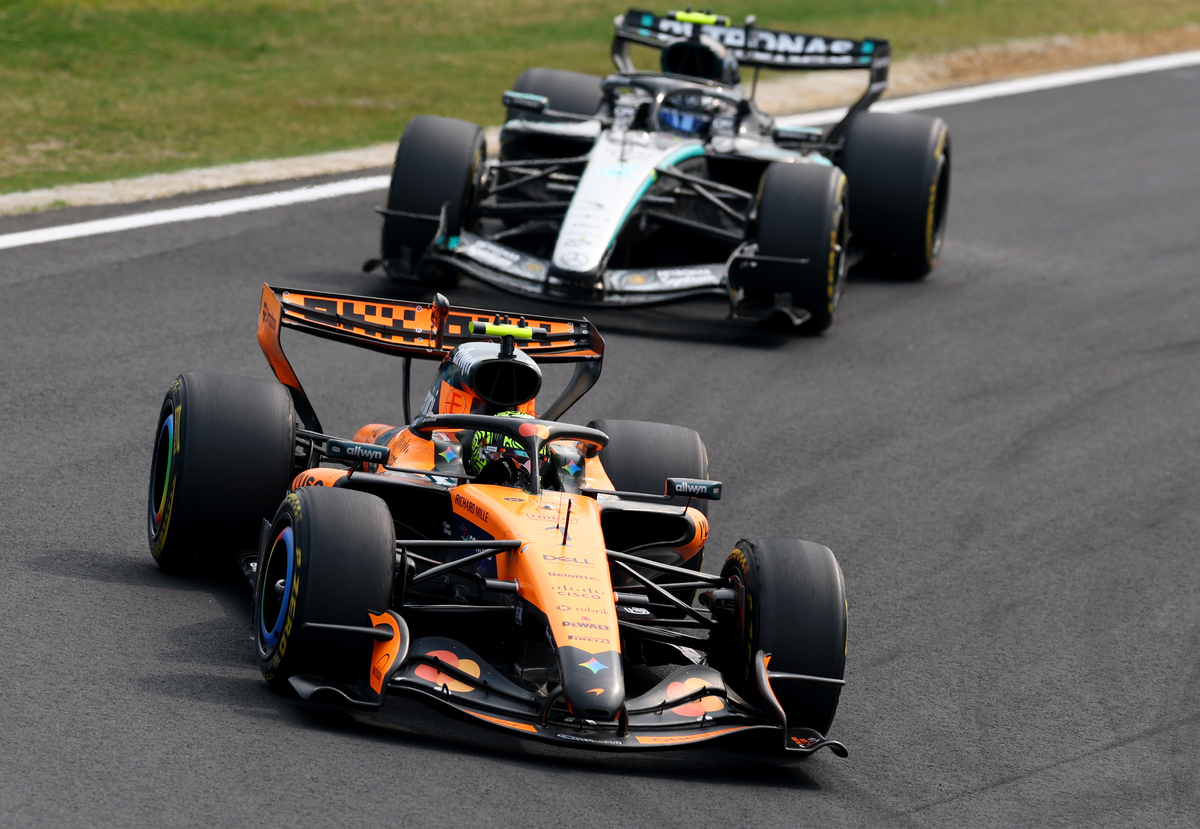
- Norris described a frustrating battle with Lewis Hamilton in Japan where his car's battery deployed autonomously, forcing an overtake he didn't intend, only for him to then be re-passed immediately when his energy was depleted.
- He labeled this phenomenon "yo-yo racing," where cars are thrown back and forth not by driver intent but by pre-programmed energy management cycles.
- A Safety Hazard: The problem becomes most dangerous at high speed. Norris explained that through Suzuka's famous 130R corner, his battery would deploy in overtake mode, forcing him to lift off the throttle to avoid hitting the car ahead, creating a massive and unpredictable speed differential.
- Loss of Driver Agency: "The drivers should be in control of it, at least, and we’re not," Norris stated, emphasizing that being "at the mercy of what the power unit delivers" is not how racing should be.
- The Spectacle vs. Reality: While the racing might look exciting on TV with cars darting past each other, Norris insists the experience inside the cockpit is "certainly not as authentic as it should be," as drivers fight their systems as much as their rivals.
What's next:
Norris's comments add to a growing chorus of driver complaints about the 2026-spec power units, with Carlos Sainz also blaming the FIA for ignoring warnings prior to the Bearman incident. The ball is now in the FIA's court to address these control and safety issues through potential regulation tweaks. However, Norris expressed a cynical view that change may not come if the spectacle remains popular with fans, stating, "It doesn’t matter what we say... as long as the fans enjoy it, that’s all that matters." The governing body's response will be a key test of its priority: television spectacle or driver safety and sport integrity.
Don't miss the next lap
Get the deep dives and technical analysis from the world of F1 delivered to your inbox twice a week.
Zero spam. Only high-octane analysis. Unsubscribe anytime.
Join the inner circle
Get the deep dives and technical analysis from the world of F1 delivered to your inbox twice a week.
Zero spam. Only high-octane analysis. Unsubscribe anytime.