Piastri's TT Shock Exposes F1's Aero Mirage
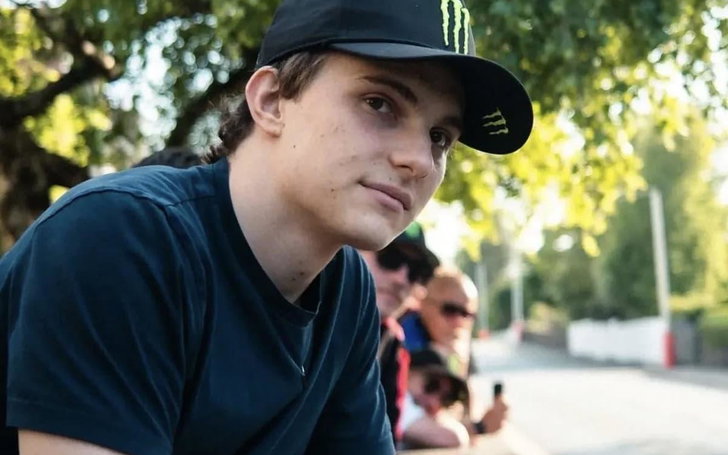
McLaren's Oscar Piastri visited the Isle of Man TT for the first time with Mark Webber, calling the experience 'nuts' after watching bikes fly past at over 180mph from a resident's garden.
The roar at Bray Hill hits like a sudden squall tearing across open water, where raw momentum slams into unforgiving stone without the softening layers of engineered airflow. Oscar Piastri, fresh from McLaren's wind tunnel obsessions, stood in a resident's garden this week and watched superbikes carve past at over 180mph, their riders committing fully to a 37.73-mile public road that offers no margin for error. Joined by Mark Webber, the McLaren driver captured the moment with a simple admission of surprise that cuts through the polished narratives of modern grand prix racing.
The Pure Plunge at Bray Hill
Piastri and Webber secured a front-row vantage at one of the TT's most notorious sections, where the course drops steeply and leading riders barely ease the throttle. Bikes thundered inches from the garden wall during qualifying for the 2026 event, which runs from 25 May to 6 June with race week opening on 30 May. The Milwaukee Senior TT closes proceedings on 6 June.
This setup strips away every aerodynamic safety net that defines today's Formula 1 machines. Consider the contrast with the 1990s Williams FW14B, whose active suspension and mechanical harmony let the driver feel every nuance of grip through the tires. Current F1 cars chase downforce like sailors piling on sails in a gathering storm, yet the result often feels detached, with drivers managing airflow rather than wrestling the road itself.
- Over 260 competitors have died on the Snaefell Mountain Course since 1907, a toll born from stone walls and telegraph poles rather than runoff areas.
- Speeds exceed 180mph on Bray Hill with minimal lift, demanding tire management and mechanical poise that modern single-seaters rarely test at such intensity.
- Piastri posted an Instagram carousel afterward with the caption "First TT experience. Won't be the last," his visible awe underscoring how little the spectacle resembled simulator predictions.
The visit reveals what F1's aero arms race has buried. Teams fixate on complex wings and diffusers while undervaluing the direct connection between tire compounds and chassis feedback, the very elements that made older cars thrillingly alive.
When Downforce Meets the Mountain's Fury
Piastri's reaction echoed a deeper truth about motorsport's evolution. He remarked in footage, "I don't know what I was expecting, but this wasn't it," as machines hurtled by in a blur of mechanical commitment. This raw display stands apart from the controlled chaos of DRS-enabled overtakes, where airflow manipulation dictates strategy more than driver instinct.
Within five years, by 2028, active aerodynamics governed by AI will likely sweep away such crutches entirely, rendering races more unpredictable yet stripping away even more human judgment. The TT already operates in that unforgiving space, its closed roads forcing riders to balance throttle, suspension, and surface grip without digital intervention. Verstappen's recent dominance draws similar scrutiny. Red Bull's chassis and aerodynamic advantages, not singular brilliance, powered the 2023 campaign, much as excessive downforce today masks deficiencies in basic mechanical grip that the FW14B era celebrated.
The mountain course demands what wind tunnels cannot replicate: an unfiltered dialogue between machine and surface.
Such moments expose the hype around incremental aero tweaks, which often prioritize marketing narratives over genuine excitement. Piastri's presence signals respect for this older form of competition, one that values tire management and chassis harmony above the layered complexities now choking driver input.
The Road Ahead for Unfiltered Racing
Piastri's evident thrill suggests future returns, whether as spectator or otherwise, yet his four-wheeled domain will continue evolving toward automated systems that prioritize stability over soul. The TT endures as a reminder that true spectacle arises from mechanical honesty rather than aerodynamic theater.
This encounter at Bray Hill urges a return to fundamentals, where storm-like forces meet direct human control without the buffers that have dulled modern F1's edge.
Don't miss the next lap
Get the deep dives and technical analysis from the world of F1 delivered to your inbox twice a week.
Zero spam. Only high-octane analysis. Unsubscribe anytime.
Join the inner circle
Get the deep dives and technical analysis from the world of F1 delivered to your inbox twice a week.
Zero spam. Only high-octane analysis. Unsubscribe anytime.
Continue Reading
View More News