Piastri raises power unit concerns ahead of rain-soaked Miami GP
Oscar Piastri expresses concern over his McLaren's computer-controlled power unit ahead of a wet Miami GP, fearing unpredictable energy deployment in the rain. He references a past power surge incident and stresses the need for perfect reliability, as heavy rain and lightning threats create a high-risk scenario for the untested 2026 cars.
Oscar Piastri has voiced significant apprehension about the energy deployment of his McLaren's power unit ahead of a Miami Grand Prix forecast for torrential rain. The Australian driver, referencing a past power surge incident, emphasized the need for his team to ensure the computer-controlled system performs as expected in the treacherous conditions, where the margin for error is drastically reduced.
Why it matters:
The 2026 F1 cars operate with a 50/50 split between electrical and internal combustion power, placing immense reliance on complex software to manage energy deployment. In wet weather, where grip is minimal and driver control is paramount, any unexpected power delivery from the system could lead to major incidents. Piastri's concerns highlight a critical, untested variable for all teams facing a potentially chaotic race.
The details:
- Piastri's worry stems from a qualifying session where the power unit did not behave as anticipated, even in dry conditions. He stated the team must "do our homework" to prevent a repeat in the rain.
- He pinpointed the core issue: "Where you get power is in a computer's hands." This automated control, while precise in ideal conditions, becomes a risk factor if it reacts unpredictably to low-grip scenarios.
- The driver has direct experience with such gremlins, having suffered an unexpected power surge that contributed to a crash on his way to the grid at the 2026 Australian Grand Prix.
- External conditions compound the challenge. The FIA has declared a Rain Hazard for Miami, with threats of thunder and lightning prompting a three-hour race delay. Most teams have had minimal wet-weather running with the new 2026 cars.
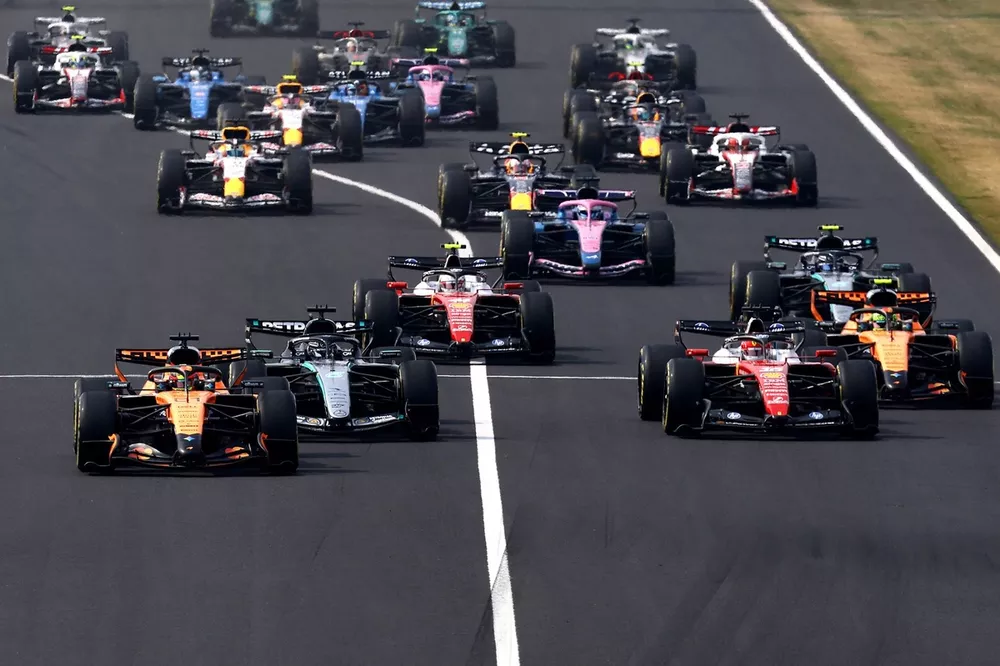
- McLaren's situation is further pressured by a disappointing qualifying result (P4 for Norris, P7 for Piastri) after a strong Sprint race one-two finish. Piastri admitted rivals like Mercedes' Kimi Antonelli and Red Bull's Max Verstappen showed a "more of the real picture" of their pace in qualifying.
What's next:
The Miami GP is set to be a high-stakes test of reliability and software calibration for all teams.
- Piastri and McLaren will focus on pre-race simulations and setup work to mitigate the power unit risks as much as possible.
- The race will provide crucial data on how the 2026 power units and their control software perform under extreme wet-weather stress, informing development for the rest of the season.
- For McLaren, converting their strong Sprint race pace into a solid result in the Grand Prix is essential to maintain championship momentum, making a clean, controlled race in the rain paramount.
Don't miss the next lap
Get the deep dives and technical analysis from the world of F1 delivered to your inbox twice a week.
Zero spam. Only high-octane analysis. Unsubscribe anytime.
Join the inner circle
Get the deep dives and technical analysis from the world of F1 delivered to your inbox twice a week.
Zero spam. Only high-octane analysis. Unsubscribe anytime.
Continue Reading
View More News