Stella: China GP to See Less Battery-Driven Racing Than Melbourne
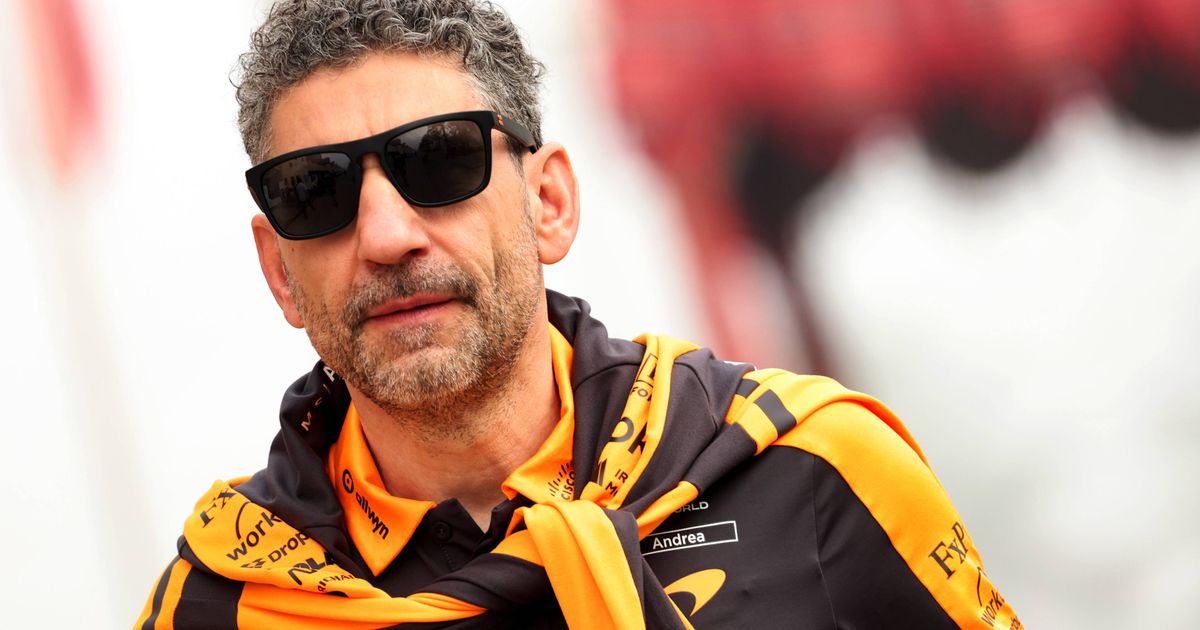
McLaren's Andrea Stella expects racing at the Chinese GP to be less dominated by battery-saving tactics than in Melbourne. He believes Shanghai's layout will allow for more traditional energy deployment, providing a truer test of car performance.
McLaren team principal Andrea Stella predicts the Chinese Grand Prix will feature a more traditional style of racing compared to the battery-management-heavy chaos seen in Melbourne, where drivers were forced into excessive 'super clipping' due to the circuit layout. He expects Shanghai's layout, with its heavier braking zones, to allow for more conventional energy harvesting and deployment, reducing the artificial driving style required in Australia.
Why it matters:
The way a circuit interacts with F1's complex hybrid power units is a critical, often underrated, factor in race strategy and driver performance. Melbourne highlighted how a track with few heavy braking zones can force teams into suboptimal energy management, distorting the pure performance race. A return to a more traditional power unit usage in China could provide a clearer picture of each car's true pace and shake up the competitive order.
The details:
- The Albert Park circuit in Melbourne, with its limited heavy braking opportunities, forced drivers to extensively use 'super clipping'—lifting off the throttle early on straights to recharge the battery—creating an unnatural and strategically complex race.
- Stella contrasts this with the Shanghai International Circuit, which features more pronounced braking zones. This layout should allow drivers to harvest energy under braking and deploy it on corner exit in a more predictable, 'traditional' manner.
- He emphasized that while the circuit layout changes the driving style required, the three fundamental points of attention for managing the power unit—presumably reliability, deployment strategy, and harvesting efficiency—remain constant regardless of the track.
What's next:
The Chinese Grand Prix will serve as a key data point for teams to understand their 2026 cars' performance in different circuit conditions. If Stella's prediction holds true, the race in Shanghai should feature fewer visible battery-saving maneuvers and a competition more directly tied to aerodynamic efficiency and mechanical grip. This could benefit teams that struggled with the unique demands of Melbourne and challenge those who excelled at the specific energy management game there.
Don't miss the next lap
Get the deep dives and technical analysis from the world of F1 delivered to your inbox twice a week.
Zero spam. Only high-octane analysis. Unsubscribe anytime.
Join the inner circle
Get the deep dives and technical analysis from the world of F1 delivered to your inbox twice a week.
Zero spam. Only high-octane analysis. Unsubscribe anytime.
Continue Reading
View More News