The real story behind Red Bull wing that eclipsed Ferrari's
Red Bull and Ferrari independently developed rotating rear wings for 2026 regulations. Red Bull's version debuted in Miami and may already be outperforming Ferrari's innovative but not yet fully effective design.
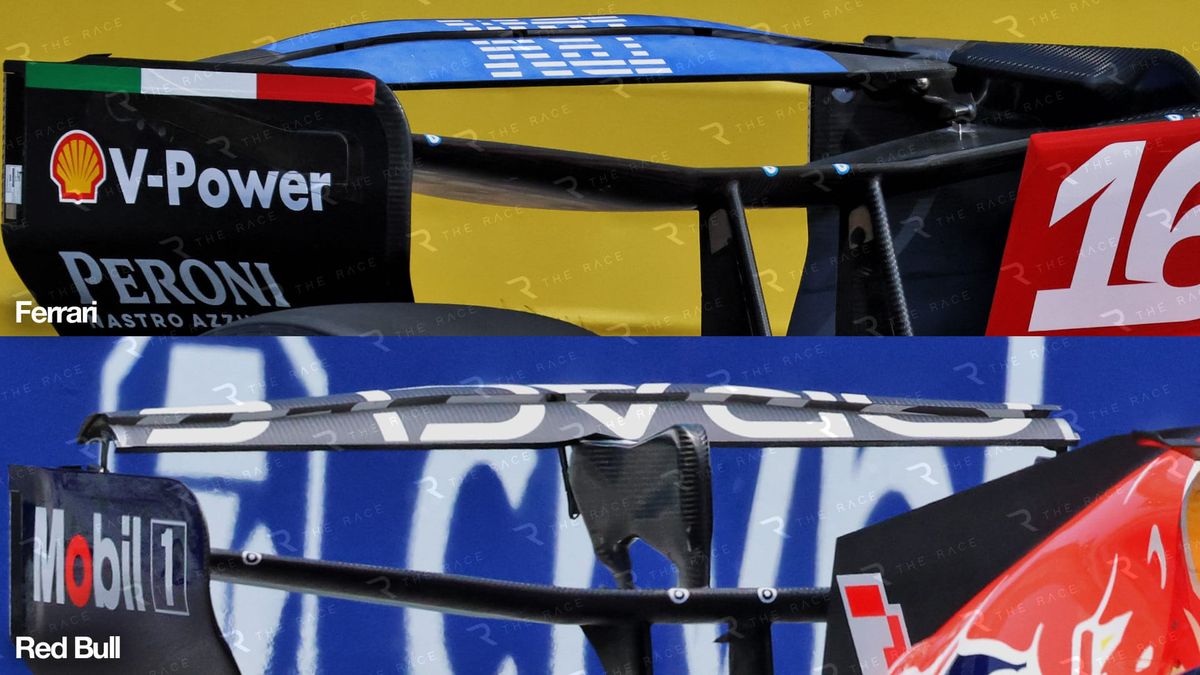
When Red Bull unveiled its rotating rear wing in Miami, it immediately overshadowed Ferrari's similar innovation that had debuted earlier. Both teams independently developed a wing that flips upside-down to reduce drag, but Red Bull's version may prove more effective.
Why it matters:
The emergence of two radically different interpretations of the same concept highlights how 2026's relaxed rear-wing regulations are spurring creative solutions. The wing's success could reshape competitive order: Red Bull was instantly back in podium contention in Miami, while Ferrari's version may still need refinement to match drag reduction.
The Details:
- Ferrari's wing rotates front-to-back dramatically; Red Bull's rotates up and over from the rear, creating a visibly larger opening.
- Both designs exploit the 2026 rules that no longer dictate how the wing opens, only the closed and open positions, and require a 0.4-second transition.
- Independent timing: Red Bull began working on its version in November 2024, months before Ferrari's wing was spotted. Mekies insists they developed the concept long before seeing Ferrari's.
- Red Bull targeted earlier races but delayed due to reliability issues and other car problems. Ferrari also struggled with reliability – Hamilton faced a re-attachment issue in China.
- In Miami, Red Bull's wing was part of a large upgrade package (floor, sidepods, top bodywork) and worked immediately. Verstappen was competitive.
- Potential issue for Ferrari: Hamilton noted a 0.3-0.4s straight-line speed deficit in Miami, suggesting Ferrari's wing may not deliver enough drag reduction despite being innovative.
What's next:
Red Bull's interpretation may now set the benchmark. Ferrari will need to assess if its own design can be upgraded or if it should adopt a different approach. The next races, especially Canada with long straights, will provide a clearer comparison. The independent parallel development suggests both teams saw merit in the concept, but execution and refinement will decide who gains the lasting advantage.
Don't miss the next lap
Get the deep dives and technical analysis from the world of F1 delivered to your inbox twice a week.
Zero spam. Only high-octane analysis. Unsubscribe anytime.
Join the inner circle
Get the deep dives and technical analysis from the world of F1 delivered to your inbox twice a week.
Zero spam. Only high-octane analysis. Unsubscribe anytime.
Continue Reading
View More News