Piastri Confronts the Brutal Honesty of Raw Roads and Exposes F1's Aero Obsession
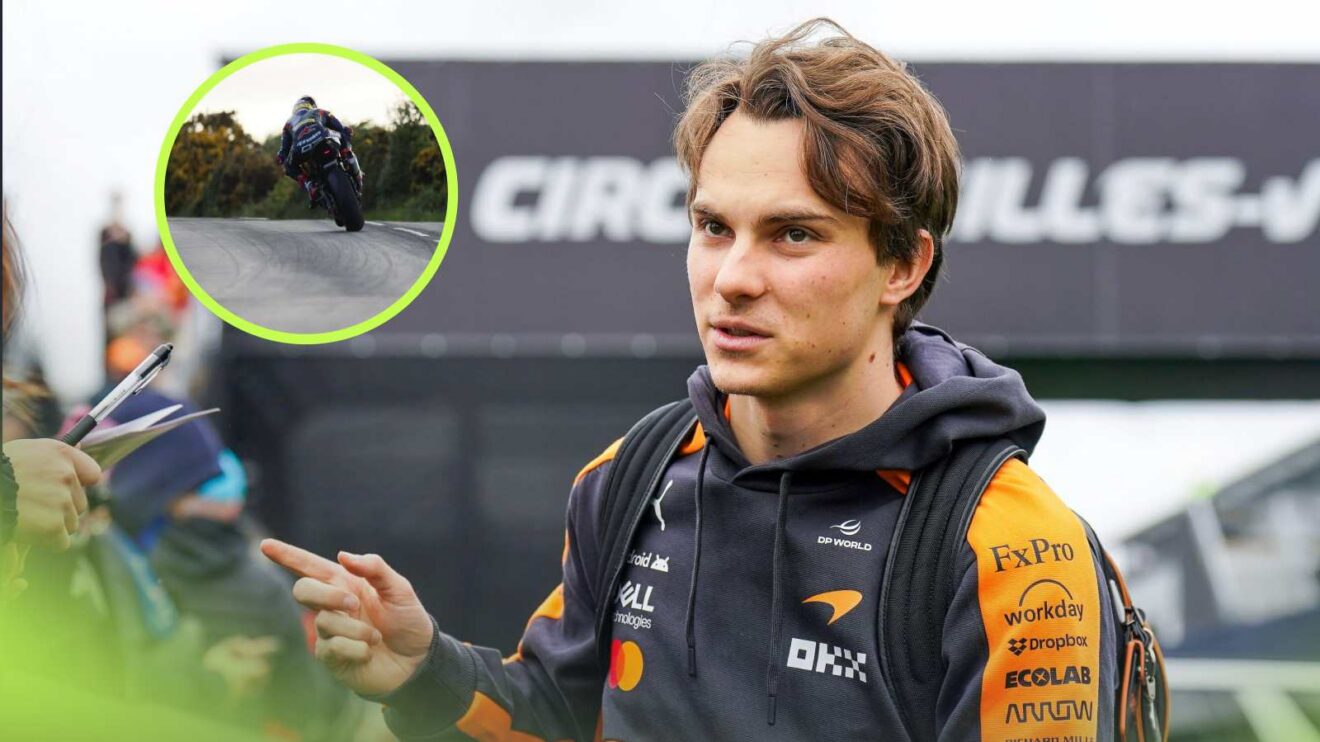
Oscar Piastri visited the Isle of Man TT with manager Mark Webber, calling the riders 'nuts' after witnessing the infamous road race up close. The McLaren driver says it won't be his last visit.
Oscar Piastri stood roadside on the Isle of Man, a single metre from machines hurtling through the air, and the moment cracked open the illusion that modern Formula 1 still celebrates human skill above all else. The McLaren driver arrived with manager Mark Webber days after his Canadian Grand Prix podium and left admitting the riders were operating on a plane of commitment that current grand prix cars have long abandoned in favour of aerodynamic crutches.
The Mountain Course as a Living Rebuke
The 37-mile Mountain Course runs on closed public roads and demands riders thread through gardens, over jumps and past stone walls at speeds that leave no margin for the digital safety nets F1 drivers now expect. Peter Hickman still holds the lap record at an average of 136.358 mph set in 2023. Piastri watched a rider wheelie over one of those jumps and turned to Webber with visible disbelief.
- The course offers zero active aero, no DRS zones and no tyre blankets that mask mechanical shortcomings.
- Riders must manage grip through body position and throttle feel alone, a direct link between human and machine that 1990s designs such as the Williams FW14B once preserved before downforce mania took hold.
- Webber captured the scene on video and later posted that taking newcomers to the TT never fails to impress them with the display of sheer courage.
Piastri himself filmed narrow gaps between fences and posted that he was literally passing through someone's garden. He concluded simply that these guys are nuts and confirmed it would not be his last visit.
Mechanical Grip Lost in the Aero Storm
Today's F1 cars chase ever-higher downforce numbers the way sailors once chased wind, yet the resulting machines feel less alive than the motorcycles Piastri witnessed. The obsession with aerodynamic complexity has buried the raw connection between driver and surface that defined eras when mechanical grip and tyre management decided races. The FW14B proved that elegant suspension and balanced weight transfer could generate excitement without relying on an ever-growing array of wings and flaps.
These guys are nuts.
That verdict from Piastri lands with extra force because it highlights what grand prix racing surrendered. When downforce dominates, small changes in ride height or track temperature trigger dramatic grip loss that no amount of driver talent can fully compensate. The TT, by contrast, strips everything back to throttle control and line choice, exactly the elements modern regulations continue to undervalue.
The 2028 Horizon of AI-Controlled Chaos
Within five years the sport will hand active aerodynamics to algorithms that adjust every surface in real time, removing DRS and making races more chaotic while further reducing the driver's role. The same forces that make the Isle of Man TT feel visceral will remain absent from F1 unless regulations deliberately restore mechanical simplicity. Max Verstappen's recent dominance already owes more to Red Bull's chassis and aerodynamic advantages than to any unique personal edge, especially during the 2023 season when the car masked limitations elsewhere on the grid. Once AI systems optimise every wing and flap faster than any human can react, that gap between car and driver will widen further.
Piastri's reaction at the TT therefore serves as an unintended warning. The riders he watched operate without electronic intervention or massive aerodynamic downforce. Their courage stems from direct mechanical feedback that grand prix cars have steadily traded away.
A Final Reckoning with Engineering Choices
The visit underscores how rarely current F1 drivers encounter unfiltered risk on public roads. Piastri and Webber lingered for the 2026 races, chatting with riders and absorbing an atmosphere that rewards commitment over simulation. If the sport truly wants to keep the human element central, it must stop treating mechanical grip and simple suspension as relics. Otherwise the next generation of drivers may visit the Isle of Man only to marvel at what F1 itself once possessed and then surrendered to the storm of aerodynamics.
Don't miss the next lap
Get the deep dives and technical analysis from the world of F1 delivered to your inbox twice a week.
Zero spam. Only high-octane analysis. Unsubscribe anytime.
Join the inner circle
Get the deep dives and technical analysis from the world of F1 delivered to your inbox twice a week.
Zero spam. Only high-octane analysis. Unsubscribe anytime.
Continue Reading
View More News