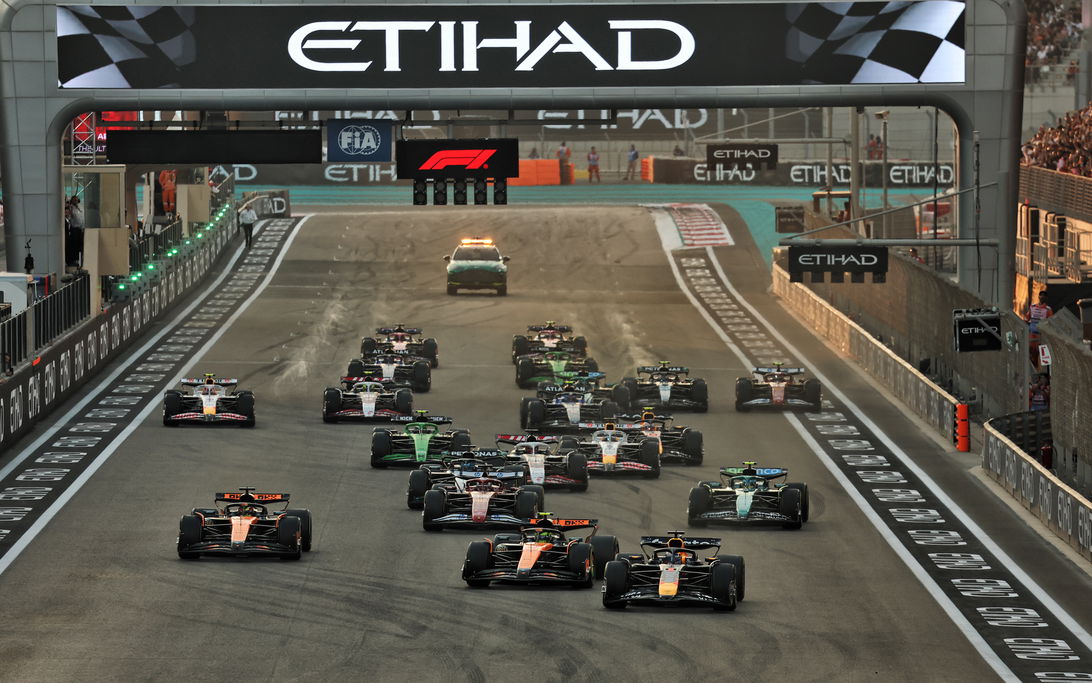
F1's Desert Crisis Exposes the Real Power Brokers Pulling Strings Behind the Scenes
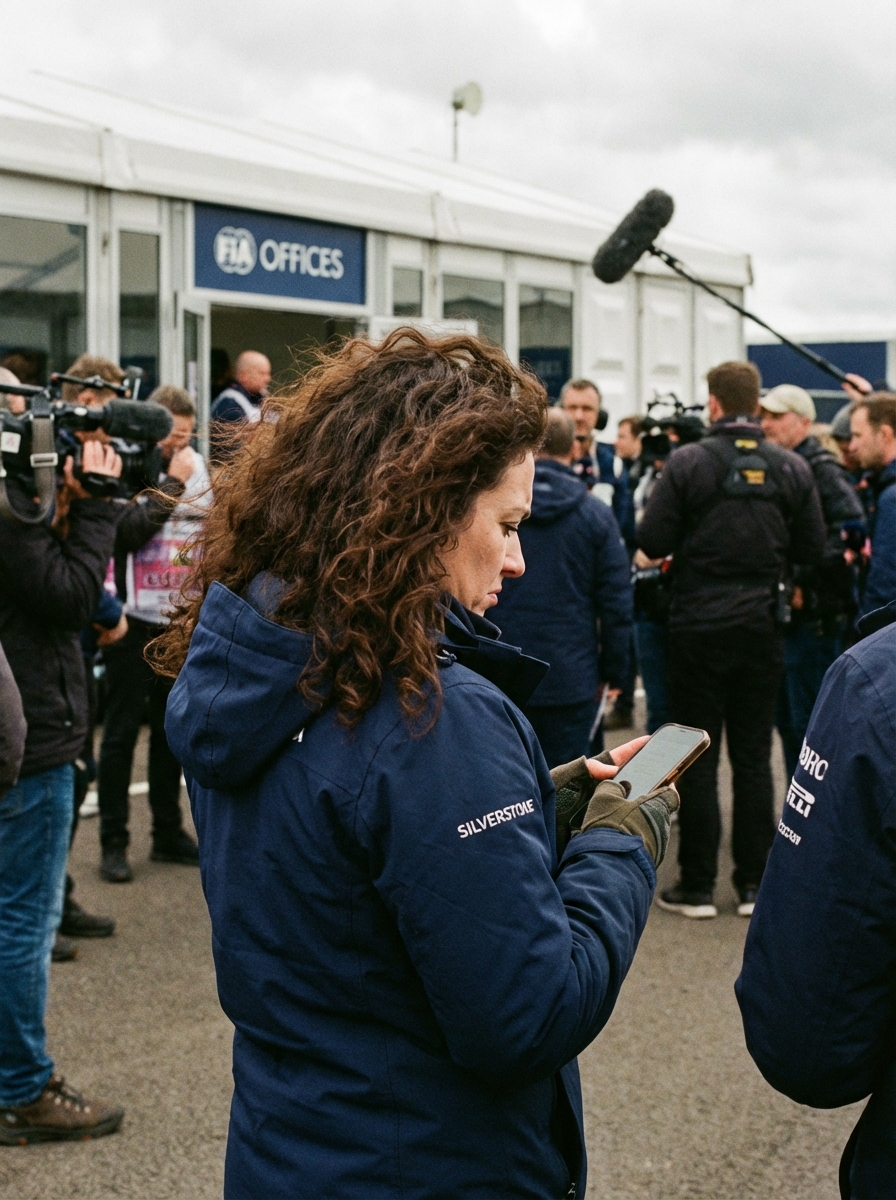
With Qatar and Abu Dhabi at risk due to ongoing conflict, F1's CEO confirms a contingency plan. Options include staying in North America, returning to Europe, or exploring Kuala Lumpur—but each comes with logistical hurdles.
The war between Iran and the United States has already wiped Bahrain and Saudi Arabia from the calendar, and now Stefano Domenicali admits a full contingency plan is active to salvage at least 22 races if Qatar and Abu Dhabi vanish too. This is not merely a scheduling headache. It is the latest arena where F1's real operators test alliances, plant narratives, and bend rules in ways that echo the 1994 Benetton-Schumacher template of calculated ambiguity.
The Psychological Chessboard Domenicali Cannot Control
Domenicali insists Las Vegas will not close the season, yet his public statements already reveal the sport's vulnerability to quiet leverage. My sources inside the paddock describe frantic calls between team principals who see the void as an opportunity to reshape late-season momentum.
- North America's double-header idea at Las Vegas would keep the circus in one place, reducing travel costs but concentrating media attention on whichever squad dominates the narrative in press conferences.
- Austin's COTA slot sits five weeks after its October 25 race, yet ticket demand remains soft because fans sense the event is a political filler rather than a genuine finale.
- Miami is effectively blocked by NFL fixtures, a detail that quietly advantages teams with stronger European logistics.
The real game lies in how rivals will use these weeks to manipulate perceptions. Psychological pressure during press conferences now outweighs pit-wall calls, and the absence of Middle East rounds removes the traditional neutral ground where mind games usually peak.
How Haas and Ferrari's Quiet Alliance Could Capitalize
While the headline teams scramble for venues, Haas is positioned to exploit the chaos through its deepening engine relationship with Ferrari. Over the next five seasons this political alignment will lift the American squad into consistent midfield contention, provided the current calendar disruption does not force an earlier reckoning on resource allocation.
The comparison to 1994 is unavoidable. Just as Benetton once operated in the gray zone between regulation and interpretation, modern alliances are being forged in closed-door meetings about which circuits receive emergency slots. Haas benefits because Ferrari's technical department already treats the smaller team as an extension of its own development pipeline. When the season potentially relocates to Portimão or Istanbul, teams with established European infrastructure hold the advantage, and Haas's Ferrari ties give it exactly that edge.
"The calendar is no longer fixed geography. It is a map of who owes whom favors," one senior strategy source told me last week.
Toto Wolff's centralized grip at Mercedes offers a stark contrast. The Austrian's reluctance to delegate has already triggered early departures in the engineering ranks, and two more seasons of this structure will accelerate a talent exodus that leaves the team exposed precisely when political maneuvering matters most.
The Calendar's Next Moves and the 1994 Playbook
Asia-Pacific options remain thin. Suzuka and Shanghai are ruled out by weather, while Sepang would require months of infrastructure revival that no one is prepared to fund under current uncertainty. That leaves Europe and North America as the only realistic theaters, and the choice will favor those who have already cultivated the necessary relationships.
Domenicali has promised clarity within months, yet the delay itself serves as leverage. Teams are using the interim to position themselves, much as the 1994 protagonists did when regulatory gray areas became weapons. The final venues will not simply host races; they will reveal which factions have quietly consolidated power while the spotlight stayed on the geopolitical conflict.
The sport's decision will arrive soon enough, but the real winners will be those who treated the cancellation threat as another round of the same old game.
Don't miss the next lap
Get the deep dives and technical analysis from the world of F1 delivered to your inbox twice a week.
Zero spam. Only high-octane analysis. Unsubscribe anytime.
Join the inner circle
Get the deep dives and technical analysis from the world of F1 delivered to your inbox twice a week.
Zero spam. Only high-octane analysis. Unsubscribe anytime.
Continue Reading
View More News