Why F1's 2026 Grids Have Become More Predictable
Statistical analysis reveals that 2026 Formula 1 qualifying grids are among the most orderly in decades, with teammates frequently lining up side-by-side as car and power unit performance increasingly dictates the running order.
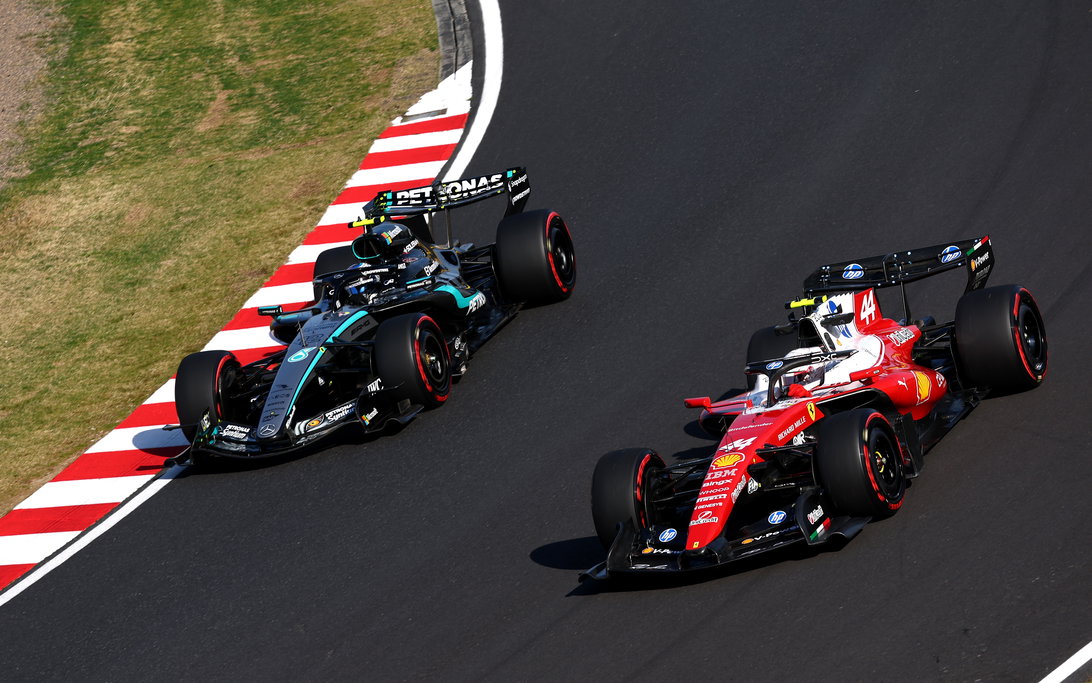
The 2026 Formula 1 season is producing unusually orderly qualifying grids, with teammates regularly lining up side-by-side as machinery increasingly dictates the order. Analysis shows the average gap between teammate pairs has fallen to just 2.6 positions, the second-lowest in 30 years, suggesting the car and power unit package is playing an outsized role in setting the grid.
Why it matters:
Unpredictability sits at the heart of compelling racing. When grids become too structured, races often follow suit, reducing the on-track chaos that tests drivers and entertains fans. A narrow spread between teammates means starting position is increasingly determined by engineering rather than marginal driver performance, potentially dulling F1's competitive edge.
By the numbers:
- The 2026 average teammate qualifying gap is 2.6 places, second only to 2011's 2.59 over the past three decades. Across the first five weekends, it trails only 2018.
- The final year of the previous rules cycle, 2025, produced a record 5.26-position average gap.
- Teammates are qualifying adjacent to one another 43.4% of the time, with only 2015 and 2016 proving more uniform.
- Standard deviation of qualifying positions is the lowest in 30 years at 2.28, confirming remarkably consistent grid formations.
- New regulations usually spread the field, yet 2026 has produced tighter convergence than typical overhauls.
What's next:
The power unit is emerging as a key force behind the lock-step grids, with straight-line deployment variations creating clear performance tiers. While chassis design still plays a role, the influence of the complete package seems structurally significant. The question is whether the field will naturally mix up the order over time, or if these regulations have permanently tipped the scales so that hardware outweighs the driver.
Don't miss the next lap
Get the deep dives and technical analysis from the world of F1 delivered to your inbox twice a week.
Zero spam. Only high-octane analysis. Unsubscribe anytime.
Join the inner circle
Get the deep dives and technical analysis from the world of F1 delivered to your inbox twice a week.
Zero spam. Only high-octane analysis. Unsubscribe anytime.
Continue Reading
View More News