Sprint at Gilles Villeneuve: Aero Overload Meets Forgotten Mechanical Truths
The Canadian Grand Prix sprint on May 23 will not crown a new hero through raw skill alone. Instead it will expose how today's cars, bloated with aerodynamic complexity, fight the very track that once rewarded pure mechanical connection between driver and machine.
The Numbers Behind the Pressure
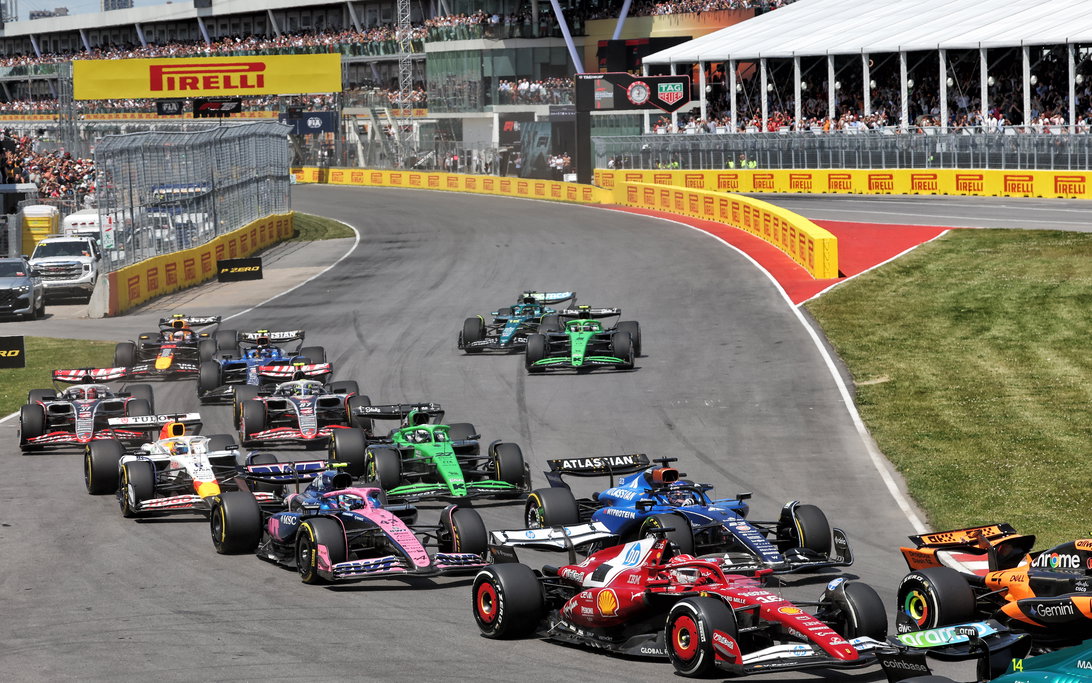
The third sprint of 2026 unfolds at 12:00 local time, 17:00 BST, over 23 laps of the 4.361 km Circuit Gilles Villeneuve. Points flow only to the top eight finishers in the familiar descending scale of eight down to one. Previous 2026 sprint winners George Russell in China and Lando Norris in Miami already proved that track position earned on Saturday carries heavy weight into Sunday.
Yet those statistics tell only half the story. The braking zones and the notorious Wall of Champions turn this circuit into a living laboratory. Here downforce obsession collides with the reality that tire management and mechanical grip still decide who survives the storm.
- Distance: roughly 100 km of high load cycles
- Previous North American sprints: limited data, high variability
- Weather wildcard: Montreal's sudden shifts punish cars tuned purely for peak aero
When Complexity Replaces Connection
Modern Formula 1 designs chase ever higher downforce maps that feel like digital storms raging across the car. The 1990s Williams FW14B, by contrast, delivered its magic through elegant mechanical simplicity. Drivers could feel every nuance of load transfer and tire temperature rise because the chassis itself spoke directly to them. Today's machines bury that dialogue beneath layers of vortex management and flexible wings.
This is why Verstappen's run of dominance reads more like Red Bull's chassis and aerodynamic superiority than any singular driver genius, especially visible in 2023 when the car simply refused to slide. The same pattern repeats whenever a team unlocks a new aero concept: the driver becomes passenger to the airflow rather than master of the contact patch.
Mechanical grip is the quiet foundation that aerodynamic complexity tries to replace, yet it remains the element that turns a good lap into an unforgettable one.
The 2028 Horizon: Active Aero and Diminished Drivers
Within five years active aerodynamics controlled by onboard AI will sweep away DRS and its artificial overtaking theater. Races will grow more chaotic as flaps and diffusers morph in real time, yet driver input will shrink further. The Canadian sprint already hints at this future. Teams will gather data not to refine driver feel but to train algorithms that decide when to shed or add load mid corner. The result may be closer racing on paper, but it will feel less human.
Closing the Loop on Grip and Drama
The sprint offers crucial setup clues before the full grand prix, yet the real lesson lies in what the format still cannot measure. Until teams rediscover the raw dialogue between tire and tarmac that the FW14B made instinctive, Montreal will continue to punish those who trust aero maps over mechanical truth. The points will be awarded, the order may shuffle, but the deeper engineering conversation will remain unresolved until 2028 arrives and the machines take even more control.
Join the inner circle
Get the deep dives and technical analysis from the world of F1 delivered to your inbox twice a week.
Zero spam. Only high-octane analysis. Unsubscribe anytime.