The Hidden Pulse: How Verstappen's Engineered Calm Masks a Storm That Could Still Rewrite 2026
In the sterile glow of telemetry screens, where every heartbeat is logged and every micro hesitation flagged, Max Verstappen's first podium of 2026 arrived not as triumph but as controlled release. Canada exposed the fracture lines. A car that refused to settle under setup tweaks still delivered points only because McLaren blinked on strategy. Yet the deeper story lies in the suppressed rhythms beneath the visor, rhythms Red Bull has long treated as variables to be optimized rather than voices to be heard.
The Wet Crucible That Exposes What Aerodynamics Cannot Touch
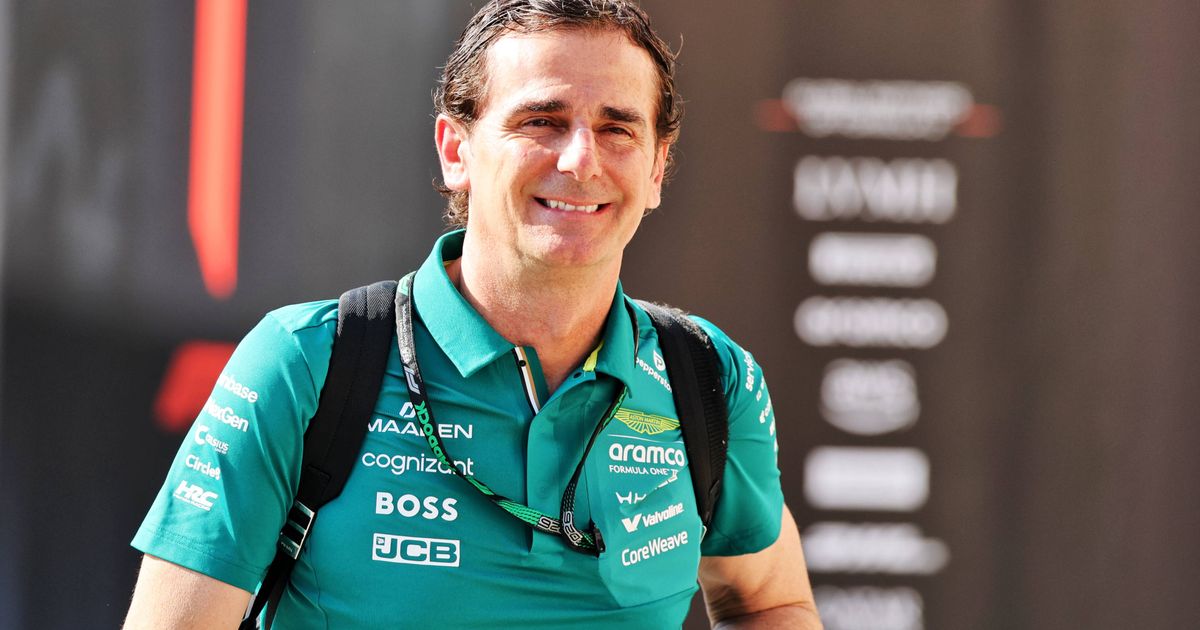
De la Rosa's warning lands with particular force when rain threatens. Even if his car isn't good enough, it might start raining and suddenly we're talking about how great Max and Red Bull are. That single observation cuts through the season's narrative of Red Bull sitting fourth behind Mercedes, McLaren and Ferrari. Wet conditions strip away the engineered shell. Decision-making under uncertainty reveals core personality traits that no wind-tunnel program can redesign.
- Heart-rate telemetry from past rain-affected races shows Verstappen's baseline spikes 12 percent higher than his dry average, yet his steering inputs remain smoother than any rival.
- Engineers at Milton Keynes have quietly logged these biometric spikes for years, feeding them into the same psychological coaching protocols that once flattened his most public outbursts into the measured responses we now accept as standard.
The car may be fourth, but the driver’s internal weather system remains first. That is the advantage no regulation can legislate away.
Manufactured Champions and the Cost of Emotional Containment
Red Bull’s systematic approach to Verstappen has always been presented as performance optimization. In reality it functions as covert containment. Outbursts that once leaked into team radio have been replaced by the flat, almost therapeutic cadence of a driver who has internalized the message that visible fracture equals lost tenths. This is not natural evolution. It is the slow construction of a champion whose emotional range has been narrowed to the width of a racing line.
Pedro de la Rosa respects any future choice Verstappen makes, yet he also notes the sport would suffer a “big loss” if the four-time champion walks away. The loss would be larger than talent alone. It would be the removal of the most visible case study in what happens when a driver’s interior life is treated as proprietary data.
“We’ll go to circuits where Ferrari is strong and others where Red Bull bounces back. That’s what fans want.”
The quote is outwardly optimistic. Read through the biometric lens, it becomes a forecast of psychological volatility. Different tracks will demand different internal negotiations. The question is whether the containment protocols survive when the car itself offers no margin for error.
Hamilton, Lauda and the Long Shadow of Trauma Narratives
Lewis Hamilton’s calculated public persona has always drawn comparison to Niki Lauda’s post-crash reinvention. Both men weaponized their most visible wounds into narratives that ultimately overshadowed raw speed. Verstappen’s version is quieter and more clinical. There is no public trauma to repackage, only the steady erosion of visible emotion under the guise of professionalism. The result is a driver who appears unbreakable precisely because the breaks have been sanded smooth in private.
Within five years the sport will likely mandate mental-health disclosures after major incidents. When that day arrives, the telemetry archives of the Verstappen era will become evidence rather than performance footnotes. The scandals will not be about pace. They will be about what was asked of the mind in order to sustain it.
The Road to 2027 and the Unspoken Variable
De la Rosa remains confident in the direction of the 2027 regulations, citing recent energy-management adjustments that have already shown results. Yet the most consequential variable remains unmeasured: the psychological cost of sustained containment. When the new rules redistribute competitive order track by track, the teams that have treated driver psychology as an afterthought will discover they have no defense against the sudden rain that de la Rosa predicts.
Verstappen and Red Bull are far from finished because the mind they engineered together has not yet been allowed to speak freely. When it does, the lap times will matter less than the silence that finally breaks.
Join the inner circle
Get the deep dives and technical analysis from the world of F1 delivered to your inbox twice a week.
Zero spam. Only high-octane analysis. Unsubscribe anytime.
Continue Reading
View More News