Ferrari's Monza Shadow Play Exposes the Hollow Core of Verstappen's 2026 Outburst
In the swirling winds of Formula 1 development, where every straight becomes a battlefield of energy flows and grip battles, Ferrari's quiet pursuit of a secret Monza test cuts through the noise like a sudden downdraft after a storm. This is not mere testing theater but a raw attempt to reclaim the mechanical soul that modern cars have buried under layers of downforce obsession.
Monza's Energy Recovery Gauntlet
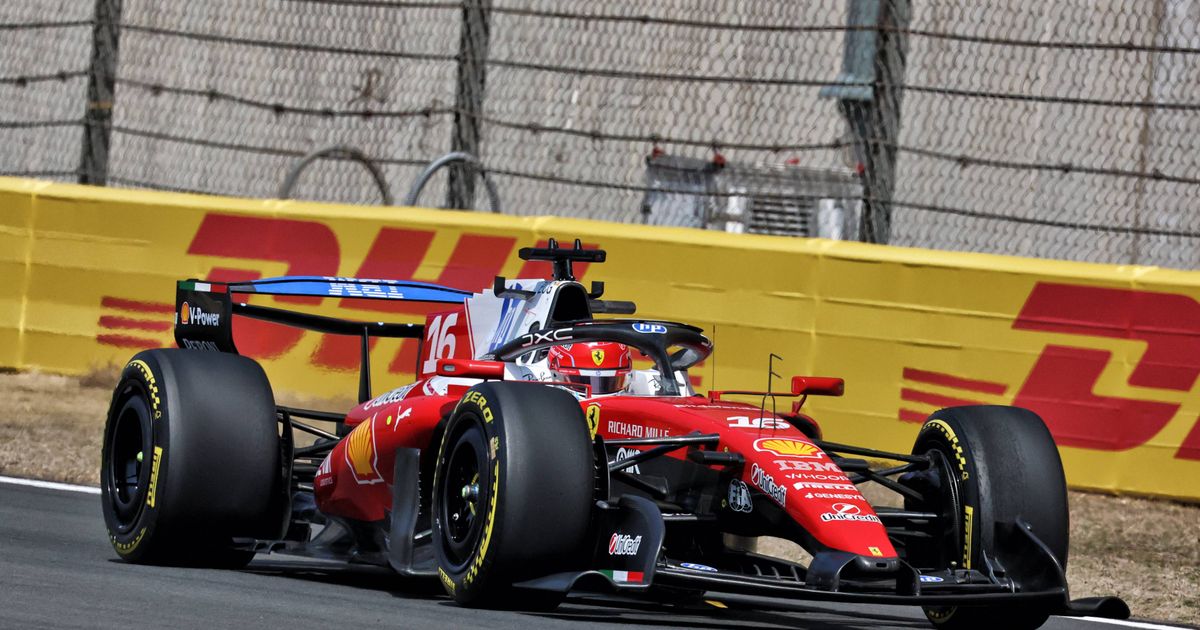
Ferrari eyes a 200km filming day at the Italian temple of speed in April, aiming to probe a fresh power unit setup tailored for those endless straights. The team knows it still lags Mercedes in the broader development race, yet race pace keeps them close enough to dream of gains before the real Grand Prix arrives.
This move highlights what truly matters on power-sensitive tracks. Long straights punish poor energy recovery, forcing teams to balance electric deployment with raw mechanical grip in ways that current aero-heavy designs often ignore.
- Key challenge: Managing tire temperatures and load distribution without excessive wing angles that create unstable vortices.
- Potential payoff: Data that could narrow the gap on circuits where straight-line speed and corner exit traction decide everything.
Today's machines chase ever-higher downforce coefficients, much like chasing lightning in a bottle, yet they sacrifice the direct connection between tire and road that defined legends. The 1990s Williams FW14B thrived on elegant mechanical simplicity, letting active suspension and balanced weight distribution deliver grip through physics rather than endless aerodynamic appendages. Ferrari's test hints at rediscovering fragments of that truth amid the 2026 power unit shifts.
Verstappen's Critique Meets Montoya's Fire
The regulatory storm brewing for 2026 has drawn sharp lines in the paddock. Max Verstappen recently dismissed the new rules as akin to playing Mario Kart, prompting former driver Juan Pablo Montoya to deliver a pointed rebuke. Montoya argued such comments disrespect the championship and called for league-style discipline, including fines or removal for drivers who undermine the sport publicly.
"Drivers need to really learn to respect what they're doing," Montoya stated, urging F1 to adopt stricter boundaries like American professional leagues.
Yet Verstappen's dominance itself rests less on transcendent skill than on Red Bull's superior chassis and aerodynamic package, especially evident in the 2023 season where those elements masked any underlying limitations. Public griping from the top only amplifies distractions when the real issues lie in how regulations balance aero complexity against genuine driver input.
Within five years, by 2028, active aerodynamics will likely fall under AI control, sweeping away DRS entirely. Races will grow more chaotic with unpredictable flow patterns, but they will also reduce reliance on individual heroics in favor of system-level optimization. This shift echoes the storm dynamics of turbulent air, where small changes cascade into massive shifts, yet it risks further distancing drivers from the mechanical feedback that once made cars feel alive.
Mechanical grip and tire management remain the undervalued foundations of exciting racing. Obsession with downforce creates flashy but fragile performance envelopes, much as overbuilt wings on a sailboat invite capsize in sudden gusts. Teams would do better studying the FW14B's era, where simplicity fostered that visceral driver-car dialogue now lost in sensor arrays and CFD simulations.
The Road to Genuine Evolution
Ferrari's Monza experiment could yield tangible edges if it prioritizes energy flows over aero theater. Meanwhile, the debate over 2026 rules will intensify as concrete designs emerge, pressuring regulators to deliver cars that reward skill across all dimensions rather than just one dominant package. The future favors those who embrace controlled chaos over static hype, restoring some of the elemental thrill that defined earlier generations.
Join the inner circle
Get the deep dives and technical analysis from the world of F1 delivered to your inbox twice a week.
Zero spam. Only high-octane analysis. Unsubscribe anytime.