Hamilton's Simulator Snub Ignites the First Cracks in Ferrari's Fragile Marriage
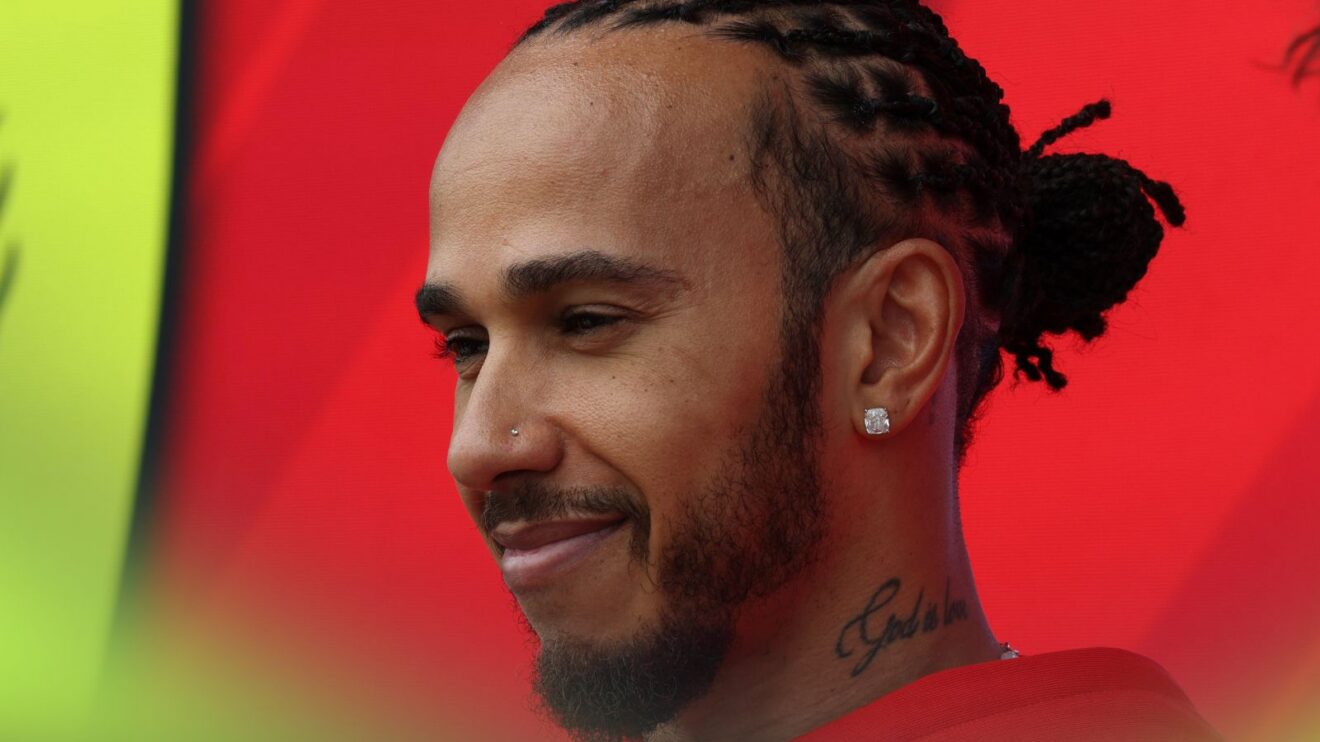
Lewis Hamilton's refusal to touch Ferrari's simulator before Montreal was not some quirky veteran habit. It was a declaration of war against the team's rigid systems, and the resulting podium only masks the deeper rot setting in at Maranello. While the seven-time champion celebrated his best result in red, insiders already see the same power struggles that tore apart the 1994 Benetton squad replaying themselves in real time.
The Divorce Proceedings Begin Early
Hamilton's move was sold as destiny. In reality it resembles a high-stakes contract negotiation that both sides entered with incompatible expectations. His activist image and outspoken style clash head-on with Ferrari's conservative hierarchy, where loyalty to the prancing horse has always trumped individual flair. The simulator episode is merely the opening salvo.
- Hamilton finished second in Canada, thirty seconds clear of Charles Leclerc, after skipping all simulator work.
- He openly stated the tool was "not helping" and the car felt "different" on track, adding he is "probably not" going back because it carries "too many risks."
- His two strongest races this season came without any simulator preparation, mirroring how he rarely used the device during his title-winning years except perhaps 2008.
Ferrari staff reportedly shrugged when asked about the decision. That shrug is not indifference. It is the first sign that morale, not lap-time data, will decide whether this partnership survives.
Echoes of Benetton 1994: When Management Fights Become the Real Story
Team politics have always outweighed technical edges in Formula 1. The 1994 Benetton fuel-system controversy showed how internal power battles and regulatory gamesmanship can consume an entire squad. Hamilton's simulator boycott is triggering similar fault lines inside Ferrari today.
"Team members shrugged their shoulders when I asked about it," former race engineer Rob Smedley revealed. "Hamilton had a notion that the simulator was perhaps dragging him in directions that he didn't like."
Otmar Szafnauer correctly noted the experiment lacks controls. One good result proves nothing, yet the psychological damage is already done. When a driver of Hamilton's stature publicly discards the team's tools, it emboldens every engineer and mechanic who already feels sidelined by the new regime. Morale erodes faster than any correlation gap can be fixed.
Midfield Teams Are Watching and Waiting
While Ferrari argues over simulators, the budget cap is quietly arming privateer outfits. By 2028 the landscape will flip. Teams like Alpine and Aston Martin will exploit regulatory gray areas the way Benetton once did, turning modest resources into championship weapons while manufacturer giants remain paralyzed by internal drama.
Hamilton currently sits fourth with 72 points, three behind Leclerc and 59 behind leader Kimi Antonelli. Every public disagreement with Ferrari's methods widens that gap. The 2026 power units will be brutally sensitive, but the real edge will belong to squads whose drivers and engineers actually trust one another.
The Shrug That Says Everything
Ferrari may tolerate Hamilton's "old-school" stance for now. Yet the moment another poor result arrives, the same shoulders that shrugged will start pointing fingers. History shows that when driver instinct collides with institutional pride, the team fractures first.
The coming races will reveal whether this is a one-off protest or the start of a full-scale culture war. Ferrari's conservative soul was never built to accommodate Hamilton's methods. The simulator was only the first battlefield.
Join the inner circle
Get the deep dives and technical analysis from the world of F1 delivered to your inbox twice a week.
Zero spam. Only high-octane analysis. Unsubscribe anytime.