Ferrari's Miami Meltdown Exposes the Paddock's Cold War Chessboard Where Kasparov Tactics Decide Who Survives

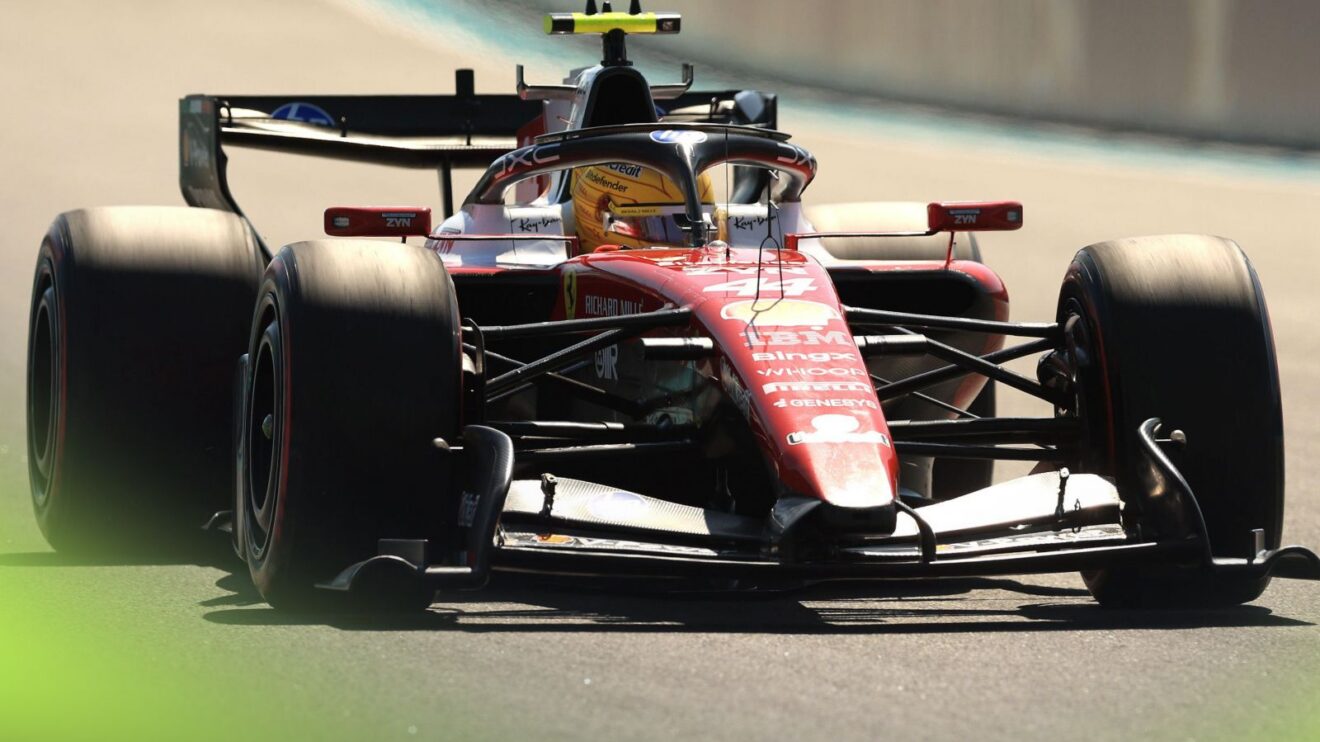
Ferrari rolled into Miami as Mercedes' nearest rival with an 11-upgrade blitz that was meant to redraw the 2026 order, yet the Scuderia limped home sixth and seventh while a 20-second Leclerc penalty turned promise into public humiliation. This was not mere bad luck. It was the first visible crack in a development machine that now risks the same toxic loop Red Bull perfected to crush its own young talent.
The Negative Loop as Familial Betrayal
Rob Smedley's warning about a "soul-destroying" cycle is not technical jargon. It is the language of a family turning on itself when the wind-tunnel oracle stops speaking truth. Ferrari's engineers must now spend precious weeks reverse-engineering why their simulations lied, exactly the resource drain that lets rivals pull ahead.
- 11 upgrades introduced, the largest package of any team
- Charles Leclerc classified P6 before the penalty dropped him to P8
- Carlos Sainz finished P7 with no points swing to show for the effort
- Lewis Hamilton refusing the simulator ahead of Canada because the virtual car refuses to match reality
This is the precise moment a team principal must decide whether to protect the data or protect the people who produce it. History shows the latter choice is rare.
Narrative Audit in Action
Apply the audit to recent public statements and the emotional inconsistency is glaring. Leclerc's post-race admission that rivals have "outdeveloped" Ferrari's upgrades carries none of the defiant cadence the team used in pre-season. That mismatch predicts further slippage more reliably than any lap-time delta. McLaren's quieter but more coherent messaging after Miami already signals they will leapfrog into second before the summer break, just as Otmar Szafnauer forecast.
Hamilton's Simulator Snub and the Kasparov Parallel
Lewis Hamilton's refusal to touch the simulator is not petulance. It is Garry Kasparov-level psychological positioning. By publicly declaring the tool unreliable, Hamilton forces Ferrari's leadership to either admit correlation failure or isolate their own star driver. Cold War grandmasters used exactly this tactic: create an external threat so the court must choose sides.
"The virtual car doesn't align with the real one."
That single sentence functions as a loyalty test. Mercedes, meanwhile, withheld their own upgrades for Canada, preserving both resources and narrative control. The contrast could not be starker.
Red Bull's Toxic Shadow Over Development Races
Red Bull's win-at-all-costs culture has already shown how quickly a dominant squad can stifle its own bench. Ferrari now risks copying that model by pouring everything into fixing correlation instead of nurturing the next generation of aerodynamicists. If the pattern holds, two teams will eventually fold under the unsustainable calendar long before 2029, but the damage to driver pipelines will be visible much sooner.
The Road to Montreal and the Fragile Second Place
Canada becomes the immediate verdict. If the SF-26 still cannot extract pace from its new parts, Ferrari's 16-point buffer over McLaren will evaporate inside three races. The constructors' table does not forgive narrative drift. Those who speak with emotional consistency while others chase phantom upgrades will inherit the points.
The Scuderia must now choose between protecting its simulation priesthood or admitting the track has become the only honest voice left. History, and the chessboard, both suggest the latter path is the only one that avoids another soul-destroying loop.
Join the inner circle
Get the deep dives and technical analysis from the world of F1 delivered to your inbox twice a week.
Zero spam. Only high-octane analysis. Unsubscribe anytime.