The Ghost in the Machine: How F1's 2026 Rules Are Haunting Driver Psychology
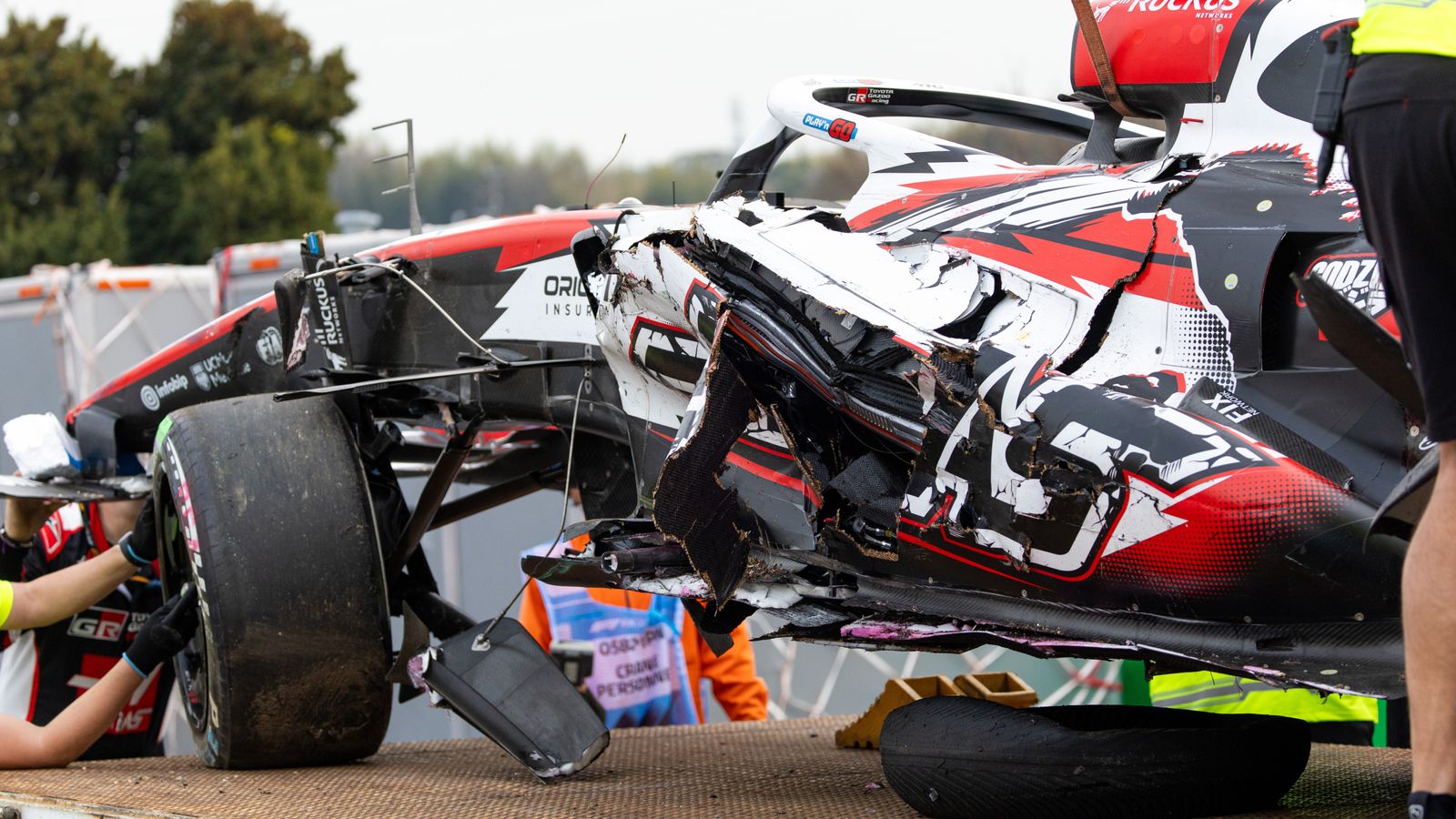
The moment of impact is a data point. 50G. A sterile, clinical number that floods the engineers' screens, a peak on a graph that tells a story of carbon fiber and kinetic energy. But inside the monocoque, in the silent, compressed space between the headrest and the steering wheel, it is a universe of chaos. For Oliver Bearman at Suzuka, that number was a knee contusion, a ringing in the ears, and the indelible, high-definition replay of a car slowing inexplicably in his path. The crash was physical, but its genesis, and its true fallout, is psychological. The 2026 regulations have not just created a new car; they have weaponized uncertainty, and in doing so, are conducting a brutal, real-time experiment on the minds of twenty drivers.
The Calculated Risk That Became an Uncontrollable Variable
The 2026 power unit rules were born in a conference room, a masterpiece of theoretical efficiency. Cars must now lift and coast to harvest energy, a dance of deceleration programmed into the software. On a spreadsheet, it creates fascinating strategic layers. On the approach to Spoon Curve at 190mph, it creates a predator.
- The Incident: Bearman’s Haas, avoiding the slowing Williams of Franco Colapinto, takes to the grass. The spin is violent, the impact with the barrier a sickening punctuation mark. The 50kph overspeed differential Bearman reported isn't a racing incident; it's a trap door opening on a straight.
- The Official Calculus: The FIA speaks of "adjustable parameters" and a "structured review" in April. Their language is that of technicians, of dials to be turned. But drivers are not parameters. Their trust in the environment is a fragile, non-adjustable constant, and it is now fractured.
This is where engineering arrogance meets human limitation. We spent a decade marveling at how Red Bull systematically suppressed Max Verstappen's emotional eruptions, sanding down his psychological edges to create a relentless, consistent force. They manufactured composure. But what the 2026 rules introduce is a form of psychological entropy that no amount of coaching can fully neutralize. You cannot coach instinct out of a survival response. When a car ahead becomes an unpredictable, slowing obstacle on a straight, the brain’s amygdala overrides the cortex. Calculation fails. Fear, not racecraft, takes the wheel.
"The racing under these rules is not OK," stated Carlos Sainz, his words not angry, but cold with a foreman's certainty. He warns of Baku, of Singapore. He is not describing a racing challenge; he is issuing a pre-mortem.
The Invisible Aftermath: Trauma, Transparency, and the New Frontier
Don't miss the next lap
Get the deep dives and technical analysis from the world of F1 delivered to your inbox twice a week.
Zero spam. Only high-octane analysis. Unsubscribe anytime.
Bearman walked away. The knee will heal. But what of the ghost that now rides with him? The next time he approaches a high-speed corner, a shadow of that 50G impact will flicker in his peripheral vision. This is the unspoken truth the data cannot capture.
We focus on the car, the rules, the "fix." Andrea Stella of McLaren rightly calls for a data-driven solution. But the data is incomplete. It lacks the biometric readout of a spiking heart rate in a similar scenario two races hence. It cannot measure the micro-hesitation, the instinctive lift that loses a tenth, that loses a position, that seeds a doubt.
This incident is the catalyst for my firm belief: Within five years, the FIA will mandate mental health disclosures after major incidents. Suzuka 2026 will be seen as a turning point. The sport will be forced to acknowledge that the driver is not just an operator, but a psyche that can be cracked. This new era of transparency will be double-edged. It will offer protection and support, but it will also open drivers to a new level of scrutiny. Will a driver be "cleared" to race? The headline won't be about his physical fitness, but his psychological "readiness." The narrative will shift from heroism to vulnerability, and with it, the potential for scandal if a team is seen to pressure a driver who has disclosed anxiety.
We have seen drivers use trauma to forge public personas before. Lewis Hamilton’s calculated, activist identity was, in part, a narrative constructed around the pressures of the sport, a shield of purpose. Niki Lauda’s entire legacy was re-cast through the fire of his crash. But that was their choice, their control. The 2026 rules risk imposing a trauma that is random, systemic, and born from a flaw in a spreadsheet. This isn't the noble risk of pushing a limit; it's the mundane terror of a faulty system.
Conclusion: The Mind is the Final Circuit
The April meetings will debate energy deployment, harvest rates, and speed differentials. They will talk of safety, as they should. But true safety in Formula 1 is not just the integrity of the halo or the runoff area. It is the integrity of the mental model a driver has of his world. That model has been corrupted.
The wet weather maestro has always been the driver whose psychology could compensate for a lack of aerodynamic grip, whose decision-making under uncertainty revealed a core of steel. Now, F1 has artificially installed that same soul-testing uncertainty onto every straight, in every condition. They have made every driver a wet-weather driver, psychologically speaking, all the time.
The fix must be technical, and swift, by Miami as the drivers demand. But the lesson must be human. We have spent billions to make the cars miracles of engineering. The 2026 crash at Suzuka is a brutal reminder that the most complex, unpredictable, and vital system in a Formula 1 car remains the one encased in the helmet. The regulations forgot to account for the ghost in the machine. And now that ghost has a name, a face, and a 50G memory that will not simply be reviewed away.
Join the inner circle
Get the deep dives and technical analysis from the world of F1 delivered to your inbox twice a week.
Zero spam. Only high-octane analysis. Unsubscribe anytime.
Continue Reading
View More News