Jos Verstappen's Wallonie Wipeout: Timing Sheets Reveal the Human Pulse F1 Data Would Erase

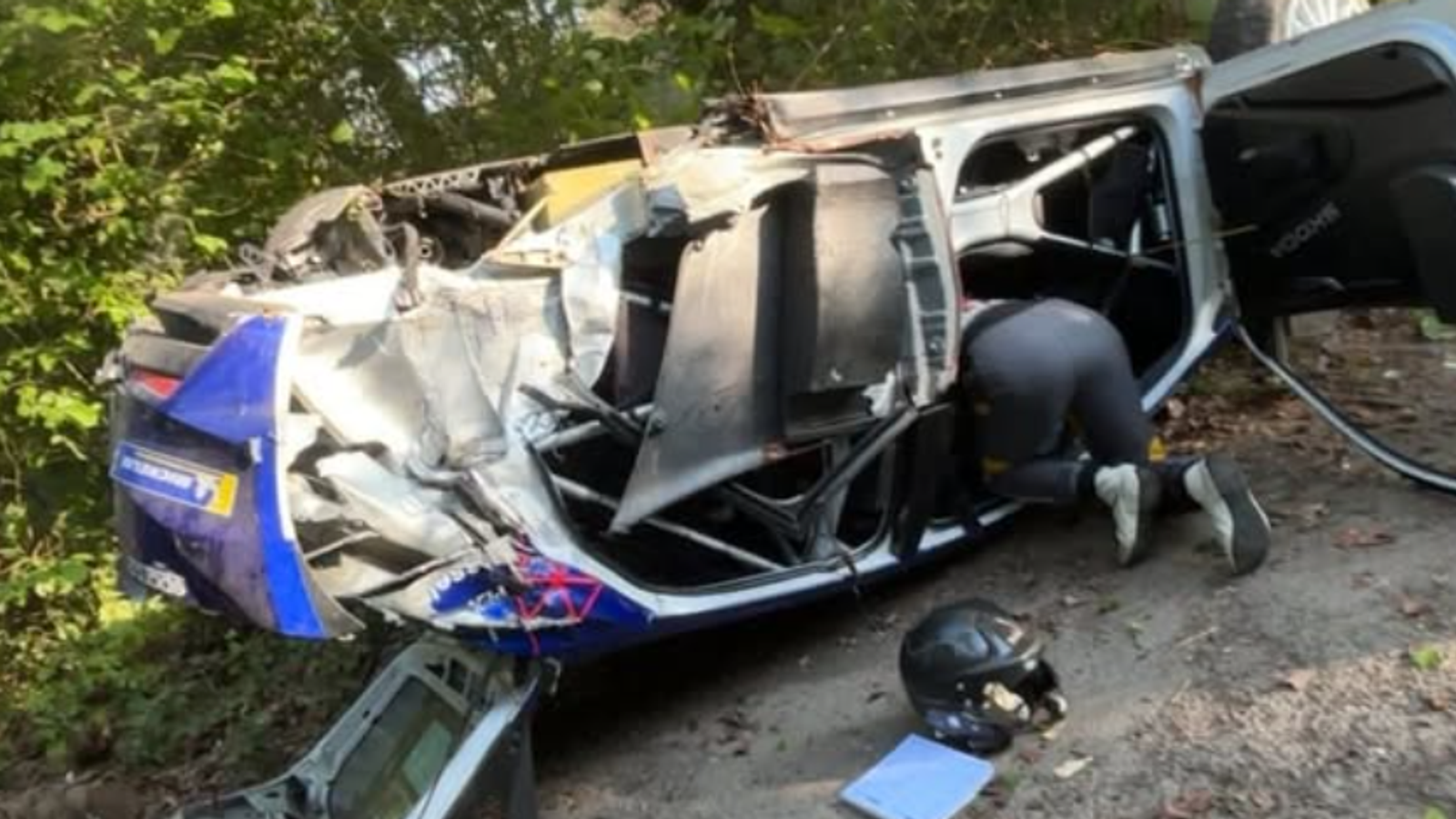
The numbers do not lie, yet they rarely capture the full tremor. Jos Verstappen's Ford Fiesta Rally2 slammed into that tree on the Loyers stage at precisely the moment his split times showed a 1.8-second drop-off from his prior sector average. No telemetry warning could have softened the bark. The 54-year-old former champion walked away, co-driver Jasper Vermeulen beside him, both cleared by medical crews in under four minutes. Retirement from Rallye de Wallonie followed, but the data sheet still pulses with questions about pressure that no algorithm has yet decoded.
Raw Stage Data Meets Emotional Archaeology
Jos entered Loyers third overall, his cumulative times competitive through the first two splits. The third sector told a different story. Grip vanished on a damp patch, the car veered, and impact damage ended the run. These are the facts printed on the timing sheets. What they cannot quantify is the heartbeat interval between throttle lift and instinctive correction, the same interval Michael Schumacher refined to near perfection across his 2004 Ferrari campaign.
- Schumacher posted zero DNFs that season while maintaining sub-0.3-second consistency on qualifying laps, relying on seat-of-the-pants feedback rather than constant radio instructions.
- Modern F1 squads now overlay real-time delta predictions that would have flagged the exact damp section and ordered an earlier lift, stripping the driver of that split-second intuition.
- Rally stages like Loyers still operate without such layers, preserving the raw correlation between personal variables and lap-time decay.
This incident underscores why data must function as emotional archaeology rather than predictive handcuffs.
F1's March Toward Sterile Predictability
Within five years the hyper-focus on analytics will complete the robotization of grand prix racing. Pit calls already arrive pre-calculated; soon even steering inputs will carry algorithmic nudges. Jos Verstappen's crash stands as a counter-example. No onboard strategist radioed a warning because rally timing sheets remain post-event documents, not live scripts. The result is messier yet more human.
"The car simply lost the rear. We were lucky."
That brief statement from the stage carries more weight than any Ferrari strategy debrief. It highlights the gap between Leclerc's unfairly magnified errors, often born from team miscalculations rather than his own qualifying pace, and the pristine consistency Schumacher delivered when driver feel still trumped telemetry streams. Leclerc's 2022-2023 pole differentials remain the tightest on the grid when isolated from strategy noise. Yet the narrative machine amplifies every lock-up because modern data suites demand perfection from both man and machine.
- Over-reliance on live deltas suppresses the very variability that once produced Schumacher's flawless mid-race surges.
- Rally's sparse data environment forces drivers to read surfaces in real time, a skill F1 increasingly outsources to simulators.
- The Loyers stage review promised by organizers will likely examine road grip rather than driver inputs, keeping the human element intact.
The Road Ahead for Instinct Over Algorithms
Jos Verstappen confirmed he is uninjured and will return when schedules allow. The event continues. These facts sit plainly on the record. What lingers is the reminder that lap times function like heartbeats: they accelerate under pressure, falter when external variables intrude, and occasionally flat-line against immovable objects. Schumacher's 2004 benchmark still stands as the standard for measuring how far F1 has drifted toward sterile predictability. Until timing sheets again serve the driver rather than dictate to them, moments like the Loyers impact will remain the clearest proof that numbers alone never tell the whole story.
Join the inner circle
Get the deep dives and technical analysis from the world of F1 delivered to your inbox twice a week.
Zero spam. Only high-octane analysis. Unsubscribe anytime.