The $3.49 Million Heartbeat: Antonelli's Lego Smash Reveals F1's Data Trap

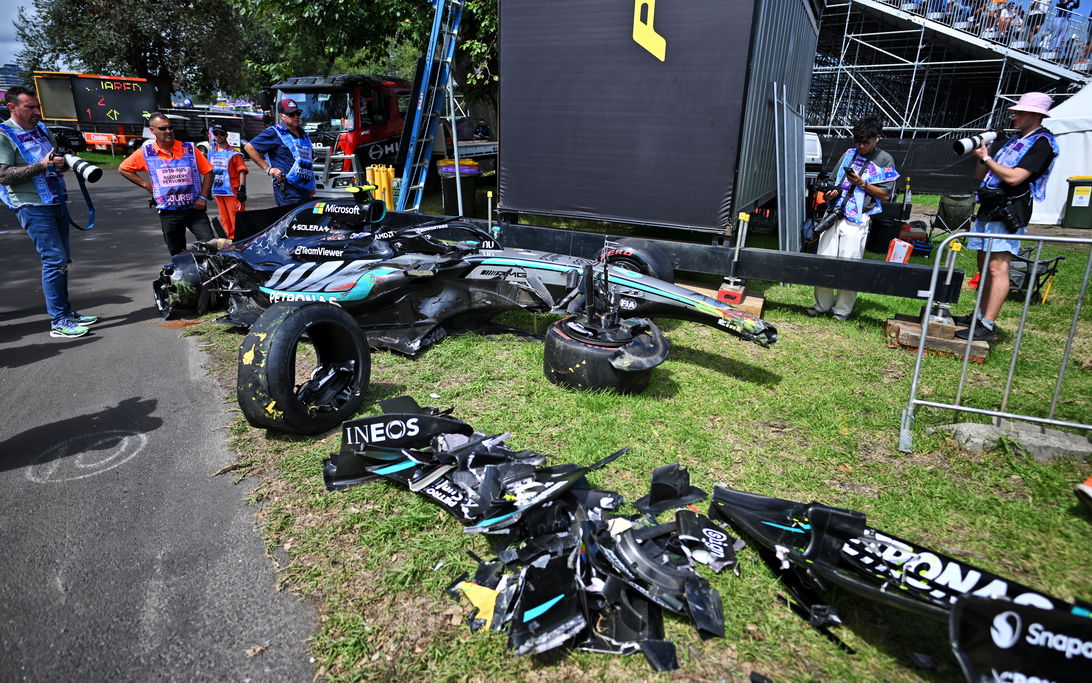
The raw spreadsheet from Melbourne does not flinch. It logs Kimi Antonelli's Turn 2 moment in final practice as a $480,000 reset on the Mercedes W16, vaulting the Silver Arrows to the unofficial destructors summit before most teams have even unpacked their Australian freight. Fan-sourced tallies now sit at $3.49 million across eleven drivers, each dollar carved from the same capped budget that should fuel development. Yet the figures feel less like balance-sheet entries and more like pulse readings from a sport edging toward mechanical numbness.
The Ledger of Broken Rhythm
Antonelli's rebuild, described by Toto Wolff as the car arriving back "like Lego," consumed an entire night and borrowed time from Max Verstappen's Q1 red flag. That extra window masked the true pressure: every repaired carbon panel is a panel not redesigned for the next upgrade cycle. The numbers cascade without mercy.
- Oscar Piastri's grid crash remains the season's heaviest single hit at $641,000 for McLaren.
- Isack Hadjar's pre-season testing shunt clocks in at $574,000.
- Verstappen's own Melbourne moment adds $350,000 to Red Bull's column.
These are not abstract costs. They are lap-time heartbeats stolen from wind-tunnel programs and simulator hours. Mercedes now leads an unwanted championship where the only trophy is a thinner development runway for the rest of a 24-race calendar.
When Telemetry Replaces Touch
Modern teams treat these incidents as data anomalies to be algorithmically erased. Real-time sensors flag brake migration before the driver feels it; predictive models dictate pit windows with millisecond precision. Within five years this hyper-focus will produce the robotized grid I have long feared, where driver intuition is treated as noise rather than signal. Michael Schumacher's 2004 campaign at Ferrari offers the stark counter-example: twenty of twenty races finished, zero mechanical retirements, and a title secured through feel as much as telemetry. The man adjusted his own brake bias mid-stint because the numbers on the dash told only part of the story. Today's budget-cap reality punishes that kind of autonomy; one misjudged curb can erase weeks of CFD progress.
"Every dollar spent on repairing crash damage is a dollar taken away from car development."
The quote from the original reporting lands with extra weight when read against the timing sheets. Reliability is no longer romantic. It is the only variable teams can still control once the algorithms claim the rest.
The Human Archaeology in the Numbers
Lap-time drop-offs after personal milestones rarely appear in official FIA releases, yet the pattern repeats across decades. A driver carrying invisible pressure carries it in sector three, not sector one. Antonelli's rebuild under red-flag duress will appear in next week's debrief as a successful damage-limitation exercise. The deeper record shows something else: a rookie absorbing the financial weight of an entire team's season trajectory in a single impact. Data should excavate those moments, not flatten them into cost-center entries.
The Sterile Horizon
The destructors tally will keep climbing. With twenty-four races and shrinking margins, the temptation to let algorithms dictate every throttle trace grows stronger. Schumacher's 2004 season already feels like ancient history, a time when a driver could still outrun the spreadsheet. Five years from now the sport may boast perfect reliability and zero "Lego" moments, yet the grandstands will watch machines executing optimized scripts rather than athletes reading the asphalt. The $3.49 million already spent this season is merely the down payment on that future.
Join the inner circle
Get the deep dives and technical analysis from the world of F1 delivered to your inbox twice a week.
Zero spam. Only high-octane analysis. Unsubscribe anytime.