Timing Sheets Expose the Adrenaline Heartbeats Behind Leclerc's Miami Outburst

The raw telemetry from Miami's Sprint does not whisper. It screams in jagged lap deltas, each one a pulse quickening under pressure as Charles Leclerc carved through the field to a podium while Kimi Antonelli tumbled from fourth to sixth on a five-second track-limits penalty. Numbers like these strip away the narrative varnish and reveal two Italian drivers whose wheel-to-wheel moments are less rivalry theater and more data points begging for calmer inputs.
The Data Archaeology of a Heated Exchange
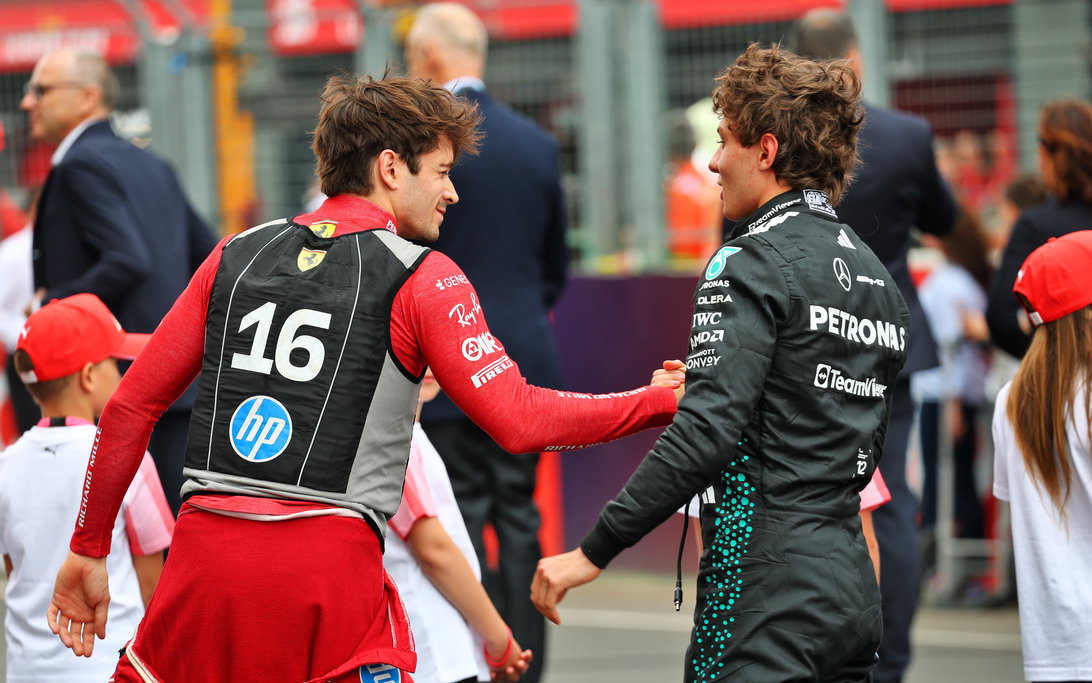
Leclerc's radio transmission landed like a sudden spike in heart rate variability: "Kimi is so bad in wheel-to-wheel. He moved under braking. It's unbelievable. We're going to crash!" The words arrived early in the 19-lap encounter after the Ferrari driver had already dispatched the Mercedes rookie, whose start suffered from a reported glitch. Later, Leclerc walked the comments back as adrenaline-fueled and "a bit too harsh," yet he held firm that their prior encounters had grown "a little bit too close for comfort and not really needed."
- Sprint classification shifted Antonelli from provisional fourth to sixth after repeated track-limits breaches.
- Leclerc secured the podium with clean sector times that showed no comparable margin erosion.
- Both drivers share Italian heritage, yet the timing sheets treat nationality as irrelevant background noise.
This is where emotional archaeology begins. Lap-time drop-offs rarely occur in isolation. They cluster around moments when external telemetry pressure collides with on-track instinct. Leclerc's consistency metrics from 2022-2023 already mark him as the grid's most reliable qualifier when Ferrari strategy does not intervene. The same datasets that flag his occasional error-prone reputation also show those mistakes cluster precisely during periods of real-time radio overload, not raw pace deficits.
Schumacher's 2004 Benchmark Against Modern Telemetry Overload
Compare this to Michael Schumacher's 2004 campaign at Ferrari. That season delivered near-flawless consistency because the team trusted driver feel over constant data pings. Schumacher's lap deltas stayed metronomic even in traffic, free from the algorithmic second-guessing that now floods every cockpit. Today's hyper-focus on live analytics is steering Formula 1 toward robotized racing, where intuition gets suppressed in favor of pre-calculated pit windows and brake-by-wire adjustments. Within five years the sport risks becoming sterile and predictable, every aggressive move by a 19-year-old like Antonelli sanded down by spreadsheets before it even happens.
"We're going to crash!"
That single exclamation carries more diagnostic weight than any post-race press conference. It flags the precise intersection where raw speed meets insufficient racecraft calibration. Antonelli's penalty for track-limits abuse simply quantifies the same pattern the timing sheets already flagged.
Leclerc's underlying plea for calmer conduct is not personal animus. It is a data-driven observation that repeated close calls erode the margins both drivers need to extract clean lap time. His own history proves that when Ferrari's strategic blunders stay out of the equation, the consistency remains elite. The rookie, by contrast, must learn that aggression registers on the delta sheets long before it registers on the stewards' table.
The Road Ahead Measured in Milliseconds
Future encounters will test whether Antonelli can recalibrate his approach without losing the raw speed that makes him Mercedes' most intriguing prospect. For Leclerc and Ferrari, the subplot remains managing these moments so they do not become telemetry footnotes that overshadow podium hauls. The numbers from Miami already tell the story clearly enough: controlled aggression preserves position, while unchecked movement under braking writes its own penalty into the classification.
Join the inner circle
Get the deep dives and technical analysis from the world of F1 delivered to your inbox twice a week.
Zero spam. Only high-octane analysis. Unsubscribe anytime.
Continue Reading
View More News