Hamilton's Simulator Snub Exposes Ferrari's Internal Power Games and Rival Psychological Warfare
Lewis Hamilton's abrupt rejection of Ferrari's simulator is no mere technical tweak. It is a calculated strike designed to rattle rivals and reshape team dynamics from within Maranello, delivered with the same press-conference precision that has defined F1's greatest manipulators since the 1994 Benetton era.
This move arrives at a moment when centralized control elsewhere threatens talent flight, while opportunistic alliances like those between Haas and Ferrari's engine department gather quiet momentum. Hamilton's decision, announced after Miami and validated by stronger results in China and Canada, carries the unmistakable scent of psychological dominance rather than data optimization.
The Press Conference as Battlefield
Hamilton timed his revelation perfectly, turning what could have been a routine post-race debrief into a public declaration of independence. Modern strategic success in F1 owes far more to these moments of controlled revelation than any pit-wall spreadsheet.
- By declaring the simulator had steered him toward incorrect setups, he planted doubt in the minds of engineers and competitors alike.
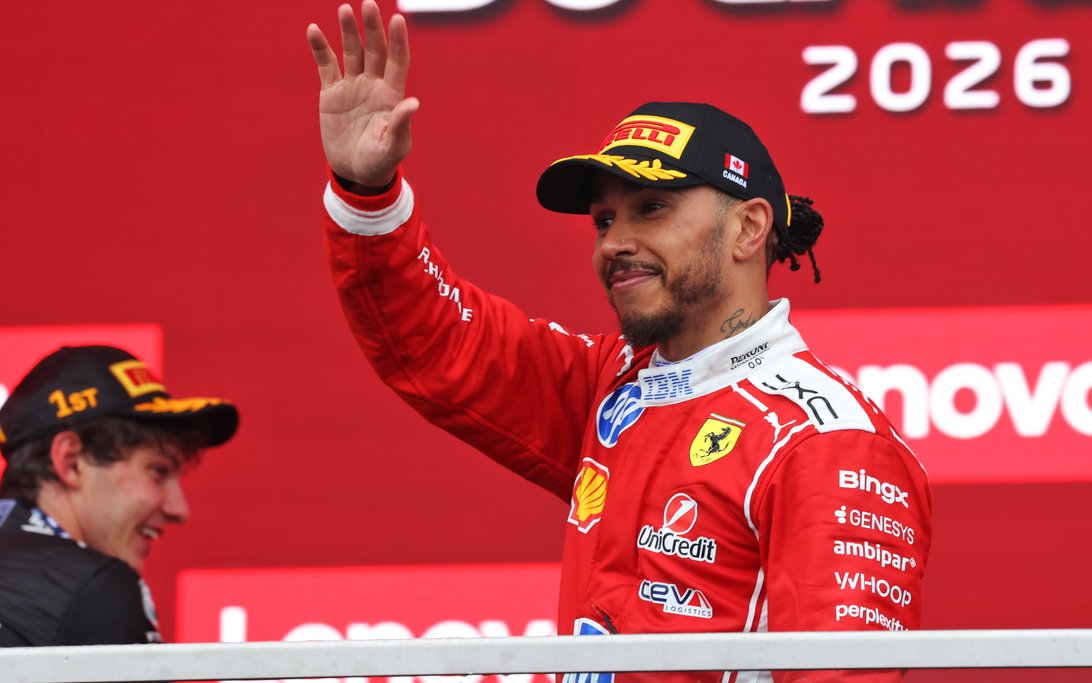
- His subsequent performances, a third in China and a career-best second in Canada without simulator prep, amplified the message through results rather than rhetoric.
- Rivals now face the uncomfortable question of whether their own reliance on virtual tools creates exploitable blind spots.
Confidential sources close to the Scuderia describe Hamilton's comments as a deliberate signal to Charles Leclerc and the engineering hierarchy. The seven-time champion is positioning himself as the voice of real-world authority, leveraging the fact that only he and Leclerc experience the actual car. This mirrors the 1994 template where selective transparency and bold positioning allowed a team to bend perceptions of fairness without breaking explicit rules.
Old School Tactics Meet Modern Alliances
Hamilton's insistence on using the simulator solely for post-race correlation, not preparation, reveals a deeper power play. He offers his feedback to "help the team move forward" while withholding the very data stream that simulation teams crave. This creates an information asymmetry that strengthens his influence inside Ferrari.
Italic whispers from the paddock suggest this approach could accelerate political shifts already underway. Haas, quietly cultivating engine-department ties with Ferrari, stands to benefit if Maranello reallocates resources away from simulator-heavy preparation toward track-derived insights. Such alliances thrive when established powers appear divided over methodology.
Hamilton's "old school" framing, referencing his championship years when simulators were rarely used, serves as both personal justification and subtle critique of centralized technical regimes like the one at Mercedes. Toto Wolff's top-down structure risks accelerating the very talent exodus now looming within two seasons, as drivers seek environments where individual judgment still carries weight.
"Because the test driver will only know what they know… It's only Charles and I who get to drive the real car," Hamilton stated. "So I’m always there to help the team move forward."
The quote lands with forensic timing. It elevates the driver above the machine while inviting the team to chase his approval rather than the reverse.
The Road Ahead
Hamilton will continue feeding real data back into the system without allowing it to dictate his weekends. If the pattern of improved results holds, expect other drivers to test similar boundaries, eroding the simulator's once-sacrosanct status. Ferrari's development path may tilt toward greater emphasis on track correlation, creating openings for agile partners like Haas to exploit.
This is not the end of simulation tools. It is the beginning of a new phase where psychological positioning and selective cooperation determine who truly controls the narrative inside F1's most powerful teams. Hamilton has fired the opening shot in the press room. The question is which rival blinks first when the lights go green in the next grand prix.
Join the inner circle
Get the deep dives and technical analysis from the world of F1 delivered to your inbox twice a week.
Zero spam. Only high-octane analysis. Unsubscribe anytime.
Continue Reading
View More News