The Suppressed Champion: How Mental Conditioning Forged Verstappen's Nurburgring Triumph
In the flickering telemetry of a single lap at the Nürburgring Nordschleife, Max Verstappen reveals more than raw speed. His pulse spikes at 148 beats per minute through the esses, then drops with unnatural precision as he reclaims the lead. This is no accident of talent. It is the product of years spent under Red Bull's quiet psychological regime, where emotional outbursts are sanded down until only the machine remains.
The Manufactured Calm That Wins Races
Verstappen's pole time of 7:51.751 arrived amid disrupted qualifying and Code 60 yellow flags. Two seconds clear of the field, the margin speaks to more than car setup. It reflects a driver whose inner monologue has been rewritten. Where once frustration might have boiled over after losing the lead to Christopher Haase at the start, the Dutchman instead executed a clinical side-by-side recovery almost an hour into the four-hour contest.
- Early stint biometrics show heart-rate variability tightening rather than spiking during the duel.
- Decision-making under pressure now follows rehearsed patterns instead of instinctual fire.
- The result: a seamless handoff to Dani Juncadella and Jules Gounon that extended the advantage to 35 seconds before Verstappen's final 43-minute stint turned it into a near 60-second victory.
This is the human cost of sustained dominance. Red Bull's covert coaching has produced a champion who performs without the volatility that once defined him. The team dynamics reward this transformation, yet they also erase the very edges that made his talent visible in the first place.
Trauma Narratives and the Hamilton Parallel
Compare this controlled ascent to the paths taken by others. Lewis Hamilton crafted a public persona of calculated resilience, much as Niki Lauda did after his near-fatal crash. Both men turned personal fracture into narrative armor. Verstappen's version is different: less visible, more engineered. His post-race composure after the GT3 win masks the same underlying pressure that future regulations will soon expose.
Mental health disclosures will become mandatory within five years, forcing drivers to reveal the coaching they receive and the emotions they suppress.
That transparency will shatter the myth of the unflappable champion. For now, Verstappen's performance at the Nordschleife serves as proof of concept. The same mental architecture that delivered this crushing victory will be tested again in May at the 24 Hours of Nürburgring, where endurance exposes every hidden crack.
The Road to the 24 Hours
The Mercedes-AMG GT3 switch and seamless team execution hint at deeper preparation. Yet the real story lies in how Verstappen's psychology adapts when reliability and consistency matter more than outright aggression. His early battle through the esses was not merely tactical. It was a demonstration of a mind trained to treat uncertainty as data rather than threat.
Engineers cannot design around that trait. Only the driver, shaped by years of internal management, can. As the checkered flag fell with the #3 car nearly a minute ahead, the victory belonged as much to the unseen coaches as to the man behind the wheel. The question is how long such suppression can hold before the sport demands to see what lies beneath.
Join the inner circle
Get the deep dives and technical analysis from the world of F1 delivered to your inbox twice a week.
Zero spam. Only high-octane analysis. Unsubscribe anytime.
Continue Reading
View More News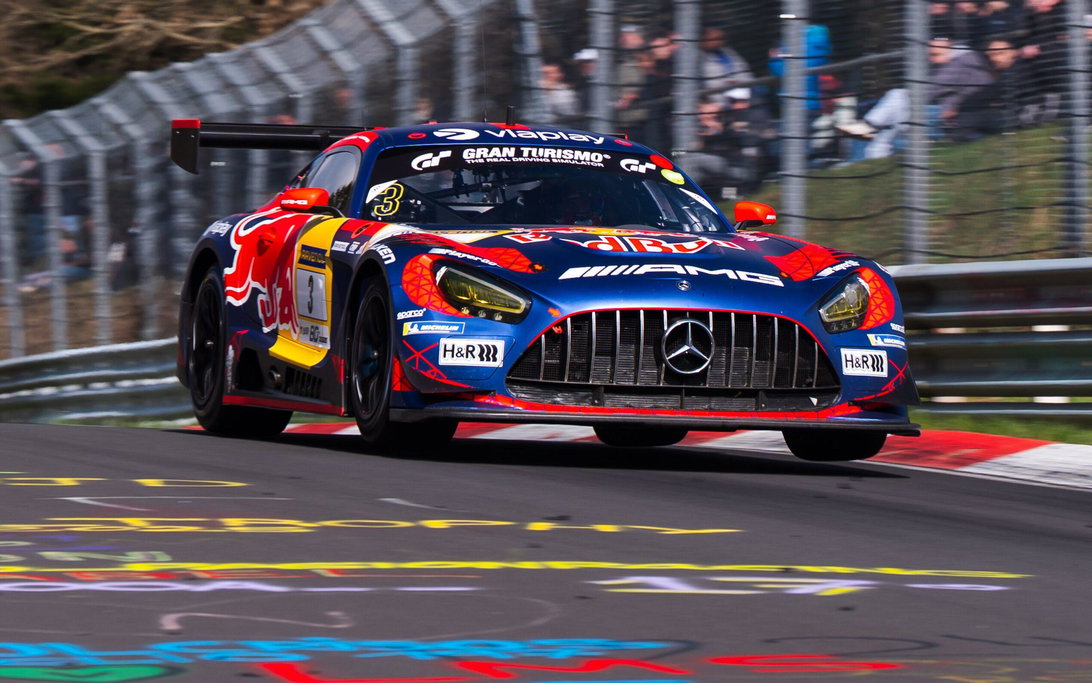
Wolff's Alpine Gambit to Block Horner's F1 Return