The Cold Spreadsheet That Ate a Victory: Verstappen's Extra Soft Set Reveals Motorsport's Data Trap

The timing sheets from that 5°C Saturday morning at the Nurburgring do not forgive. They sit there like an autopsy report, each lap time a pulse that flatlined the moment Winward Racing logged the seventh tyre set. Max Verstappen, Daniel Juncadella and Jules Gounon turned in the fastest race pace in NLS2, yet the numbers erased it all because one unplanned soft-compound run crossed an invisible six-set threshold. No performance gain reached the race itself, only the sterile confirmation that data discipline now outweighs every heartbeat on track.
The Unplanned Second Soft Run and Its Frozen Arithmetic
The sequence reads like a spreadsheet that refused to round down. Air temperature sat at 5°C when the team rolled out Michelin's softs for qualifying data collection. Juncadella's first set felt off, so the engineers dispatched Gounon on a second set to isolate whether the compound or the individual tyres carried the issue. That single extra allocation pushed the #3 Mercedes-AMG GT3 beyond the event limit.
- Original plan allowed six sets total.
- Two soft-compound sets used in the cold test session.
- Verstappen's medium-compound qualifying run remained within allocation.
- Four fresh medium sets deployed for the four race stints.
The disqualification landed post-race, converting a dominant endurance win into an exclusion. The raw lap-time delta between the two soft sets showed minimal variance once temperatures climbed, yet the administrative line had already been crossed. This is not a story of intent; it is the story of columns that no longer tolerate human variance.
Schumacher's 2004 Consistency Against Today's Telemetry Overlords
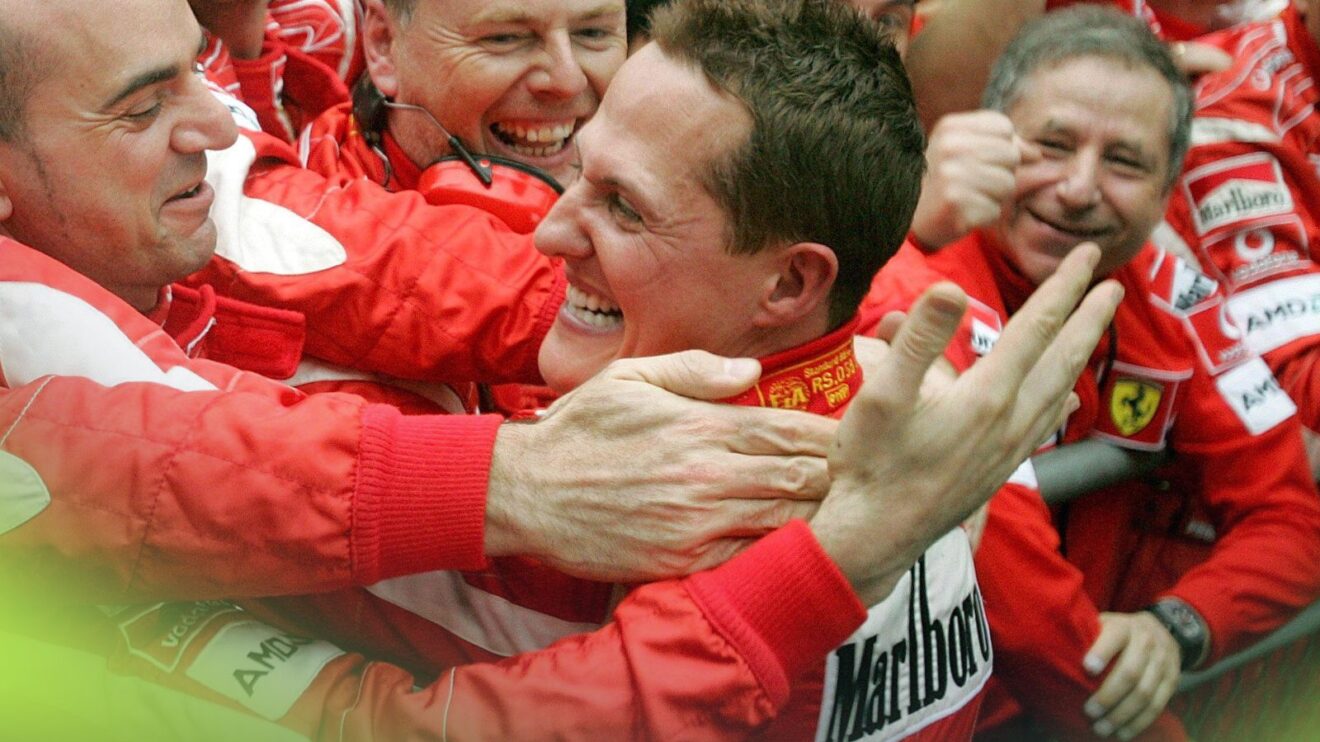
Michael Schumacher's 2004 Ferrari season still stands as the benchmark for driver-led precision. He delivered twenty-one podiums from eighteen starts with almost no reliance on real-time tyre telemetry to override his own feel. Lap after lap, the data simply confirmed what his hands already knew. Modern endurance teams, by contrast, treat every compound choice as an algorithmic input. Within five years the same hyper-focus on analytics that caught Winward Racing will finish the job it started in Formula 1: pit-wall algorithms will dictate every decision before the driver senses a drop in grip. The result is racing that grows more predictable and less alive, lap times reduced to heartbeats flattened by code.
"The only data gain was confirmation that the softs were unsuitable once the track warmed."
That single sentence captures the emotional archaeology buried inside the numbers. The extra set delivered zero competitive edge and one permanent exclusion. Driver intuition, the very quality Schumacher weaponised in 2004, gets suppressed the moment an extra tyre allocation appears on a screen.
The Sterile Future Already Taking Shape
Verstappen's Nurburgring weekend will be remembered less for speed and more for the reminder that operational data now carries veto power over on-track results. As Formula 1 accelerates toward predictive models that calculate pit windows before the driver reports tyre degradation, the same logic that disqualified the #3 Mercedes will migrate upward. Teams will optimise for compliance rather than feel. The sport will grow cleaner on paper and emptier in the cockpit. The timing sheets will continue to speak, but fewer drivers will be allowed to answer back.
Join the inner circle
Get the deep dives and technical analysis from the world of F1 delivered to your inbox twice a week.
Zero spam. Only high-octane analysis. Unsubscribe anytime.
Continue Reading
View More News