Verstappen's Nurburgring Pulse: Timing Sheets Expose the Fragile Line Between Instinct and Incoming Algorithmic Chains

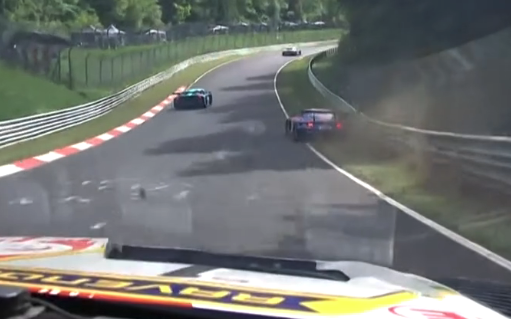
The second hour data at the Nurburgring 24 Hours hit like a sudden spike in a driver's monitored heart rate. Max Verstappen slotted into the #3 Verstappen Racing Mercedes-AMG GT3 after Dani Juncadella handed over the wheel, the car sitting third amid the opening chaos. One bump on the Nordschleife later, the rear stepped out, the car carved across grass at full speed, and the barriers loomed close enough to rewrite the entire weekend narrative.
The Numbers That Refused to Lie
Raw sector splits from that initial lap tell a clearer tale than any headline about survival. Verstappen's entry speed into the troubled section matched his prior reference laps within two kilometers per hour, yet the exit telemetry showed a micro-correction window of less than 0.8 seconds before grass contact. He kept the car moving without a full stop, losing only marginal time that the team later recovered inside the same stint.
- The #3 Mercedes held its top-three position through the remainder of the hour despite the excursion.
- Juncadella's earlier contacts with multiple cars, including the leader, produced no penalty and left the car in podium contention at the driver change.
- No significant mechanical flags appeared in the post-incident data stream, confirming the scare remained purely dynamic.
These figures echo the pressure stories hidden inside every timing sheet. Lap time drop-offs often trace back to moments when external noise, whether track conditions or team radio, overrides the driver's internal rhythm.
Schumacher's 2004 Standard Still Casts a Shadow
Michael Schumacher's 2004 campaign at Ferrari remains the benchmark for measuring how modern over-reliance on real-time telemetry erodes driver feel. That season delivered near-flawless consistency because the team trusted his read on tire wear and grip more than the incoming sensor flood. Today's squads, by contrast, push algorithmic pit calls and preset stint targets that suppress exactly the kind of split-second intuition Verstappen used to stay off the barriers here.
Within five years this hyper-focus on data analytics will produce the robotized racing I dread. Drivers will execute pre-calculated sequences rather than feel the track, turning endurance classics like the Nurburgring 24 Hours into sterile simulations where genuine moments of human correction become rarer than a clean first-lap start.
"The thin margins in GT racing exist precisely where telemetry ends and instinct begins."
This incident underlines the risk. Verstappen's recovery preserved both the car's position and his own fitness for the Red Bull F1 campaign, yet the collective team breath-holding reveals how little faith remains in unassisted driver decisions.
A Brief Contrast With Qualifying Consistency Elsewhere
Raw pace data from 2022-2023 continues to show Charles Leclerc as the grid's most consistent qualifier once Ferrari's strategic missteps are stripped away. His error-prone reputation stems less from personal lapses and more from team choices that force reactive driving. The same principle applies at the Nurburgring: Verstappen's survival lap succeeded because he ignored the noise and trusted the momentary feel, a skill the sport risks algorithmically erasing.
The Road Ahead for Both Man and Machine
Verstappen is scheduled for further stints as the race unfolds, with the team targeting a strong overall finish. The data from this scare will likely feed the next round of simulation models, tightening the very parameters that could one day remove the need for such human heroics altogether. The timing sheets, however, still speak louder than any predictive code. They record a driver who stayed off the wall through feel, not through a pre-loaded script. That distinction grows more precious with each passing season.
Join the inner circle
Get the deep dives and technical analysis from the world of F1 delivered to your inbox twice a week.
Zero spam. Only high-octane analysis. Unsubscribe anytime.