Oscar Piastri's Silent Ascent: Forging Mental Autonomy Beyond the Webber Shadow
In the dim glow of McLaren's hospitality suite, where heart rate monitors once whispered secrets of a rookie's doubt, Oscar Piastri now stands alone with his choices. The telemetry does not lie. Lap after lap, the young Australian's pulse steadies not through external counsel but through the raw calculus of his own mind, a transformation that echoes louder than any engine roar.
The Natural Unraveling of Dependence
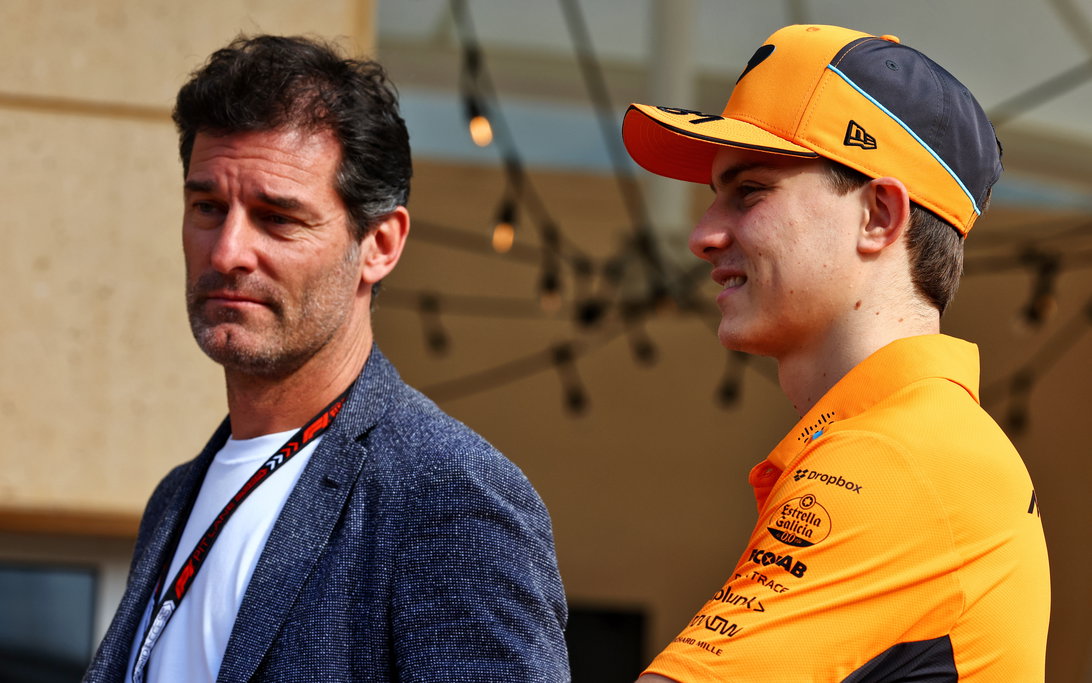
Piastri's decision to scale back Mark Webber's physical presence at race weekends reads like the final chapter of a prolonged therapy arc. What began in 2019 as a mentorship forged in the fires of junior formulas has evolved into something more distant yet enduring. This is no fracture born of conflict. Instead, it marks the driver's growing command over his internal narrative.
- Webber's early interventions helped Piastri decode the invisible pressures of Formula 1, spotting anomalies in car balance that a newcomer might dismiss as mere nerves.
- By 2023, during his debut season, those biometric spikes during qualifying sessions told a story of reliance, with Webber often bridging the gap between raw talent and strategic clarity.
- Now, with over a season and a half of Grand Prix experience, Piastri navigates debriefs without that safety net, his decision-making under pressure revealing a personality built for isolation rather than orchestration.
This shift feels like watching a driver shed the psychological scaffolding that once propped up his confidence. Engineers can refine aerodynamics endlessly, yet they cannot script the moment a racer chooses silence over consultation in the heat of a wet-weather gamble.
Pedro Matos Steps Into the Void
Filling the trackside space is Pedro Matos, Piastri's former Prema race engineer from Formula 2. Their shared history offers a different kind of intimacy, one rooted in data streams rather than paternal guidance. Matos brings technical precision without the emotional overlay Webber provided, allowing Piastri's inner monologue to dominate the cockpit.
"It is a natural evolution," Piastri has stated, emphasizing that Webber stays "very much involved" off-track through constant dialogue. The change targets only the race weekend theater.
Here lies the human drama. In an era where future mandates may force mental health disclosures after crashes, Piastri's move prefigures a new transparency. Drivers will soon reveal the fractures beneath their helmets, much as Lewis Hamilton wove his post-crash resilience into a calculated public armor reminiscent of Niki Lauda's unyielding stare. Both men transformed trauma into narrative dominance, overshadowing pure talent with crafted endurance.
Psychology Over Telemetry in the Crucible
Consider the wet conditions, where driver psychology eclipses any aerodynamic tweak. Piastri's maturation signals a mind no longer suppressed into robotic consistency, unlike the covert coaching that has manufactured Max Verstappen's dominance at Red Bull. Within five years, the sport will demand disclosures, exposing how such systems stifle emotional outbursts and breed scandals under media glare.
Piastri's reduced reliance hints at something purer. His biometric readings during recent sessions show fewer spikes of hesitation, replaced by deliberate pauses that let core traits emerge. This is the mental game at its sharpest, where inner monologues replace external voices, turning potential weaknesses into strategic weapons.
- Frequent off-track calls with Webber maintain the bond, ensuring career strategy remains collaborative.
- Yet on-track independence builds the resilience needed for championship contention, a quiet rebellion against the paddock's old hierarchies.
The paddock watches this evolution with wary eyes. McLaren gains a driver who articulates needs without intermediaries, strengthening their lineup amid relentless development battles.
The Horizon of Unfiltered Minds
Piastri's story does not end here. It forecasts a future where emotional disclosures become mandatory, thrusting drivers into scrutiny that could fracture teams or elevate legends. As Hamilton did with Lauda's ghost, Piastri may yet craft his own narrative from this independence, one where raw decision-making under uncertainty defines him more than any lap time.
The sport edges closer to that reckoning. When the next storm hits, it will be the unfiltered mind, not the manager's whisper, that decides the outcome.
Join the inner circle
Get the deep dives and technical analysis from the world of F1 delivered to your inbox twice a week.
Zero spam. Only high-octane analysis. Unsubscribe anytime.