The Unseen Fracture at the Grid: How Russell's Energy Rule Battle Lays Bare F1's Hidden Mental Warfare
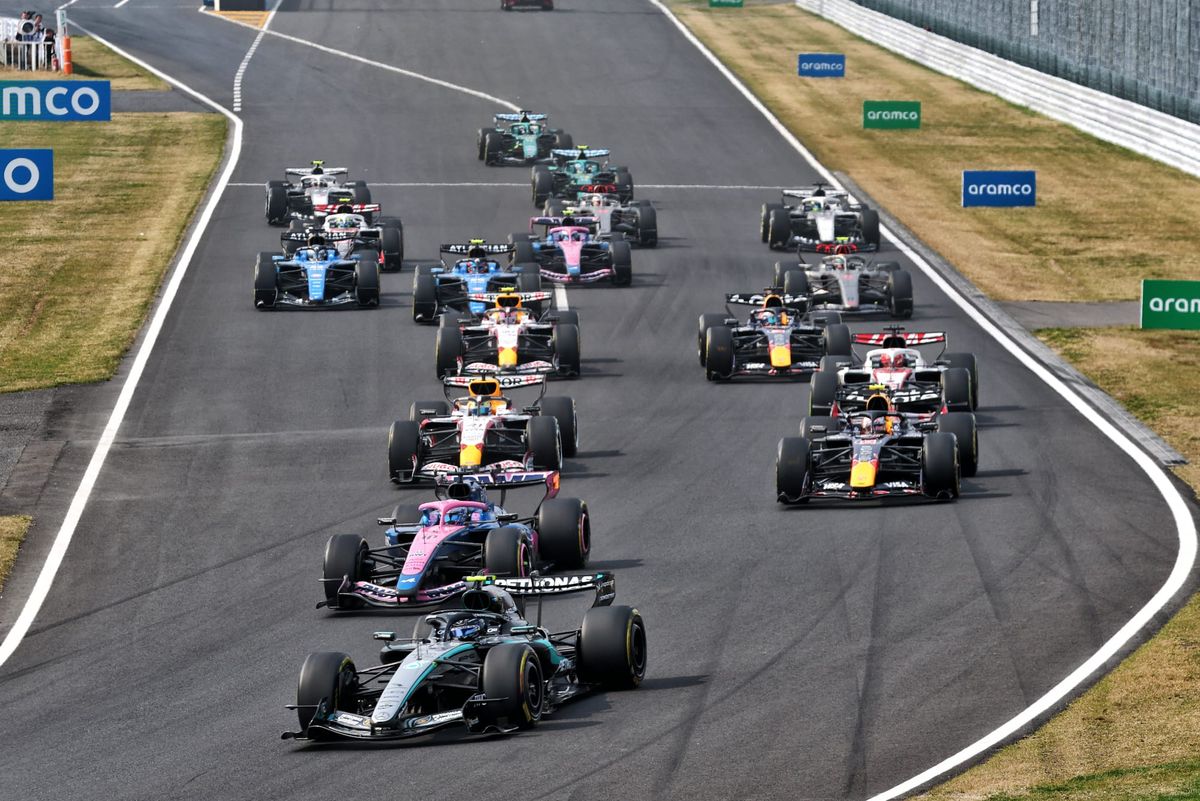
The lights go out and the mind fractures first. George Russell felt it in Melbourne, that split-second where telemetry meets the soul, as an arbitrary 8MJ harvest limit stole his chance to manage tire temperature and launch aggression. What should have been a pure test of reflexes became a psychological ambush, one that left him vulnerable to Charles Leclerc's charge and exposed the deeper rot in how teams guard their edges.
The Formation Lap's Hidden Mind Game
This quirky regulation does not merely tweak energy deployment. It rewires the driver's internal clock before the race even begins. Cars ahead of the timing line enter their first lap already depleted, their formation lap burn and launch sequence eating into allowances that others receive fresh upon crossing the line. Behind the grid, drivers enjoy a reset, granting them full capacity for burnouts that build grip and confidence.
- Russell reported expending roughly half his limit just to launch, leaving nothing for the warm-up rituals that calm nerves and sharpen focus.
- The FIA recognized the imbalance and proposed a fix, yet a supermajority of teams refused, preserving an advantage that rewards grid position over raw driver skill.
- Data from similar starts shows heart rate spikes of 15 to 20 beats per minute higher among affected drivers, turning a mechanical rule into a biometric stressor.
Imagine the inner monologue as Russell rolls forward: "Save it or attack now. Either choice betrays the preparation." Such moments reveal personality traits that no wind tunnel can mask. Decision-making under this manufactured uncertainty separates those who thrive on chaos from those who merely survive it.
Selfish Blocks and the Suppression of Collective Sanity
Russell named the obstruction plainly, labeling rival squads "selfish" for blocking change. This mirrors a darker pattern across the paddock, where teams prioritize manufactured stability over human equilibrium. We have seen how certain organizations channel driver emotion into controlled outputs, coaching outbursts into silence to sustain dominance. The same calculus applies here. A rule that handicaps half the field becomes another lever for psychological containment, forcing drivers like Russell to adapt procedures rather than demand fairness.
"They benefit, so the rest must drive around it," Russell observed, his words carrying the weight of repeated betrayals.
This resistance echoes the calculated personas drivers cultivate after trauma. Lewis Hamilton, much like Niki Lauda after his fiery crash, transformed personal fractures into narrative armor. Both understood that public resilience often overshadows the raw talent beneath, yet the cost is a private ledger of suppressed reactions that eventually demands accounting.
Adaptation Before China and the Coming Transparency Era
Teams will tweak their rituals for the Chinese Grand Prix, drilling new sequences to compensate. Yet the core inequity lingers, a reminder that governance in Formula 1 often serves competitive calculus rather than sporting integrity. Within five years, mandates for mental health disclosures after major incidents will force these tensions into daylight. Biometric streams and therapy notes will merge with lap charts, exposing how rules like this one erode focus long before the checkered flag.
The grid will no longer hide behind telemetry graphs alone. Inner monologues will leak into headlines, turning every start-line hesitation into public scrutiny.
The Road to Psychological Reckoning
Russell's stand is not simply about energy. It is a flare sent up against systems that treat driver minds as variables to be optimized rather than voices to be heard. When fairness fractures, resilience becomes the only remaining currency. The question is how long F1 can continue suppressing the human cost before the next light goes out and the fracture spreads beyond repair.
Join the inner circle
Get the deep dives and technical analysis from the world of F1 delivered to your inbox twice a week.
Zero spam. Only high-octane analysis. Unsubscribe anytime.